Languages
Friday, October 2, 2026



News and Views from the Global South
Middle East & North Africa

We Arabs Ask No Favors…..
In these difficult times for the Palestinian people and for justice, the Government of Israel is proposing to add further to the turmoil by unilaterally absorbing large swathes of the Palestinian West Bank of the Jordan River. It might therefore be fitting to remind the world of the chronology of the events leading up to the creation of the State of Israel in May 1948.
World Comes Together with $1.35 billion for Yemen
World leaders gathered on Tuesday to pledge $1.35 billion in aid for Yemen, which currently undergoing what many is the world’s “worst humanitarian crisis”, with Saudi Arabia announcing a contribution of $500 million.
On the Agenda of Iraq’s New Government: An Empty Treasury, Low Revenue, and COVID-19
Iraq’s newly-announced leader has brought hope to a country embroiled in a 17-year-long conflict, but authorities must ensure that issues such as swift and rapid response to COVID-19, security concerns, and corruption among others are addressed with urgency, experts said on Tuesday.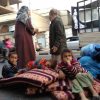
The Gaza Strip and COVID-19: Preparing for the Worst
The coronavirus is now present in Gaza, the populous Palestinian enclave blockaded by air, land and sea since 2007. An epidemic would be calamitous. Hamas should tighten public health measures; Israel should loosen restrictions so that medical supplies can enter and afflicted Palestinians can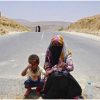
Coronavirus Worsens Yemen’s Long Tale of Woe
In every room in Yemen’s Al-Saba’een hospital, patients in critical condition waited on chairs, and still others laid on the bare ground. I saw women and girls sharing beds in pairs, and children laying close together being treated.
What’s Needed for Real Changes for Women in Lebanese Politics?
Women were at the forefront of Lebanon’s 2019 ‘October Revolution’. Beyond the iconic images of their participation, it seems that by women linking equity in politics to the broader issues of mismanagement of corruption paid off - although activists say there is a long road ahead.
A Multi-Billion Dollar US Mideast Arms Market May be in Jeopardy
When President Saddam Hussein ran one of the world’s most authoritarian regimes in the militarily-volatile Middle East during 1979-2003, US newspapers routinely described him as “the strongman of Iraq” — as most journalists rightly view dictators worldwide.
US Mideast Peace Plan: from a Paper Pharaoh & a Fake Moses
Israeli Prime Minister Benjamin (Bibi) Netanyahu was slapped corruption charges last week while he was hobnobbing with US President Donald Trump in Washington. Bibi has, apparently, done his homework in psychology. He knew the quickest way to get around Trump was to flatter him.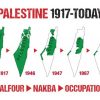
US Mideast Peace Plan: Israelis Offered the Cheese & Palestinians the Holes
The Israeli human rights organization B’Tselem has described the much-ballyhooed US Middle East peace plan as “more like Swiss cheese-- with the cheese being offered to the Israelis and the holes to the Palestinians”.
US-Iran Confrontation & Implications for India
The unease in the relations between the US and Iran have been in the international news for around a month now. Both sides have not shied away from using outright methods of warfare like the use of ballistic missiles and assassinations, along with attempts at economic and diplomatic sanctions.
Is Iraq Now a Virtual “US-Occupied Territory”?
Pat Buchanan, a senior advisor to three US Presidents and twice candidate for the Republican presidential nomination, once infamously described the United States Congress as “Israeli-occupied territory” -– apparently because of its unrelentingly blind support for the Jewish state.
Iran Announces New Nuclear Deal Breach
Iran announced its fifth breach of the 2015 nuclear deal Jan. 5, stating that it “discards the last key component of its operational limitations” put in place by agreement.
Arab Region’s Largest Youth Gathering Focuses on New Tech
On late Monday morning, a motley group of more than a thousand youth gathered in a hall in Sharm el-Sheikh, Egypt, to listen to Sophia — a humanoid robot capable of displaying humanlike expressions and interacting with people. Yahya Elghobashy, a computer science engineering student from Cairo, sat excitedly in the audience. A few meters away from him, also in the audience, was Abdel Fattah el-Sisi — the President of Egypt.
Syria Regime Detains, Tortures Doctors in ‘War on Health’
Syria’s government has arrested, detained and tortured large numbers of medics in a systematic effort to cut off treatment to swaths of the turbulent country’s population and swing the civil war in its favour, according to a new report.
Bangladeshi Migrant Female Domestic Workers Face Violence
Millions of Bangladeshi women are facing violence either as domestic housemaids or as migrant workers in Gulf countries. A few days ago, a video in social media, secretly filmed by a Bangladeshi housemaid employed in Saudi Arabia, caught everyone’s attention where she was helplessly crying and begging to be rescued from her abusive employer.
Despite Halting Progress, UN Continues its Push for a Nuclear-Weapons-Free Zone in the Middle East
A longstanding proposal for a regional nuclear-weapons-free zone (NWFZ) in the Middle East – one of the world’s most conflict-ridden regions – has been kicked around the corridors of UN committee rooms since 1974.
Saudi UNESCO Win Riles Khashoggi Standard-Bearers
Human rights campaigners have reacted angrily to the election of Saudi Arabia to the United Nations cultural agency UNESCO’s top board, highlighting the kingdom’s ongoing crackdowns on political freedoms and critics.
U.N. Group Launched to put Afghan Women at Centre of Peace Initiatives
Afghanistan’s first female ambassador to the United Nations this week launched a U.N. group that aims to put women at the centre of peace initiatives in Afghanistan.
Achieving the Possible: “Weapons of Mass Destruction Free Zone in the Middle East”
A historic conference on the Middle East opened at the United Nations in New York on 18th November and will continue until 22nd November. The Conference on the Establishment of a Middle East Zone Free of Nuclear Weapons and Other Weapons of Mass Destruction is presided over by Ambassador Sima Bahous of Jordan.
UN Agency for Palestinians in Crisis as Chief Quits
The United Nations agency for Palestinian refugees was in “crisis mode” on Wednesday after director Pierre Krahenbuhl resigned amid a misconduct probe over whether he fast-tracked his girlfriend into a top aid job, analysts said.
Election Death Toll Underscores Afghanistan’s Fragile Democracy
A wave of bloody Taliban attacks aimed at derailing Afghanistan’s recent elections killed and maimed hundreds of people, including children, the United Nations mission to the country said on Tuesday.« Previous Page — Next Page »


The Week with IPS

NEXT STOP - SDGs
Tracking global progress towards a sustainable world
Tracking global progress towards a sustainable world
