Languages
Sunday, November 8, 2026



News and Views from the Global South
Middle East & North Africa
Report Details Widespread Torture in Syrian Jails
Since March 2011, Syrian authorities have subjected tens of thousands of people to torture, rape, sexual abuse and unlawful detention, with some cases of ill treatment leading to death, according to a Human Rights Watch (HRW) report released Tuesday.New Israeli Deputy PM Undercuts Strategy of Pressure on Obama
By staking out a policy line on Iran reflecting the views of the Israeli national security leadership, Deputy Prime Minister Shaul Mofaz has undercut the Benjamin Netanyahu government's carefully planned strategy to get U.S. President Barack Obama to threaten war against Iran if it doesn't give up its nuclear programme.Israel’s New Dissidents Find an E-Voice
A reserve soldier went on hunger strike in solidarity with Palestinian prisoners last week, vowing to surrender his citizenship and live as a Palestinian in a refugee camp; another activist was briefly jailed. They are Israel’s new dissidents. An e-book now comes to light, shedding light on their raison d’être.U.S. Dangerously Short-Sighted on Yemen, Experts Warn
As President Barack Obama's administration becomes further enmeshed in what many are calling an undeclared war in Yemen, observers here are urging the government to broaden its policy approach to the country beyond counterterrorism.Israelis Grapple with an Unfinished War
As the threat of war against Iran and its allies in Lebanon and Gaza lingers, questions arise over a war launched 30 years ago. Israel’s far-reaching invasion of Lebanon launched in June 1982 wasn’t an easy choice. Veterans still grapple with this controversial episode of Israel’s history whose name, objectives and legacy were never officially sanctioned.Israeli Guns Hold University Degrees Away
After more than 25 years spent fighting for women’s rights in the Gaza Strip, Andaleeb Shehadeh is now struggling for the right to complete her university education.OP-ED: Bahrain Repression Belies Government Stand on Dialogue
Bahrain remains a repressive state, and civil rights are violated daily.
This Football Is a Game of Dispossession
The football teams are back in their refugee camps in Algeria, and no, FIFA has taken no note of this tournament. And the television cameras are all at the Euro cup.
U.S. Drone Strikes Setting Dangerous Global Precedent
U.S. counterterrorism measures are under intense scrutiny from United Nations (U.N.) experts and civil rights groups declaring drone strikes illegal under current frameworks.
No Rest for Cyber Activists
One and a half years since the beginning of the Arab Spring, activists who guided their fellow citizens through the relatively unchartered terrain of social media activism feel their fight for human rights, democracy and transparency is only just beginning.
What is Stopping the Algerian Spring?
The on-going hunger strike of nine Algerian court clerks, coupled with the government’s indifference to their demands for an independent labour union, have stirred debate about Algeria’s role in the Arab Spring, which many see as an incomplete attempt to overturn a deeply flawed political and economic system.
In Limbo in the Saharan ‘Free Zone’
The road vanishes under the sand just after the border crossing at Tindouf, western Algeria. Another 20 kilometres into the desert, a billboard welcomes us into the Sahrawi Arab Democratic Republic.Spicing Tradition With Taste
Kosher, in spoken English, might mean ‘proper’, ‘acceptable’, ‘legitimate’. Yet, sourced in the Bible, the Hebrew word incontrovertibly finds its way in Jewish cuisine. Food is kosher when suitable for consumption – that is, according to a set of religious dietary laws or kashrut.Women Targeted in Tahrir Square
It is becoming increasingly uncomfortable to be female or foreign in Cairo’s Tahrir Square, birthplace of the January 2011 Egyptian revolution.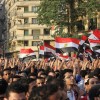
U.S.: “No Going Back” on Democratic Transition in Egypt, Says Clinton
As angry demonstrators gathered once again in Cairo's Tahrir Square to protest what many are calling a "soft coup" by the military, U.S. Secretary of State Hillary Clinton insisted that Washington still expects "a full transfer or power to a democratically elected civilian government" in Egypt.
Desert Opera Finds New Meanings
The imposing stronghold is almost transparent, barely noticeable, in the pitch-black desert. On top of the stands, with a thousand kilowatts at his finger’s tip, Avi Yona Bueno turns the night into lights, revealing sets, sites, and sounds. “I’m god,” smiles the lighting designer. “I’m god to my children.”
Dam Threatens Turkey’s Past and Future
Hasankeyf, a small village in southeastern Turkey, has been under threat for 15 years. Home to approximately 3,000 people, the site is one of the oldest continuously inhabited human settlements, with an archaeological record going back at least 9,500 years.At Home, Israelis Attack Africans
It’s Saturday night in south Tel Aviv. Amine Zegata, a 36-year-old refugee from Eritrea is reopening the small bar he owns in the HaTikva neighbourhood. The pub was closed after Jewish Israelis smashed his windows and the bottles within during the race riots two weeks back. But Zegata has been assaulted twice since then. Violence against African refugees is continuing.
SYRIA: Conscience Is Their Only Armour
With the international community vowing to ratchet up pressure on the Syrian government, non-violent activists say they remain undeterred even as the situation seems to be deteriorate daily.Attacking Iran Likely Counter-Productive, Think Tank Warns
While a nuclear-armed Iran would pose significant new challenges to the United States and Israel, a military attack by either country to prevent Tehran from developing a weapon could well prove counter-productive, according to a major new report released here Wednesday by a think tank close to the administration of President Barack Obama.Refugees Crowd Behind Five-Star Checks
A group of Palestinian Jerusalemites steps down from a crowded bus to let two Israeli soldiers climb aboard to check identity cards, below the aluminum roof of this newly operational checkpoint terminal.« Previous Page — Next Page »





The Week with IPS

NEXT STOP - SDGs
Tracking global progress towards a sustainable world
Tracking global progress towards a sustainable world
