Languages
Tuesday, October 6, 2026



News and Views from the Global South
North America

Voter Suppression Tactics Likely to Affect U.S. Election
Voter suppression has reached new heights in the United States, analysts and experts say, as elected state officials have increasingly resorted to a new and growing generation of voter suppression tactics.
In U.S., Corporate Cash Pouring into State Campaigns
Local and state campaigns have become a moneyed battleground this year for corporations and special interest groups hoping to sway the results of elections for local and state offices on Nov. 6.
A Posthumous Message from Hurricane Sandy*
Hi, this is Sandy. By the time you read this, I’ll be gone, after dissipating into increasingly weaker remnants of strong winds, heavy rains and snowfall in the Great Lakes region of North America.**Cultural Barriers Falling in the Wake of Hurricane Sandy
In one night, Hurricane Sandy devastated large parts of the East Coast of the United States. But in the long run, the aftermath of the storm could have some positive effects as different religious communities learn to work side by side to tackle challenges brought on by the disaster.
Hurricane Sandy a Taste of More Extreme Weather to Come
Killing nearly 200 people in the United States, Canada and the Caribbean and crippling much of New York City and surrounding areas earlier this week, Hurricane Sandy was the kind of extreme weather event scientists have long predicted will occur with global warming.
Q&A: Is Print Media Headed for the Graveyard?
As the digital revolution continues to spin out of control, several newspapers in the United States have either stopped their presses and ended print runs, or gone online.Women Poised to Vote for Stronger Economy
A few weeks ago, President Barack Obama was seen as certain to collect the majority of women's votes in the Nov. 6 presidential election. Four days before the election, however, the women's vote is thought to be divided equally between Obama and his Republican challenger, Mitt Romney.
Hurricane Sandy Fans Flames of Climate Change Debate
As the East Coast deals with the havoc and devastation wrought by Hurricane Sandy, climate scientists are seeing yet another reason to put climate change and global warming on the current political agenda.
Pan-American Rights Commission “Under Threat”
Representatives of nearly 40 civil society organisations from throughout the Americas gathered here on Wednesday to express concerns with proposed changes to the Inter-American Commission on Human Rights (IACHR).
U.S.: Obama Given Slight Edge in Final Week of Presidential Race
With less than a week left in the 2012 election campaign and much of the Northeast recovering from Hurricane Sandy, President Barack Obama and his Republican challenger, former governor Mitt Romney, are running neck and neck in the national popular vote, according to the most recent surveys.Latino Excitement at Record Levels in U.S. Election
Just over a week before the United States votes in a highly anticipated and historically tight presidential election, a new poll released Monday finds that interest by Latino voters has strengthened significantly over the past two months, and that turnout among Hispanics could be higher than the records set in 2008.
Southern U.S. States Inch Towards Renewable Energy
With the U.S. East Coast virtually shutting down Monday with the arrival of Hurricane Sandy, the broader debate over transitioning to cleaner energy sources and slowing, if not halting, climate change is taking on ever greater urgency.
Pentagon Nixed 1998 U.S. Nuclear Scientists’ Probe of Iranian Programme
In 1998, the Defence Department vetoed a delegation of prominent U.S. nuclear specialists to go to Iran to investigate its nuclear programme at the invitation of the government of newly-elected Iranian President Mohammad Khatami, according to the nuclear scientist who was organising the mission.U.S. Muslims Could Be Critical Voting Bloc
With Barack Obama and Mitt Romney virtually tied with Election Day less than two weeks away, Muslim voters could play an unexpected critical role in deciding the outcome Nov. 6.
For U.S. Voters, “Faith” Often Means Political Party, not Religion
While religious coalitions in the United States have remained generally stable during the 2008 and 2012 president election campaigns, new research released here on Tuesday suggests far more complexity among what is often called the U.S. “values voter”.
U.S.: Greater Middle East Dominates the Last Debate
U.S. strategy in the Greater Middle East, which has dominated foreign policy-making since the 9/11 attacks more than 11 years ago, similarly dominated the third and last debate between President Barack Obama and Governor Mitt Romney Monday night.Jewish, Christian Groups Clash Over U.S. Aid to Israel
Jewish groups have reacted furiously to a letter to Congress by 15 leaders of Christian denominations asking for a review of whether some of the three billion dollars in annual United States aid to Israel is being used in violation of U.S. law and policies.
Climate Change, the Taboo Phrase in U.S. Electoral Politics
The United States endured its hottest summer in history this year, with droughts and wildfires ravaging the country. And according to a new report from the global reinsurance giant Munich Re, insurance losses related to extreme weather have nearly quadrupled in the U.S. since 1980.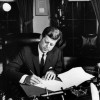
U.S.: 50th Anniversary of Cuban Missile Crisis Offers Lessons for Iran
It was exactly 50 years ago when then-President John F. Kennedy took to the airwaves to inform the world that the Soviet Union was introducing nuclear-armed missiles into Cuba and that he had ordered a blockade of the island - and would consider stronger action - to force their removal.
Q&A: Health Impacts of Genetically Modified Foods Still Unknown
In 1994, genetically modified produce, in the form of tomatoes, first appeared in grocery stores in the United States. Numerous other types of produce have been genetically modified since, and consuming them has become common practise. But because the phenomenon is so recent, the long-term effects of eating such foods remain unknown.U.S.: On Eve of Foreign Policy Debate, Voters Sour on Arab Spring
On the eve of Monday’s foreign policy debate between President Barack Obama and Republican challenger Mitt Romney, the electorate appears increasingly disillusioned with the so-called Arab Spring, according to a new survey released by the Pew Research Center here.« Previous Page — Next Page »





The Week with IPS

NEXT STOP - SDGs
Tracking global progress towards a sustainable world
Tracking global progress towards a sustainable world
