Languages
Friday, September 18, 2026



News and Views from the Global South
From Spanish Wire
MEXICO: Cross-Border Child Custody, a Legal Tangle
Mexican or foreign-born children being held by one of their parents in this or another country are caught up in a legal tangle marred by red tape and the arbitrary powers of judges, according to experts.GUATEMALA: For the Maya, the World Isn’t Ending – the Environment Is
The end of the Maya long-count calendar does not predict a global catastrophe, let alone the end of the world, say native activists and elders who spoke to IPS in Guatemala. But what are coming to an end are the world's natural resources, as a result of human activity, they warn.LATIN AMERICA: Iran Flaunts Its Allies
Iran's president, Mahmoud Ahmadinejad, sought to freshen up his international image on a tour of Latin America and demonstrate that his country does have friends in the world, while almost every day events place him at the epicentre of fraught geopolitical tensions.Haitian Diaspora Tests Brazil’s International Solidarity
Brazil, for decades a source of migrants to the United States and Europe, is now facing its own humanitarian challenge: applying the international solidarity it trumpets to the Haitians who are arriving in the thousands, in search of a better life.EL SALVADOR: Pesticides Fill Graveyards in Rural Villages
Sitting in the shade under a tree at a careful distance, Francisco Sosa watches his son prepare the land for planting by spraying the weeds with an herbicide from a tank carried on his back.GUINEA-BISSAU: Another Blow to a Fragile Democracy
The death of the president of Guinea-Bissau, Malam Bacai Sanhá, could usher in a replay of the military uprisings that have set an unmistakable seal of instability on the political life of this small West African country.BRAZIL: Growing Pains in a Country Under Construction
Major infrastructure works are sprouting like mushrooms in Brazil, generating millions of jobs and drawing more than 60 billion dollars in foreign investment in 2011. But this thrust has failed to sustain economic growth, which according to the latest projections is below three percent.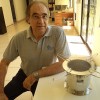
CLIMATE CHANGE: Clean, Efficient Wood Stoves Good for People and the Planet
In his quest to make the most efficient possible use of energy generated through wood combustion, Salvadoran René Núñez developed a simple but highly efficient wood stove that produces no smoke and reduces greenhouse gas emissions by 95 percent.Salvadoran Poet Roque Dalton’s Murder – Case Closed
It was the first time that a Salvadoran judge was holding a hearing to decide whether the case of Roque Dalton, a poet murdered 36 years ago, should go to trial. But the hopes of his family were dashed.SOUTH AMERICA: Responsible Tourism at the “End of the World”
An innovative responsible tourism initiative in the Beagle Channel - a narrow strait linking the Atlantic and Pacific near the southernmost tip of South America - ensures the compatibility of the observation and conservation of unique bird and mammal species.No One Wants Mexico City’s Garbage
The closure of Mexico's biggest garbage dump has highlighted the absence of a comprehensive policy for urban waste collection, disposal and processing, a failure that has serious consequences for health and the environment.BOLIVIA: Artificial ‘Islands’ to Protect Cattle from Annual Floods
Small-scale dairy farmers in this remote area of Bolivia's northeastern Amazon region of Beni have a new hope for protecting their livestock from the fierce annual floods that start in December.
BRAZIL: Miracle Mileage from a Hobbled Economy
In 2011, Brazil's economy grew by less than half the 7.5 percent it attained in 2010. However, this result would be miraculous in any other country with the barriers to productivity and competitiveness that prevail in Brazil.Shale Gas Turns the Tables on Petroleum Powers
Countries that have always depended on imported oil and gas, like Chile, Paraguay, Poland or Ukraine, and especially heavy consumers such as the United States and China, could become self-sufficient in natural gas in the near future and even start exporting it.CUBA: Pope to Visit a Country in Flux
On his upcoming visit to Cuba, Pope Benedict XVI will find a country immersed in dramatic changes, as it "modernises" its socialist system and continues to open up to religion, marking a difference from the society found by John Paul II when he visited almost 14 years ago.GUATEMALA: Native People Suffer Racism in Employment
"There's a big difference in the way indigenous people and mestizos (people of mixed ancestry) are treated. We are not paid the same wages for the same work," Higinio Pu, an activist with the native group Waxaquib Noj, which means "wisdom" in the Maya Quiché language, told IPS.CUBA: Men for Non-Violence
Promoting the first Men for Non-Violence platform is one of the challenges undertaken by a group of social actors who devoted November and December 2011 to the most intensive Cuban campaign ever against gender-based violence.HONDURAS: The Society of Fear
As the new year rolls in, Honduras is feeling more than ever the challenges posed by soaring rates of violent crime, police corruption, the penetration of the police by organised crime, and a wave of selective killings of journalists and experts in the fight against drugs.The Oil That Comes in from the Cold
Thanks to soaring oil prices and new technology, oil producers in the hot sands of Arabia, the torrid Niger delta or the humid plains of the Orinoco are facing new competition from rivals in the frozen North.RIGHTS-CUBA: Government Pardons Some 3,000 Prisoners
Only seven prisoners convicted of political crimes are among the nearly 3,000 inmates pardoned by the government of Raúl Castro. Most of the prisoners have reportedly already been released.PORTUGAL: No Jobs? Just Emigrate!
Hounded by the economic crisis that shows no signs of letting up and by political leaders of all stripes, Portugal's conservative Prime Minister Pedro Passos Coelho sent out an unprecedented message to his fellow citizens: emigrate.« Previous Page — Next Page »


The Week with IPS

NEXT STOP - SDGs
Tracking global progress towards a sustainable world
Tracking global progress towards a sustainable world
