Languages
Tuesday, September 15, 2026



News and Views from the Global South
International Women's Day

Breaking Barriers for Women Is a Short Cut to Economic Growth and Development
In South Asian societies, as elsewhere, it is all too common for women to be held back, time and again Women's potential remains largely untapped - which is not only morally wrong, but also economically unwise. According to recent projections, harnessing women's full potential throughout South Asia would increase GNP by more than half by 2025. In absolute terms, women could earn countries in South Asia an additional 400 billion dollars in the next ten years! clearly, women hold the key to economic success for South Asia: their empowerment can fuel further development. The Netherlands has invested substantially in the economic empowerment of women in this region. Our successes, achieved in collaboration with many stakeholders, show what can be achieved if we keep up these efforts.
“Women in the Changing World of Work: Planet 50:50 by 2030.”
Yayi Bayam Diouf became the first woman to fish in her small rural fishing village in Senegal despite initially being told by the men in her community that the fish wouldn’t take bait from a menstruating woman. When she started practicing law, Ann Green, CEO of ANZ Lao, was asked to make coffee or pick up dry cleaning (by men and women), simply because she was a young woman. The difficulties faced by Yayi and Ann in entering the labour force and at the workplace are not only unique to them, but sadly is the reality for many women across the globe.
The Labour Market Is the Key to Equality for Women in Latin America
Latin America and the Caribbean is the only region in the world where, for the past four decades, states have continuously met to discuss and commit themselves politically to eradicating discrimination and gender inequality and moving towards guaranteeing women the full exercise of their autonomy and human rights.
Seven Scary Facts About Widening Gender Gap
Women across the globe are facing new threats, which risk dismantling decades of hard-won rights and derailing the effort to end extreme poverty, an international confederation of civil society organisations has revealed ahead of International Women’s Day on March 8.
Women’s Rights Activists: “Nevertheless, We Persist”
Human rights groups have expressed concern for the future of global negotiations on women’s rights in a climate of restrictive policies ahead of an upcoming annual UN meeting on the status of women.
“Women in the UN Working Together to Improve the Lives of Women Worldwide”
This International Women’s Day we celebrate women in the changing world of work, recognizing the need to fully realize women’s working potential in order to achieve Agenda 2030. We know that when women earn money, they spend it on feeding their families and educating their children. It is estimated that if women farmers had the same access to resources as men, the number of hungry people in the world could be reduced by up to 150 million.
Valuing Women’s Unpaid Work
Women’s work remains unaccounted for even though the issue of unpaid work carried out by women is being discussed globally at the policy, academic as well as practitioners’ levels.
Palestinian Women Victims on Many Fronts
Israel’s siege of Gaza, aided and abetted by the Egyptians in the south, has aggravated the plight of Gazan women, and the Jewish state’s devastating military assault on the coastal territory over July and August 2014 exacerbated the situation.
Empower Rural Women for Their Dignity and Future
Rural women make major contributions to rural economies by producing and processing food, feeding and caring for families, generating income and contributing to the overall well-being of their households – but, in many countries, they face discrimination in access to agricultural assets, education, healthcare and employment, among others, preventing them from fully enjoying their basic rights.
From the Mountains to the Sea, Timorese Women Fight for More
In Timor-Leste, the gap between rich and poor is most keenly felt by rural women and children. But while women are working hard to help rebuild Timor-Leste, their contributions are not always recognised, in a country where men’s narratives still heavily dominate.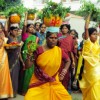
The 15 Journalists Putting Women’s Rights on the Front Page
Media coverage of maternal, sexual and reproductive health rights is crucial to achieving international development goals, yet journalists covering these issues often face significant challenges.
Opinion: It’s Time to Step It Up for Gender Equality
If we look at the headlines or the latest horrifying YouTube clip, Mar. 8 – International Women’s Day – may seem a bad time to celebrate equality for women.« Previous Page


To celebrate International Women’s Day on March 8, 2017, IPS has invited people from all quarters, from policy makers and political and cultural influencers to ordinary people with challenging daily lives, to offer their opinions, news and views on how the women of the world – able as we’ve seen to take to the streets and argue their own case – should navigate a time of such uncertainty.

The Week with IPS

NEXT STOP - SDGs
Tracking global progress towards a sustainable world
Tracking global progress towards a sustainable world
