Languages
Wednesday, October 28, 2026



News and Views from the Global South
International Women's Day

Addressing the Scars of Abuse: A Global Call to Protect Girls and Secure Their Futures
In March 2000, 15-year-old Binta Manneh was eager to test her skills at an out-of-town interschool sports competition. That night, as she stepped out to buy biscuits from a nearby shop, she encountered paramilitary officers – men sworn to protect the nation.
International Women’s Day, 2025
UN: Women’s Rights Face ‘Unprecedented’ Pushbacks
Girls and women worldwide are facing growing threats to their security and rights, from threats to their education access to severe poverty and multiple forms of violence. In 2024, nearly one in four governments worldwide reported a backlash to women’s rights, as a new report from UN Women reveals. 
Our Silence on Female Genital Mutilation in Sierra Leone Will Not Protect Us
Over 200 million women and girls around the world have undergone female genital mutilation (FGM). This is the partial or total removal of the external female genitalia for non-medical reasons.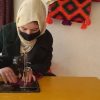
Stitching Hope: Two Afghan Women Rebuild Their Lives with Needle and Thread
Zainab and Mursal, two young Afghan women, had their education cut short by the Taliban. But instead of surrendering to despair, they picked up a needle and thread—transforming their skills into a thriving sewing business that now provides income and inspiration to other Afghan women.
International Women’s Day, 2025
In Zanzibar, Women Turn the Tide with Sponge Farming
In the early morning, as the tide pulls away, Zulfa Abdallah ties her scarf tightly around her head. She adjusts her goggles, places a snorkel across her forehead, and wades into the chest-deep waters off Jambiani village in Zanzibar. The Indian Ocean is her livelihood now, its waves offering a lifeline to women like her who confront challenges of poverty and climate change. 
International Women’s Day, 2022
Women Lighting the Way in Off-Grid Zimbabwe
Electricity transmission lines run through Chiedza Murindo’s home in Murombedzi, a small town in Zvimba district in Mashonaland West province, but her house has no electricity. That is the harsh reality for much of Zimbabwe’s rural population, where only 13% of households live without power compared to 83% of urban households. 
Women Lead the Fight for Housing in Brazil
"Here we empower women and we do not tolerate domestic violence, which we treat as our own, not as an intra-family, issue," says Lurdinha Lopes, a leader of the squatting movement in Brazil.
Rural Women Are Essential to the Struggle Against Hunger
Adelaida Marca, an Aymaran indigenous woman who produces premium oregano in Socoroma, in the foothills of the Andes in the far north of Chile, embodies the recovery of heirloom seeds, and is a representative of a workforce that supports thousands of people and of a future marked by greater gender equality.
Women’s Progress Uneven, Facing Backlash – UN Rights Chief
“The women’s movement has brought about tremendous change but we must also recognise that progress has been slow and extremely uneven and that it also brought its own challenges,” warned the UN High Commissioner for Human Rights Zeid Ra’ad Al Hussein.
Gender Disparity at UN: Three Out of 71, Zero out of Nine
The United Nations has frequently been accused of vociferously preaching gender empowerment and women’s rights to the outside world -- but failing miserably to practice what it preaches in its own political backyard.
Women in the Changing World of Work: Planet 50-50 by 2030
This year as the world commemorates International Women’s Day it is a time for all of us to celebrate and reflect on the progress made on Women’s rights globally. But more importantly, a day to call for an end to gender inequality in all its forms especially in the work spaces. Appropriately themed “Women in the Changing World of Work: Planet 50-50 by 2030” the commemoration comes against a backdrop of a world that is undergoing major changes with significant implications for women.
Let Women Speak and Give Them a Hearing
Basic rights always need champions, and that’s truer today than it ought to be as around the world we see an unwelcome pattern of reaction to modern complexities ranging from globalization and automation to austerity and dwindling wages. One alarming example is how the agenda of promoting women’s rights, so far from completion, is being pushed back rather than forward.
Time to Champion Women’s Empowerment: Implementation of SDGs in Bangladesh
The year 2015 was highly significant in relation to global convergence on ways forward towards achieving sustainable development at local, national, regional, and global levels.
Why a Feminist Foreign Policy Is Needed More than Ever
Lately, the world has tended to present itself in increasingly darker shades. In many places, democracy is questioned, women’s rights are threatened, and the multilateral system that has taken decades to build is undermined.
Barefoot Solar Warriors Take On Gender Injustice and Climate Change
On a summer morning in 2008, Magan Kawar decided to leave her village for a job. The very next day, her parents-in-law excommunicated her.
16-Hour Days for Zimbabwe’s Women
As the cock crows, Tambudzai Zimbudzana, 32, is suddenly awakened from sleep. She quickly folds her blankets and strides outside her three-room, sheet iron-roofed house in rural Masvingo.
Be Bold for Change–Empower Women, Empower Humanity
The world of work is changing for women across the globe and Bangladesh is no exception. Factors such as globalization, advancement in technology, and the digital revolution have ushered in new ways for women to enter into work. The theme for the International Women’s Day, 8 March, 2017, focuses on “Women in the Changing World of Work: Planet 50-50 by 2030” under which gender parity in the workforce is the critical prerequisite for inclusive and sustainable economic growth.
Unemployment and the Informal Economy – Key Challenges for Women in Latin America
The participation of women in the labour market in Latin America and the Caribbean has steadily grown over the last few decades. But in 2017, as unemployment and informal work are on the rise, there is a continued need to push hard for gender equality in order to create more and better employment for the 255 million women of working age in this region.
New Maternity Legislation in Cuba Ignores Fathers
A new set of regulations to strengthen the maternity rights of working women and encourage people to have children in Cuba were seen as a positive step but not enough, because they do not include measures to encourage more active participation in child-rearing by men.
New land rights are changing women’s world of work
International Women’s Day this year focuses on economic empowerment in the changing world of work. The vision is to achieve gender equality and empowerment of women and girls by 2030. Girls’ aged three will become adults with a legal right to work in 2030. Together, with those aged up to 10, these girls are the prime target for gender equality by 2030.
Time to Close the Gender Gap in Africa with Bold Actions
International Women's Day (IWD) is an important opportunity to celebrate the achievements of women and to be bold in promoting gender parity.Next Page »





To celebrate International Women’s Day on March 8, 2017, IPS has invited people from all quarters, from policy makers and political and cultural influencers to ordinary people with challenging daily lives, to offer their opinions, news and views on how the women of the world – able as we’ve seen to take to the streets and argue their own case – should navigate a time of such uncertainty.

The Week with IPS

NEXT STOP - SDGs
Tracking global progress towards a sustainable world
Tracking global progress towards a sustainable world
