Languages
Saturday, November 7, 2026



News and Views from the Global South
IPS UN Bureau Report

Indignity, Disease, Death—The Life of a Sewer Worker in Pakistan
A dark head emerges, followed by the torso. The balding man heaves himself up, hands on the sides of the manhole, as he is helped by two men. Gasping for breath, the man, who seems to be in his late 40s, sits on the edge, wearing just a pair of dark pants, the same color as the putrid swirling water he comes out from.
Turning the Tide: Health Community Turns to UNFCCC for Inclusivity
There is a rapid realization that climate change is impacting health, which is why the recently adopted World Health Organization's Climate Change and Health Resolution is considered pivotal.
Climate Finance: The Planet is Speaking, Listen and Respond with Justice
As the planet groans under record-breaking temperatures and extreme weather events, Africa, which is responsible for only two to three percent of global emissions, stands out disproportionately as the most vulnerable region in the world. António Guterres, the United Nations Secretary-General’s special address on climate action titled ‘A Moment of Truth’ said 2024 was the hottest May in recorded history, and that this marks twelve straight months of the hottest months ever. For the past year, every turn of the calendar has turned up the heat.
Lawmakers Deliberate on ICPD30, Water Security at Tajikistan Conference
It's been 30 years since the International Conference on Population and Development Programme of Action (ICPD30) was adopted in Cairo, transforming policy and thinking on population and development issues.
Climate Change, Pollution Push Karnaphuli Fishers Out of the Profession
Jishuram Das, a sexagenarian who was born in Jelepara, located in Chattogram, has been catching fish from the Karnaphuli River since his childhood. But nowadays, he often sits idle without going to catch fish, as their catches have drastically fallen.
Explainer: What You Need to Know About Climate Change and Blue Carbon
The area where land meets the sea, known as coastal ecosystems, could be the key to reducing the effects of climate change. What is blue carbon? Blue carbon refers to the carbon dioxide (CO2) stored within marine or coastal ecosystems worldwide. These ecosystems include coastal plants such as mangroves, seagrasses, and salt marshes, which trap CO2 in their seabeds.
A Nuclear-Armed European Union? A Proposal Under Fire
The continued veiled threats from Russia, warning of nuclear attacks on Ukraine, have prompted some politicians in Europe to visualize a nuclear-armed European Union (EU).
Blue Economy Must Benefit Fishing Communities in Global South, Says WorldFish Chief
The Global South is crucial for ensuring aquatic food security to feed the growing world population. It is imperative that blue economy initiatives benefit fishing communities in developing and small island nations, which are facing disproportionate impacts of climate change, says Dr Essam Yassin Mohammed, Director General of WorldFish, an international non-profit research organization based in Penang, Malaysia.
Quiet Revolution Underway as IFAD’s Innovative Solutions Rise to Global Rural Challenges
Technology and innovation are at the center of the International Fund for Agricultural Development’s strategy to fulfill its global mission to eradicate poverty and hunger in the developing world, IFAD’s President Alvaro Lario told IPS in an exclusive interview.
World Environment Day: UN Secretary-General Reckons with ‘A Moment of Truth’ on Climate Action
Coming at a time of record-breaking global temperatures over the last twelve months, the UN chief calls on world leaders, including the G20 and G7 members, to commit to their climate action goals as laid out in the Paris Agreement. Experts across multiple industries are also encouraged to do their part to mitigate the impact of the climate crisis.
Peace or No Peace, Israel Stands Accused of Genocide & War Crimes in Gaza
The Biden administration, which is frantically attempting to finalize a shaky peace agreement between Israel and Hamas, is being stymied by at least two far right-wing politicians in Netanyahu’s cabinet—Foreign Minister Bezalel Smotrich and National Security Minister Itamar Ben Gvir—and also by the Israeli Prime Minister himself who wants to totally eradicate Hamas before he agrees to a cease-fire.
Explainer: How India’s Political Parties Neglect Climate Change
As India's 968.8 million voters were gripped by election fever, the worst-ever heat wave held the country in its clutches.
Saudi Dissident’s Detention in Bulgarian Migrant Center Illegal—Rights Group
When Abdulrahman Al-Khalidi fled Turkey for Bulgaria after his fellow Saudi dissident Jamal Khashoggi was murdered, he thought he was heading for safety and sanctuary in the European Union. But, he says, he instead would end up facing the exact opposite.
Biodiversity Meetings in Nairobi End, All Eyes Are Now on COP16
Regions struggling to revise and update their National Biodiversity Plans aligning them with the Global Biodiversity Framework adopted at COP15, will now be given the technical and scientific support to develop and submit their plans on time. This was one of the key decisions of the 4th meeting of the Subsidiary Body on Implementation (SBI)—the crucial pre-COP meetings of the United Nations Convention on Biodiversity (UNCBD)—to review the status and challenges of implementing the Global Biodiversity Framework (GBF), which started on May 22 and ended in Nairobi late in the evening of May 29, 2024.
Commonwealth Secretary-General Calls for Concrete Finance Commitments for Small Island Developing States
Commonwealth Secretary-General Baroness Patricia Scotland is calling for concrete commitments to climate finance that will acknowledge the multi-dimensional vulnerability faced by the world’s small island developing states (SIDS).
Maggot Farming Creates Entrepreneurs, Saves Farming Costs in Zimbabwe
Three years ago, 43-year-old Benard Munondo was an "ordinary" Zimbabwean teacher at a local primary school, but now he has turned maggots into gold. Thanks to maggot farming, Munondo, who has never owned a home nor driven a car, now has both. In 2020, a week’s training on maggot farming changed his world.
UN, International Partners Coordinate Aid to Papua New Guinea Landslide Disaster
As the communities of Enga province in Papua New Guinea contend with the landslide that has devastated the residents of Yambani, the United Nations and its partners have been active on the ground addressing the immediate humanitarian needs, according to agencies.Papua New Guinea’s prime minister, James Marape, says “extraordinary rainfall” and weather pattern changes were responsible for multiple disasters in the Pacific Island nation this year, including the landslide last Friday.
Explainer: Why Is It Important for Venezuela to Adopt Escazú Agreement in the Coming Year?
Venezuela is one of the few countries outside the Escazú Agreement, a treaty in Latin America and the Caribbean ratified by 16 member countries that guarantees access to environmental information, public participation in environmental decisions, and environmental justice.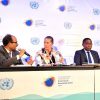
Uniting for Climate Action: UN, World Bank and UNDRR Leaders Push for Climate Finance, Justice and Nature-Based Solutions for SIDS
As leaders of Small Island Developing States (SIDS) meet for the 4th International Conference on SIDS in Antigua this week, top United Nations and World Bank officials are calling for urgent action to help SIDS tackle their unique challenges and plan for the next decade.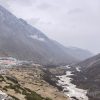
Explainer: Why GLOFs Are Growing Concern in the Himalaya
Phu Chhettar Sherpa, who worked as an icefall doctor (a Sherpa who fixes ropes for climbers) for seven years from 2015 to 2021 on Mt. Everest, vividly recalls his fear of possible flash floods after the huge earthquake in Nepal in 2015.
Small Island Nations Demand Urgent Global Action at SIDS4 Conference
“This year has been the hottest in history in practically every corner of the globe, foretelling severe impacts on our ecosystems and starkly underscoring the urgency of our predicament. We are gathered here not merely to reiterate our challenges, but to demand and enact solutions,” declared Antigua and Barbuda Prime Minister Gaston Brown at the opening of the Fourth International Conference on Small Island Developing States on May 27.« Previous Page — Next Page »





The Week with IPS

NEXT STOP - SDGs
Tracking global progress towards a sustainable world
Tracking global progress towards a sustainable world
