Languages
Friday, October 9, 2026



News and Views from the Global South
Kenya

The Price of Ignoring the Sexuality of Kenya’s HIV-Positive Youth
It all started with a fight, one that would change his life forever.

Taking the Knowledge of Doha Back to Kenya’s Rural Communities
The skyscraper Qatari capital city of Doha is a far cry from Cecilia Kibe’s home in Turkana district, a remote area in Kenya inhabited by mostly nomadic communities and pastoralists hit hard by the effects of climate change.
Political Provocateurs Expose Kenya’s “MaVultures”
A new website linking corruption and other scandals to high-ranking Kenyan politicians, created by a team of political provocateurs, has become one of the most-visited web pages in the country.

Kenyan NGO Pioneers HIV and Aids Phone Counseling
 Young people find discussing HIV and Aids and sexuality difficult.In Kenya, a non-governmental organization has made it easier for them by establishing a free tele-counseling service.

Kenyan Candidate Running Against Homophobia
During an interview at the Hilton Hotel in downtown Nairobi, David Kuria Mbote, Kenya’s first openly homosexual candidate for public office, stresses that his campaign will not be only about gay rights.
Q&A: Kenyan Women Set to Take on Men in Elections
As Kenya gets ready for voter registration this month, ahead of the country’s Mar. 4, 2013 polls, women’s rights organisations are hoping that the provisions for gender equality in the new constitution will mean significantly increased representation in the government.
Indigenous Seek Profits From Forests
Kenya’s Ogiek community, the indigenous group of hunter-gatherers who were evicted from the Mau Forest three years ago, say they will no longer sit by and watch logging companies profit from the resources of their traditional home while they live in poverty in tented camps around the forest without even the most basic of services, like sanitation.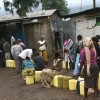
Kenya’s Water Wars Kill Scores
Water scarcity is fuelling deadly inter-ethnic wars that continue to claim lives in Kenya, according to government officials. And if nothing is done to educate communities on how to conserve the valuable resource, the situation will escalate, governance experts and environmentalists warn.
Men and Women Farming Together Can Eradicate Hunger
Three years ago, the residents of the semi-arid Yatta district in Kenya’s Eastern Province lived on food aid due to dwindling crops of maize that could not thrive because of the decreased rainfall in the area. That was until a local bishop, trying to find ways to prevent mothers from forcing their teenage daughters into prostitution, changed everything.
Kenyan Differences Melt With Gold
When Kenyan athlete David Lekuta Rudisha simultaneously became the first person ever to break the 1min 41sec mark in the 800m while also becoming the first person to set a world record at this year’s London Olympics on Thursday Aug. 9, he managed another first. He briefly united an ethnically divided nation.
Kenya Set to Run Away With Medals
On a chilly morning at the Moi International Sports Centre in Nairobi, the largest multi-purpose sports centre in Kenya, 800m world record holder David Rudisha looked like just another athlete.
East Africa’s Financial Integration Slow off the Starting Blocks
For months now East Africans have been expectantly waiting for an economic revolution to begin as they anticipate the launch of a new standardised payment system that will integrate the electronic transfer of money in the region. But continued delays in the launch of the system have economists fearing that the weak financial infrastructure here is hindering its implementation.
World Bank Approves Contentious Ethiopia-Kenya Electric Line
The World Bank has voted to approve funding credit for a major transmission line that would link Kenya to the controversial Gilgel Gibe III dam site in southern Ethiopia, pushing back against months of calls by local and international rights and environmental groups to keep out of the project.
Mapping out Climate Change Adaptation Plans on Kenya’s Airwaves
On a Wednesday morning in Mutitu-Andei township in Makueni County, one of Kenya’s driest areas, smallholder farmer Josephine Mutiso tunes into Radio Mang’elete 89.1 FM and listens as meteorological experts discuss the changes in rainfall patterns in the county.
OP-ED: The Paradox of Losing Life While Giving Life in Africa
Three years ago, the African Union began a continent-wide campaign to reduce the number of women who die when pregnant or giving birth.
KENYA: Microloans, Greenhouses Help Women Cope with Climate Change
At Gakoromone Market in Meru, in Kenya’s Eastern Province, Ruth Muriuki arrives in a pickup full of tomatoes and cabbages despite the scarcity of rainfall in the area, thanks to the greenhouse technology she uses on her farm – and microcredit.
Instant Infant HIV Diagnosis to be Rolled Out in Rural Kenya
Jesse Mtembe, a nursing officer at the Akithenesit Health Centre in Teso North, in Kenya’s Western Province, cannot wait for his centre to be connected to a new software system for diagnosing HIV in infants that is being developed in the country’s leading private university.
Political Will – and Money – Needed for Disaster Management
Managing the impact of increased disasters due to climate change will only be possible if such efforts are led by local communities, say non-governmental organisations working in climate change.
KENYA: Like a Fish Belongs to Water, the Ogiek Belong to the Mau Forest
The resettlement of evictees from Kenya’s Mau Forest remains a humanitarian and environmental concern for the country as more than 25,000 people continue to live in camps around the forest.
Kenya’s Two Female Supreme Court Justices Set to Work
Deputy Chief Justice of Kenya’s Supreme Court Nancy Baraza, who made history as the first woman appointed to the post, has begun overhauling the country’s judiciary.
HORN OF AFRICA: Human Trafficking on the Rise Amid Drought and Famine
Amina Shakir (not her real name) fled the drought and famine in Somalia for a better life in Kenya. But she did so illegally, placing her faith in the hands of a criminal network headed by Mukhalis or agents in Swahili. In the end her faith was misplaced as she was "sold" into employment upon finally reaching Kenya.« Previous Page — Next Page »





The Week with IPS

NEXT STOP - SDGs
Tracking global progress towards a sustainable world
Tracking global progress towards a sustainable world
