Languages
Monday, November 9, 2026



News and Views from the Global South
Millennium Development Goals (MDGs)
COSTA RICA: Luxury Homeowners Evade Solidarity Tax
The first attempt to collect a new tax on luxury homes in Costa Rica has ended in failure, in spite of the fact that it is a solidarity tax entirely devoted to building social housing for slum-dwellers.
HAITI: Displaced Women Face Double Jeopardy
Women's rights and development activists working in Haiti say that greater attention must be paid to the immediate needs of women and girls, as well as their role in the long-term reconstruction of the devastated country.
KENYA: Victory for Anti-Abortion Lobby
The threat by influential Christian leaders to mobilise a vote against Kenya's draft constitution if it does not explicitly prevent any expansion of abortion rights appears to have succeeded.U.S.: Obama Calls for More Development, Counterinsurgency Aid
U.S. President Barack Obama Monday called on Congress to approve major increases over the coming months in global health, development, and counterinsurgency assistance as part of a record 3.8-trillion-dollar 2011 federal budget.WORLD SOCIAL FORUM: Reconciling Social and Environmental Needs
One of the greatest challenges facing the world today is to attend to the urgent social needs of the planet’s population, and particularly the one billion people living "on the brink of survival", while dealing with the equally urgent demands of the environment.HEALTH: 10-Billion-Dollar Vaccine Pledge by Gates Hailed
The pledge by the Bill & Melinda Gates Foundation to provide 10 billion dollars over 10 years on vaccines aimed at reducing child mortality in the world's poorest countries was hailed by global health organisations around the world Friday.
WORLD SOCIAL FORUM: Sierra Leone Sees Opportunity to Rise Up
The World Social Forum held in Nairobi in 2007 inspired Sierra Leonean activists to organise themselves to demand things like housing, health care and greater accountability from their government. That inspiration was not sustained.HEALTH: Rotavirus Vaccine Making Headway in Africa
New vaccination programmes against rotavirus are starting to have a positive impact, and could eventually prevent hundreds of thousands of child deaths a year, according to a new report.
SWAZILAND: Dreams of Free Education Deferred
Ten-year-old Tembuso Magagula sat outside her classroom with her shoulders hunched against the cold today, tears streaming from her eyes. Her long-awaited first day of school had turned into a nightmare.
ARGENTINA: Slow Progress in Cutting Maternal Deaths
Some 300 women a year die in Argentina of complications during pregnancy, childbirth or the postpartum period, from largely preventable causes. Many of the deaths result from unsafe abortions.
ZIMBABWE: One Million Casualties of Land Reform
The seizure of large commercial farms - almost all white-owned - has continued despite the formation of a unity government in Zimbabwe. The country's farm workers say they are the biggest losers.
DEVELOPMENT: Yemen to Lead South in U.N. Negotiations
The republic of Yemen, categorised by the United Nations as one of the world's "least developed countries" (LDCs), will lead the largest single coalition of developing nations this year: the 130-member Group of 77 (G77).
Q&A: “U.S. Should Invest in New U.N. Women’s Agency”
One year after U.S. President Barack Obama's inauguration, how has his administration fared in terms of advancing an agenda for women's rights around the world?
MAURITIUS: These Women Chose the Sea
She cannot swim, but Marie-Claite Hector is not afraid of the ocean. The 53-year-old pushes her small boat with all her strength towards the blue lagoon, starts the engine, and sets out to sea.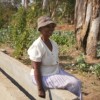
ZIMBABWE: Water Scarcity No Obstacle To Bulawayo Farmers
A project in Zimbabwe's second city, Bulawayo, is creatively using "marginal water" to ease water scarcity while helping residents provide food and earn a living.
GHANA: Quietly Extending Options to Women
Juliana Kweais has a small scar on her bottom lip, from the first time she witnessed an abortion. The sharp blow to her mouth was delivered by her grandmother, after the then-13-year-old Kweais had asked why her auntie had given "birth" to a bloody sack.
MALI: Small Farmers in the Carbon Market
Mohamed Abd Khibé is a caretaker at the acacia nursery in Dialoubé village, part of a project to sequester carbon in trees while simultaneously improving farmers' livelihoods.BRAZIL: ‘Colonisation Made Us Poor,’ Say Indigenous Peoples
"We weren't poor until colonisation made us poor," indigenous leader Marcos Terena said at the Rio de Janeiro launch of a United Nations report on the State of the World's Indigenous Peoples.
KENYA: Clash Over Abortion Rights in New Constitution
A harmonised draft constitution has now been handed over to Kenya's Parliamentary Select Committee. Influential Christian leaders are warning that the question of abortion could derail the constitutional review process.
MIDEAST: Will You Marry Poor Me
"If we had money we'd get married right away," says Samir*, 23. He has found his bride, but not the money to hold the wedding.LIBERIA: Paper Rights Flimsy Protection
Just a few metres outside the front door of a large white-washed courthouse in north central Liberia, Tete Garwo sells small plastic bags of cold water and passes time by pleading her case to thirsty customers. The 40-year old woman describes how she was forced out of her house by an abusive husband, then deprived of her half of the property.« Previous Page — Next Page »





The Week with IPS

NEXT STOP - SDGs
Tracking global progress towards a sustainable world
Tracking global progress towards a sustainable world
