Languages
Monday, November 9, 2026



News and Views from the Global South
Millennium Development Goals (MDGs)
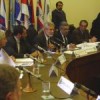
URUGUAY: Development from the Ground Up
Putting people, not the economy, at the centre of development by coordinating and designing initiatives based on the interests of the target populations themselves is the goal of the Support to Territorial Networks (ART) programme, which is growing year after year in Uruguay.ENVIRONMENT: Climate Change a Decisive Threat to Development
When the world's policy-makers of a bygone era were painfully slow in reacting to the economic crisis in the early 1920s, the British economist John Maynard Keynes famously warned: "In the long run, we're all dead."
MOZAMBIQUE: Technology Could Increase Food Harvest and Reduce Poverty
In rural Mozambique, increasing numbers of families are growing their own food and lifting themselves out of poverty.
SOUTH AFRICA: Law Failing Lesbians on “Corrective Rape”
"Women are getting killed in the Western Cape," says Ndumie Funda, who runs LulekiSizwe in her "cabin" in the township of Gugulethu near Cape Town.
CUBA: Will Legalising Multiple Jobs Bring Real Change for Women?
With a good job as a professional in Cuba’s public sector, Mariela Sánchez takes advantage of the flexible hours to take on another, part-time job and collaborate with a specialised publication.MOZAMBIQUE: Markets Too Far For Farmers’ Profit
August is peak tomato season in the Niassa province of northwest Mozambique, and farmers are bringing bucket-loads of tomatoes to sell to Nkwichi Lodge, one of the few buyers of local produce in the region.SWAZILAND: Bringing Men on Board to Reduce Maternal and Child Mortality
Swazi men have very little involvement in caring for newborns and mothers, yet they are critical partners in ensuring their well being.
Q&A: “Sanitation Is Inextricably Linked to Human Rights”
Some 1.6 million people die each year due to water and sanitation related diseases, millions of girls do not go to school because of lack of toilets, and prison detainees are denied access to adequate sanitation in some countries as a form of punishment, clear violations of the rights to health, education, and many other human rights.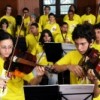
BRAZIL: Music Education Opens Doors to Social Inclusion
"It takes us an hour and 20 minutes to get there. We have to walk, because we can't afford the 30-minute bus ride. But the girls never miss their music classes, not even when they have to go without lunch because they don't have time to eat after school," says their mother, Maria da Cruz.CHILE: Activists Demand Humane Treatment for Women Who Abort
Some 30 members of the Chilean Health Ministry's Consultative Council on Gender and Women's Health have asked the government to enforce a directive ordering humane and compassionate treatment for women who have had an abortion.ZIMBABWE: Women’s Rights Activists Lobby to ‘Engender’ Constitution
Zimbabwe’s latest constitutional reform process has generated strong interest among activists in strengthening protection for women's rights. The early signs are that the drafting of a new constitution will not prioritise correcting legal, social and economic discrimination against women.NICARAGUA: Literacy Goal Met – Further Education Planned
After an intense two-year literacy campaign, Nicaragua has managed to reduce the number of people who cannot read and write to below four percent of the adult population, from nearly 21 percent.
PERU: Rural Highlands Communities Coming Online
Little by little, rural communities in southern Peru are beginning to take advantage of the internet to acquire new knowledge and increase their income. But the use of computers in rural areas faces numerous challenges, from illiteracy to fear of the unknown or questions about the sustainability of these new communications initiatives once they are left in local hands.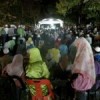
WOMEN-MALAYSIA: Top of the Class, Nowhere in Politics
Yet another by-election is over in Malaysia.EDUCATION-SIERRA LEONE: Schools in Crisis as Thousands of Teachers go Unpaid
Government’s refusal to pay the salaries of thousands teachers, while looking to recruit thousands more, has plunged the schooling system into crisis.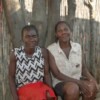
NAMIBIA: Garden Project Grants Modest Independence
Life in Omaruru? Put it this way: even the river that gives the town its name doesn’t always make it down. In this semi-desert part of Namibia, existence is a daily battle against poverty. A women’s gardening project is trying to change this.
SIERRA LEONE: Custom Slow To Yield To New Law on Inheritance
They told her after the 40-day ceremony to mark the death of her husband. M'ballu Kamara's in-laws said she would be taken care of by her husband's younger brother. It took her a moment to realise the "care" she was to receive would require that she become his third wife.ENVIRONMENT: Africa Builds United Position for Copenhagen
An African Union proposal demanding billions of dollars in compensation for the impacts of climate change is taking shape.
INDONESIA: 'Safe' Abortion Could Put a Brake on Women's Mortality Rates
Women's rights groups who are campaigning for widening the scope of abortion in Indonesia are calling for an amendment to a colonial era law that puts poor women at risk.
MALAWI: Activists Look Askance at New Mine
"We are serious about the integrity of the environment," says Neville Huxham, the country director for Paladin Energy Africa. "We're taking the uranium out of the ground, we're exporting it to be used for productive purposes, so we should be getting a medal for cleaning up the environment."
DEVELOPMENT: New Threats Aggravate Africa's Water Crisis
The widespread water scarcity in the African continent, impacting on the lives of nearly 300 million people, may be aggravated further by several new threats, including climate change, transboundary disputes and the negative fallout from military conflicts.« Previous Page — Next Page »





The Week with IPS

NEXT STOP - SDGs
Tracking global progress towards a sustainable world
Tracking global progress towards a sustainable world
