Languages
Saturday, October 3, 2026



News and Views from the Global South
Pakistan

Mob Killing Sparks Fresh Outrage Over Pakistan’s Blasphemy Laws
Aimal Khan, 27, an airman in Pakistan's Air Force, warns the country will end up in the throes of mayhem if the state does not do something about the abuse of the blasphemy laws. "People will use it to settle personal scores," he said.
Pakistan Moves to End Impunity for Rapists
Amid a wave of reforms to tighten the country’s laws on honour killings and sexual assault, on Feb. 2, the Sindh Assembly passed a law making DNA testing in rape cases mandatory in the province.
Pakistani Reporters in the Crosshairs
The Federally Administered Tribal Areas located on the Pakistan-Afghanistan border remain one of the most perilous places in the world to be a reporter, with journalists walking a razor’s edge of violence and censorship.
Migrant Workers in the Gulf Feel Pinch of Falling Oil Prices
In the Al Quoz industrial area of Dubai in the United Arab Emirates (UAE), a number of medium and large-sized buses can be spotted transporting workers clad in company uniforms to distant worksites early in the morning. In the evening or, in certain cases, late at night, these workers are brought back to labour camps in the same buses.
Biogas Brings Heat and Light to Pakistan’s Rural Poor
Nabela Zainab no longer chokes and coughs when she cooks a meal, thanks to the new biogas-fueled two-burner stove in her kitchen.
Transgender in Pakistan: A “Forgotten People”
At an open market in the district of Mehmoodabad in Karachi, Miss Bindiya Rana, 35, starts another day at work selling clothes. Living in one of the poorer parts of the city, like many others here she faces a daily struggle to make ends meet. Yet, of strong build with dyed hair and wearing heavy make-up, she and others like her face a bigger challenge than most.
Climate Change Leaves Kashmir’s Economy High and Dry
Trudging barefoot on his two-acre piece of land, 57-year-old Mukhtar Ahmad has little hope of growing any crops this year due to the sudden dry spell that has struck Kashmir’s winter.
Free Press a Casualty of Pakistan’s Terror War
Pakistan’s Federally Administered Tribal Areas (FATA) is widely viewed as one of the world's most dangerous places to be a journalist, with at least 14 killed since 2005 and a dozen of those cases still unsolved, according to local and international groups.
CPJ: Two Thirds of 2015 Journalist Deaths were Acts of Reprisal
Of the 69 journalists who died on the job in 2015, 40 per cent were killed by Islamic militant groups like Al-Qaeda and Islamic State. Startlingly more than two-thirds were targeted for murder, according to a special report by the Committee to Protect Journalists.
Afghan Refugees’ Right To Stay in Pakistan May Expire
“We aren’t happy here but cannot go back to our country because the situation there was extremely bad,” Ghareeb Gul, Afghan refugees told IPS.
Beekeeping Helps Pakistan Farmers Cope with Crop Losses
Farmers in the rain-dependent district of Chakwal in Punjab province of Pakistan are finding relief in beekeeping as the groundnut crop suffers a blow from shifting rainfall patterns.
Pakistan Moves to Stop Biodiversity Loss
Pakistan has framed a biodiversity conservation and protection plan aimed at stemming biodiversity loss, restoring ecosystems and promoting sustainable use of natural resources for the wellbeing of the present and the future generations.
Women Suffer Psychological Problems After Living Under Taliban
“My two sons were killed by Taliban militants mercilessly three years ago. My husband died a natural death two year back. Now, I am begging to raise my two grandsons,” Gul Pari, 50, told IPS.
Drinking Water Shortages Plague Pakistan Region
“We have to purchase water from the municipalities for our daily use. The water column has gone too deep and it is hard to pump out the commodity,” said Muhammad Shakir, a resident of Hayatabad, an upscale town in Peshawar, the capital of Khyber Pakhtunkhwa (KP).
Frequent Floods Intensify Migration, Food Security in Pakistan’s Mountainous North
Ishaq Khan shivers as he recounts an unfortunate flash flood in 2010, which covered his maize and potato crop with mud and washed away over a dozen fruit trees he planted 45 years ago.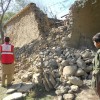
Disaster Strikes Pakistan’s Khyber Region, Aid Efforts Slow in Coming
Jauhar Shah lost everything. His house came tumbling down while his family was sleeping. He survived but his wife and daughter did not. The October 26 tremor measuring 8.1 Richter scale changed his life forever.
Pakistani Communities Reel in the Wake of Massive Earthquake
“My grandmother rushed inside the room to save me. Roof suddenly collapsed and she died,” said 12-year-old Mushtari Bibi.
Pakistan: Looking to Hydropower to Assure More Reliable Electricity
“We are lucky a local dam will give us cheap and uninterrupted power supply. Currently, we remain without electricity for 14-16 hours every day,” Muhammad Shafique, a schoolteacher in Upper Dir, told IPS.
Opinion: The Early History of Iran’s Nuclear Programme
Iran has had a nuclear programme since 1959 when the United States gave a small reactor to Tehran University as part of the “Atoms for Peace” programme during Mohammad Reza Shah Pahlavi’s reign. When the Non-Proliferation Treaty (NPT) was introduced in 1968 and entered into force in 1970, Iran was one of the first signatories of that Treaty.
Opinion: Nuclear States Do Not Comply with the Non-Proliferation Treaty
Article Six of the Non-Proliferation Treaty (NPT) makes it obligatory for nuclear states to get rid of their nuclear weapons as part of a bargain that requires the non-nuclear states not to acquire nuclear weapons. Apart from the NPT provisions, there have been a number of other rulings that have reinforced those requirements.
Pakistan One of the World’s First Safe Havens for Refugees
The United Nations has declared that 2015 is already “the deadliest year” for millions of migrants and asylum seekers fleeing war and persecution in their countries.« Previous Page — Next Page »


The Week with IPS

NEXT STOP - SDGs
Tracking global progress towards a sustainable world
Tracking global progress towards a sustainable world
