Languages
Wednesday, November 11, 2026



News and Views from the Global South
Politics
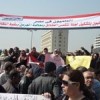
Egypt’s Fate Lies in a Square
Demonstrators who turned up in Cairo's Tahrir Square Friday in even larger numbers than on earlier days are from all walks of life: old men wearing traditional galibiyas, young people in jeans and T-shirts, and women of all ages wearing Islamic head scarves. The protesters, whose numbers across the nation are now estimated at more than one million and growing, shout variations of one slogan: "The people want the fall of the regime!"
Q&A: Mobilising Society Against the Death Penalty
Civil society is more coordinated and stronger at an international level today thanks to the Internet, and cyberspace can play an important role in efforts to eradicate the death penalty, says Federico Mayor Zaragoza.U.N. Avoids Tough Stance on Egyptian Crisis
The U.N. Security Council, which is empowered to intervene in crisis situations threatening international peace and security, has remained tight-lipped over the weeklong rioting, killings and mass demonstrations in Egypt - even as the political upheaval has spilled over into Jordan and Yemen.MIDEAST: Israelis Discover a New Love for Mubarak
Around the world, peoples revel in anticipation of the fall of a regime that has denied its citizens their basic rights. But most Israelis are haunted by nightmare scenarios of 'the day after', as if their country's stability was anchored in the continuity of the rule of Hosni Mubarak – not in peace.Migrants’ Strike Tests Greek Govt
A hunger strike by migrants is emerging as a test case for how far migrants can go to fight for rights, and how far the government can go to clamp down on them.MALAYSIA: Online Media Fight Internet Clampdown
A government plan to control online media has sparked widespread protest from journalists and lawmakers who say the move is a sign of the ruling party’s desperation as it prepares for a "do or die" general election.DEATH PENALTY: New Hope for Sentenced Malaysian
A young Malaysian’s legal battle to escape the hangman’s noose in Singapore is finding new hope. "He has a 50-50 chance of being spared," Madasamy Ravi, the lawyer appearing for 23-year-old Yong Vui Kong, said in a telephone interview from the city-state.EGYPT-U.S.: Obama Pressed to Pressurise Military
On the eve of massive planned protests dubbed "Day of Departure" in Egypt, continuing attacks by pro-government conspirators on anti-government protestors and roundups of human rights activists and foreign journalists are contributing to pressures on the administration of President Barack Obama to take a tougher line, including withholding military aid, toward the regime of Egyptian President Hosni Mubarak.OP-ED: The Fox Guarding the Henhouse
The extraordinary events of January 2011 in Egypt should prove one point for good: Democrat or Republican, liberal or conservative, U.S. presidents wish their favoured Arab states would forever remain nice, docile autocracies.U.S.-EGYPT: Neo-Cons Split on Mubarak
The ongoing crisis in Egypt has resulted in a rare split among U.S. hawks, as some leading neo-conservatives have called for Washington to help oust President Hosni Mubarak, while others have joined the Israeli government in quietly supporting Egyptian leader against protesters calling for his ouster.EGYPT: Mubarak Switches On Smear Campaign
The regime of embattled Egyptian President Hosni Mubarak has unleashed a media campaign to discredit pro-democracy protestors. That comes on the back of a violent crackdown by his supporters.Q&A: Hunger, Food Shortages Fuel Uprisings
The rise in food prices and growing hunger, one of the causes of the popular uprisings in Tunisia, Egypt and other countries in the Arab world, is due to financial speculation and not a lack of arable land, says Janaina Stronzake, a leader of Brazil's Landless Workers Movement (MST).
MEXICO: Fasting for Life in Land of Death
"The moral reserve of this country is low. People have let too many things happen without taking to the streets...and they continue to let them go by," peace activist Pietro Ameglio told IPS in this Mexican border city.
WORLD SOCIAL FORUM: Poverty without Borders
It's the land of freedom, of bright lights and burgers, where daring entrepreneurs arrive from across the planet in search of fame and fortune. The United States of America - the world's melting pot - has been a symbol of hope for centuries, but behind this vision of wealth and wonder is a tale often untold.
Iranian Shadow Touches Egypt
The young activists who began Egypt’s popular uprising admit the online campaign that turned into the country’s largest ever anti-government street demonstrations has far exceeded their expectations. But as the movement gains momentum, protesters are beginning to think about what kind of state will emerge if President Hosni Mubarak falls. And many are worried.MIDEAST: A Region in Flux, But Will Reforms Stick?
As the world watched nine days of largely peaceful demonstrations in Egypt degenerate into bedlam fueled by confrontational pro-government hoodlums wielding Molotov cocktails Wednesday, observers are tracking the regional contagion of popular, reform-driven uprisings and wondering whether they are enough to usher in real change.
WORLD SOCIAL FORUM: Kenyans Rekindle Old Flame
"One of the things we will be taking to Dakar," says Onyango Oloo, "is [knowledge of] how not to organise a World Social Forum."Bankers Bash on, Regardless
The World Economic Forum became a platform this year for bankers to seek to re-assert their traditional power. And once again, it became a forum - in contrast and even opposition to the World Social Forum due to begin in Senegalese capital Dakar next week – where the damaging effects of globalisation and the environmental consequences of unrestrained growth were pushed aside.
MIDEAST: Israeli Army Battles New Dangers Within
They chant, "One people, one draft!" They raise the flag of unified, across-the- board army enlistment – students and veterans wearing scars of past wars from a few dozen mainstream Zionist civil society organisations and youth movements.Arabs Push for Stability in Lebanon
With political crises in Egypt and Tunisia overshadowing other issues in the Middle East, the appointment of billionaire Najib Mikati as Lebanon’s new prime minister is winning regional support in the hope that the change will minimize instability in yet another Arab country. Many questions are arising, however, about the formation of the new government and how much clout Hezbollah will have over it.COTE D’IVOIRE: February Month of Action by African Union
A High Level Panel has been set up by the African Union to send a team of experts to Côte d'Ivoire and come up with a solution to the political impasse that would be binding on both incumbent Laurent Gbagbo and his rival for the presidency, Alassane Ouattara.« Previous Page — Next Page »





The Week with IPS

NEXT STOP - SDGs
Tracking global progress towards a sustainable world
Tracking global progress towards a sustainable world
