Languages
Tuesday, November 17, 2026



News and Views from the Global South
Politics
BOLIVIA: Amazon Indigenous Communities Plan 1,000-km March
The indigenous peoples of the Amazon region of Bolivia have declared themselves in a "state of emergency" and announced that on May 20 they will begin a 1,000-kilometre march to La Paz to demand that the government defend their territory from being plundered by oil, logging and mining companies.
MIDEAST: Israel, Iran Talking War to Ward Off War?
Suddenly, the Middle East is awash with talk of war this summer. Or, is the talk of war merely meant to keep war at bay?
SWAZILAND: Activist’s Funeral Postponed As Police ‘Suppress Terrorism’
The Swazi government is determined that neither in life nor death will Sipho Jele's political colours be flown publicly.SRI LANKA: Tourists Return to Paradise Isle a Year After War’s End
A year since Sri Lanka’s bloody civil war ended on May 18 last year, tourists are returning in huge numbers to a popular beach destination located over 300 kilometres from where the last battles were fought.
ECONOMY: Africa Has Less Say After Changes in World Bank Voting
The World Bank has described its recent increase of 3.13 percent in the voting power of emerging economies as a reform "to enhance voice and participation of developing and transition countries". But the shift has actually decreased a third of African countries’ share of votes.U.S.: Overflowing Prisons Spur Call for Reform Commission
Despite the lacklustre performance of so-called "blue ribbon commissions" in the United States over the years, sponsors of the latest proposal - the National Criminal Justice Commission - are optimistic that it will become a reality and that its recommendations will be taken seriously by the president, Congress and the U.S. public.
THAILAND: Violence, Uncertainty Follow Gov’t Crackdown
Burning tyres and buses with plumes of smoke billowing from them. Sniper shots and grenade attacks. Deaths and injuries. No-go zones in the Thai capital.
San Fight Land Grab in Namibian Park
Pensioner Makena Makanga slowly savours a piece of manketti fruit unaware that the tree it came from will soon be chopped down and mulched along with the rest of her forest to make way for a massive agribusiness project.GREECE: Turks Bearing Gifts
The first visit in six years of a Turkish prime minister to Greece has been widely hailed as a historical rapprochement after a long period of mutual bitterness.THAILAND: Media Grapple with Questions of Credibility, Bias
Two months into Thailand's anti-government protests and as an army-led blockade is underway to end them, the media are struggling with challenges to their credibility and perceptions of bias in the South-east Asian country's gravest political stalemate in years.Regional Commission Against Impunity in Central America
The countries of Central America's so-called northern triangle, El Salvador, Honduras and Guatemala, are studying the idea of setting up an international commission against impunity – an initiative that has the support of human rights organisations.MIDEAST: New Solution for the Old City?
As the 43rd anniversary of the "reunification" of Jerusalem is observed this week in Israel, marking Israel's annexation of the eastern portion of the city, a new initiative that calls for a sustainable and unified solution for the historic city is generating a buzz in Washington.PERU: Gas Exports Will Cause Local Shortages, Governors Protest
The Peruvian government refuses to change the contract it signed with Consorcio Camisea to export natural gas to Mexico, as demanded by the governors of the southern provinces of Arequipa, Cuzco, Moquegua, Puno and Tacna, who are worried about shortages of local supplies.Shielded by U.S. Umbrella, Israel Joins Rich Man’s Club
With tongue firmly entrenched in his cheek, an Arab diplomat recounts an Israeli cabinet meeting interrupted by an aide rushing in with the latest statistics on the state of the economy.
COLOMBIA: “Death Threats Have Become Routine,” Says Jesuit Priest
The death threats against Catholic priest Javier Giraldo painted on walls in the Colombian capital may have come from far-right paramilitaries, the military, drug trafficking gangs or groups with interests in African oil palm plantations.
AFRICA: Military Manoeuvres in the Sahel
Military exercises are under way in the Sahel region as part of the United States-led Trans-Saharan Counter Terrorism Partnership. Participating militaries are enthusiastic, but civil society cautions that force may not be enough to ensure regional security.MIDEAST: Divided We Celebrate
"What kind of celebration is this," said Bat-El, 22, engulfed in a sea of blue- and-white Israeli flags in a huge procession marking Israel's self-celebrated Jerusalem Day, the anniversary by the Hebrew calendar of Israel's conquest of East Jerusalem 43 years ago during the 1967 Arab-Israel war.THAILAND: Lese Majeste Cases Rise, But Public in the Dark
When Wipas Raksakulthai was arrested last month for violating this kingdom’s draconian lese majeste law, he could have consoled himself with the thought that at least his case was readily picked up by the local and foreign media.Iraqi Christians Cling to Their Faith in Jordanian Exile
As the 2003 United States-led invasion of Iraq began, the country’s Christians started streaming across the border into neighbouring Jordan. Today most of them continue to live here in abject poverty with no hope of ever returning to the land of their ancestors.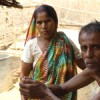
RiGHTS: Villagers Pay Dearly for India’s War with Maoists
Almost a year on, Dipali Sahu still recalls with horror the day an operation by the policemen and paramilitary troopers began here in June last year to take back control of the vast swathes of eastern India captured by the Maoist rebels.Treaty Aimed at Banning Nukes Remains Grounded
The world's anti-war activists, including parliamentarians, civil society groups and diplomats, have succeeded in creating international treaties to ban a wide array of deadly weapons: anti-personnel landmines, blinding laser weapons, cluster munitions, dum-dum bullets and chemical and biological weapons.« Previous Page — Next Page »


The Week with IPS

NEXT STOP - SDGs
Tracking global progress towards a sustainable world
Tracking global progress towards a sustainable world
