Languages
Wednesday, November 18, 2026



News and Views from the Global South
Politics
CENTRAL AMERICA: Honduras Pushing for End to Isolation
More than nine months after the coup d'etat that overthrew the government of Manuel Zelaya in Honduras, the country is still isolated and remains outside of the Central American Integration System (SICA) and the Organisation of American States (OAS).POLITICS-NEPAL: Himalayan Nation Split Over Federalism
Agreeing to turn Nepal from a constitutional monarchy into a federal state is turning out to be much easier than agreeing on exactly what kind of federal system is best for this Himalayan country.CHINA: Slowly, Transparency in Public Funds Taking Root
For six decades, governmental budgets and spending in China have remained classified and inaccessible to the general public. Yet this may be about to change.
Q&A: Africa’s Mid-2000s Economic Boom Fuelled Capital Flight
The African continent lost 854 billion dollars due to illicit financial flows during the 39-year period from 1970 to 2008.Anti-Government Sentiment Mounting in U.S.
Public hostility toward the government has reached record highs, according to a major new survey released on the 15th anniversary of the bombing of the Oklahoma City federal building, the worst deadliest terrorist attack on U.S. territory before 9/11.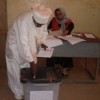
SUDAN: Election Results Expected Soon
Poor access to telephone networks and lack of roads in some areas of South Sudan is delaying the submission of voting results to the election commission.
Latin America Feels the “Garzon Effect”
Latin America owes Spanish Judge Baltasar Garzón, who is facing prosecution in his country for trying to investigate Franco-era abuses, for the groundbreaking invocation of legal principles that have led to trials for crimes against humanity in Argentina, Chile, Guatemala, Peru and Uruguay, human rights lawyers say.U.S. Image Brightens Overseas
Global perceptions of the U.S. have improved over the past year but ratings of many other countries, including Britain, Japan, Canada and the European Union, have declined over the same period, according to a poll released Sunday.Opposition Mounts to Carbon Compensation Schemes
The World People's Conference on Climate Change and the Rights of Mother Earth, which opened Monday in Bolivia, will reflect vigorous resistance to financial compensation for forest conservation in return for permits to emit greenhouse gases, activists told IPS.New Web Portal Tracks Airlines Delivering Aid and Arms
A new information portal launched Monday has been described as the world's first internet clearing house aimed at tracking unethical air cargo carriers transporting humanitarian aid and relief supplies to war zones while simultaneously smuggling arms and narcotics - at times, to the same conflict areas.Obama Weighs Choices for Sharply Divided High Court
With the resignation of Supreme Court Justice John Paul Stevens, U.S. President Barack Obama faces an opportunity that may become a migraine - or vice versa.HONDURAS: Truth Commission Under Fire from All Sides
The Truth and Reconciliation Commission set up to investigate the June 2009 coup that ousted Honduran president Manuel Zelaya will begin its work in May under the sceptical watch of a wide range of observers, from human rights organisations to right-wing political sectors.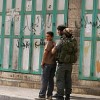
MIDEAST: Custodial Death Marred Palestinian Prisoners Day
A young Palestinian man died in Israeli custody as hundreds of Palestinians took to the streets of villages and towns across the West Bank and Gaza to commemorate Palestinian Prisoners Day on Friday, Apr. 16.CHINA: In Latest Quake, Poorly Built Schools Haunt Gov’t – Again
Collapsed buildings, homes turned to rubble, students killed or trapped in the wreckage of schools and dormitories – last week’s 7.1-magnitude earthquake in western China’s remote Qinghai province offered chilling reminders of the Sichuan earthquake that killed almost 90,000 people in 2008.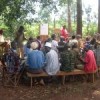
AFRICA: Foreign Investors Safeguarded From Obligations to Locals
Parts of the Tana Delta on Kenya’s northern coastline are being leased to foreigners to grow food and bio-fuels for export. Civil society organisations are worried about such deals as they are done without public consultation while safeguarding investors from requirements that could benefit local communities, such as technology transfer.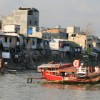
PHILIPPINES: Revival of Filthy River Flows from Changed Habits
While more developed countries consider waterfronts prime property, most Filipinos have regarded rivers and creeks as their "backyard" and sewage system.
Q&A: ‘U.S. Can Stop Israeli Settlements’
Ziad Abuzayyad was Palestinian cabinet minister responsible for Jerusalem affairs and a member of the Palestinian Legislature. During previous rounds of peace talks with Israel he was a leading member of the Palestinian negotiating teamNinety-Four Percent of Kandaharis Want Peace Talks, Not War
An opinion survey of Afghanistan's Kandahar province funded by the U.S. Army has revealed that 94 percent of respondents support negotiating with the Taliban over military confrontation with the insurgent group and 85 percent regard the Taliban as "our Afghan brothers".
THAILAND: Anti-Gov’t Protesters Use Cultural Taboo as Weapon
"I know the word; I understand it; I love it," street artist Chuwit Kunasawat said, using his pencil-thin brush, dipped in deep red ink, to paint on the right cheek of an anti-government protester.POLITICS-HUNGARY: Rightward Swing Has Fascist Overtones
In the autumn of 2006 Hungary was rocked by a series of anti-government protests triggered by the release of a tape in which then prime minister Ferenc Gyurcsány confessed to his Social-Democratic Party (MSZP) having lied to win elections that year. Now it is payback time.
Migrants Risk Everything in Arizona Desert Crossing
As he drops his last purification tablet into a pail of swirling, murky water, Sergio, 26, stares out toward the desert. Recently deported from Arizona, where he has a young child and where he has lived for the majority of his life, he explains, "I have to return, it's my home."« Previous Page — Next Page »


The Week with IPS

NEXT STOP - SDGs
Tracking global progress towards a sustainable world
Tracking global progress towards a sustainable world
