Languages
Sunday, November 8, 2026



News and Views from the Global South
Politics
MEXICO: Maquiladora Factories Manufacture Toxic Pollutants
Since the 1960s, maquiladoras or export assembly plants have been the cornerstone of Mexico's strategy to attract foreign direct investment and boost exports. But the environmental and social costs have been high.OP-ED: Expanding Deserts, Falling Water Tables and Toxins Driving People from Homes
People do not normally leave their homes, their families, and their communities unless they have no other option. Yet as environmental stresses mount, we can expect to see a growing number of environmental refugees. Rising seas and increasingly devastating storms grab headlines, but expanding deserts, falling water tables, and toxic waste and radiation are also forcing people from their homes.LIBYA: No ‘Mission Accomplished’ Claimed in Washington Yet
While the apparent end of Muammar Gaddafi’s 42-year reign over Libya was greeted with considerable satisfaction here Monday, no one was prepared to declare "mission accomplished", particularly given the looming questions around what happens next.PORTUGAL: Young Professionals Flee Crisis – to Former Colonies
Thousands of young people from Portugal are joining an emigration flow that never trickled to a stop but is turning into an exodus now due to the severe economic crisis plaguing this southern European country. And the main destinations of those looking for a better future abroad are former colonies, especially Brazil.POLITICS: IBSA Opposes Measures Against Syria
Members of the emerging economy grouping known as IBSA - India, Brazil and South Africa - have joined China and Russia in opposing measures against Syria.GUATEMALA: Activists Worried that Clenched Right Fist Will Take Power
Activists in Guatemala are alarmed at the prospect of a victory by the right in the September general elections, recalling the dismal records of past regimes in the areas of human rights, the economy and justice.Pockets of Resistance As Rebels Claim Tripoli
The head of Libya’s National Transitional Council (NTC) has announced the end of the Muammar Gaddafi era, while sporadic fighting continued across the capital, Tripoli.HAITI: Martelly Still Unable to Appoint New PM
Almost three months since he was sworn in as the country’s president, Michel J. Martelly has already attempted to appoint two prime ministers to guide his government. Bernard Gousse, a minister of justice under the Gérard Latortue dictatorship (2004-2006) and businessman Daniel Rouzier, were both rejected by Haitian lawmakers.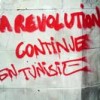
Arab Spring Slips Into Tunisian Fall
Seven months after Tunisia’s historic uprising which saw the ouster of long-time dictator Zine el-Abidine Ben Ali and gave birth to the region’s Arab Spring, many Tunisians are losing confidence in the progress of their revolution.INDIA: Civil Society Shows Its Muscle
In his Independence Day address to the nation on Aug. 15 Indian Prime Minister Manmohan Singh vowed to fight corruption, but nationwide agitations since then demanding an effective ombudsman to check graft showed an unconvinced public.THAILAND: Yingluck Will Need Luck and Pluck
As she stepped into her role as an ingénue on the macho stage of Thai politics, the backers of Yingluck Shinawatra, the country’s first woman prime minister, had hoped she would enjoy a honeymoon period.EGYPT: The Mubarak Show Goes Into Hiding
In a shuttered Cairo café, Egyptians crane their necks to watch the courtroom drama unfolding on a small television screen mounted high on the wall. The camera pans across the crowded courtroom and zooms in on a frail old man lying on a stretcher inside the caged defendants' box. Part Godfather, part Hannibal Lecter, he is the feared head of a powerful family at the centre of a web of violence and corruption. Beside him are his two sons, one known for shady business deals, the other groomed to head the cartel.Sri Lanka Ducks International Probe
Although the Sri Lankan government has evaded calls for an international probe into alleged excesses while militarily defeating Tamil separatism in 2009, it may yet be called to account at the September session of the United Nations Human Rights Council (UNHRC).Talks Bog Down Ahead of U.N. Health Meet
The first High Level Meeting on Non-Communicable Diseases is scheduled to take place one month from now, but U.N. member states are lagging in preparing for it, an alliance of civil society organisations says.
Q&A: “Put Yourself in Our Shoes, Mr. President”
"I repeat: there will be no peace talks without concrete actions. Words are not enough," Colombian President Juan Manuel Santos said on a visit to Argentina this week. Earlier, in Chile, he said for the first time since taking office a year ago that he was "willing" to eventually sit down to talks with the guerrillas.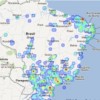
LATIN AMERICA: Citizens Chart Crime Using Online Maps
"I was walking down the street, talking on my cell phone, when a guy on a motorbike came by and grabbed the phone out of my hand. I ran after him but I couldn't catch him. He had probably been following me."China May Not Be Long-Term Engine of Latin American Growth
China's burgeoning presence as a leading trade and investment partner in Latin America is still an overriding concern for some observers in Washington, as the East Asian giant appears to have changed the focus of economic development in countries south of the U.S.'s border.SYRIA: Driving Into a Divided Land
Scores of buses carrying Syrians out of the country are waiting in uneven lines on the Lebanese-Syrian border for their paperwork to be processed. There are no Arab or Western tourists eager to cross to the other side, usually seen in hordes this time of year.
MIDEAST: Palestinians Strike to Seek Historic Agreement
Nestled between rolling hills just outside of Jerusalem, a dozen Palestinian workers have escaped the scorching summer heat in the shade of a makeshift tent, where they anxiously wait to sign what would be the first collective bargaining agreement between Palestinian workers and an Israeli employer.SYRIA: U.S., EU Call for Assad’s Ouster
After tiptoeing toward demanding the ouster of Bashir Al-Assad over the last several months, U.S. President Barack Obama Thursday finally jumped over the line with his first explicit call for the Syrian president to resign.
Q&A: Native Peruvians ‘More Marginalised Despite Growth’
For the first time, a representative of the indigenous communities in Peru's Amazonas region is sitting in Congress: Eduardo Nayap, an Awajún leader who played a central role in the lengthy protests against laws that opened up native territories in the rainforest to oil, mining and logging companies.« Previous Page — Next Page »





The Week with IPS

NEXT STOP - SDGs
Tracking global progress towards a sustainable world
Tracking global progress towards a sustainable world
