Languages
Monday, November 9, 2026



News and Views from the Global South
Poverty & MDGs
Bolivian President Denounces Water Privatisation
"Water is life. Water is humanity. How could it be part of the private business?" asked Bolivian President Evo Morales Wednesday, stressing the social and economic consequences of the growing trend of private ownership over water supply and delivery systems in many parts of the world.EL SALVADOR: Growing Tension Between Funes and Ruling Leftwing Party
Two years into his term, El Salvador's first-ever leftwing president, Mauricio Funes, finds himself more and more distanced from the Farabundo Marti National Liberation Front (FMLN) that brought him to power and from the promises of change that got him elected, analysts say.
EAST AFRICA: ‘It’s Not a Heartless Mother Leaving a Child Behind, Just One Who Wants to Survive’
On the road between the Kenyan and Somali border lie the dead bodies of children who have succumbed to the famine and the hardships of making the journey from their drought-stricken villages to Kenya.SOUTH SUDAN: Row Over Exorbitant Fees for Pipeline Use
Less than three weeks after gaining independence, South Sudan is embroiled in a row with Sudan over pipeline fees charged by the latter to export oil.LATIN AMERICA: Social Front Against Water Privatisation
Civil society organisations in Latin America have begun to coordinate joint actions in the region to curb what they see as a tendency towards privatisation, while protesting what they call a range of "subtle" ways of undermining public control of water.CENTRAL AMERICA: Families Downsizing
María José Aceituno, who works at a public relations firm in the Guatemalan capital, has two children and says she is not having any more, in order to safeguard the financial position and security of her family. "I would rather have two happy children than 10 who are dissatisfied," she said.
SWAZILAND: Irrigation Waters the Hopes of a New Village
A transboundary water project is reinforcing the fight against food insecurity and poverty along the Komati River which flows through South Africa, Swaziland and Mozambique.U.N. Puts Spotlight on Youth in Tough Global Climate
Government leaders, U.N. officials and representatives from over 400 hundred youth organisations concluded two days of talks Tuesday on such issues as the importance of youth in eradicating poverty and how to stabilise the global economic system in the face of myriad challenges.
RWANDA: Women Parliamentarians Outnumber Men, But Gender Budgeting Still Needed
Rwanda is the first country in the world where women outnumber men in parliament, with women occupying 45 out of 80 seats. However, despite this, experts say that the country still needs a gender equality perspective on how national resources and programmes are implemented.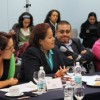
MEXICO: Women Journalists Face Double Threats
The murder of journalist Yolanda Ordaz, whose body was found Tuesday in the eastern Mexican city of Veracruz, once again threw into relief the dangers that reporters face in this country, which in the case of women are compounded by discriminatory and sexist treatment.U.S.: Laws “Not Enough” to Tackle Violence Against Native Women
Juana Majel Dixon, first vice president of the National Congress of American Indians, said earlier this year that, "Young women on reservations live their lives in anticipation of being raped...They talk about 'how I will survive my rape‚' as opposed to not thinking about it at all."
NICARAGUA: Court Downgrades Rape to “Fit of Passion”
The rape of a young woman that has become a symbolic case in Nicaragua was ruled a "crime of passion" by the Supreme Court in a verdict that is suspected to have political overtones.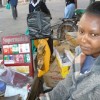
KENYA: Gender Responsive Planning and Budgeting at Work
For the first time ever, the Kenyan finance minister has allocated almost four million dollars, about 3.6 percent of the primary education budget, to provide free sanitary pads to schoolgirls.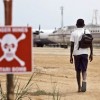
Worrying Dysfunction in DR Congo Airports
Major operational shortcomings are behind the recent spate of crashes at airports around the Democratic Republic of Congo, raising questions about safety for aircraft and passengers in the central African country.SWAZILAND: Economic Crisis Means Short Supply of ARVs
Swaziland’s economic crisis has affected its ability to provide healthcare as the country’s buffer stock of antiretrovirals (ARVs) has fallen below the prescribed three-month supply.Right to Water Still a Political Mirage
When the international community commemorates the first anniversary of a historic General Assembly resolution recognising the right to water and sanitation as a basic human right, there will be no joyous celebrations in the corridors of the United Nations, come Jul. 28.
HEALTH-AFRICA: Improving Sanitation, Still a Long Way to Go
When Callixte Munyabikari, a potato farmer from Gakenke in northern Rwanda, was rushed to a regional hospital after he fell ill with diarrhoea, he thought it was just a bad case of food poisoning.
Q&A: Challenge Men To Share Political and Economic Power
Bineta Diop, director of the non-governmental organisation Femmes Africa Solidarité, is at the forefront of the fight for better protection of women in conflict zones and their integration in peace processes.SENEGAL: Fish Farming Breathes New Life Into Rural Economy
July signals the start of three months of intense activity for residents of the seven villages around the small dam at Sébi Ponty. The dam was stocked with tilapia in 2006, and aquaculture is proving to be a vital economic activity for youth in the area.
MALAWI: Fuel Shortages Ignite Violent Nationwide Protests
In light of the recent spate of protests in Malawi, government should rethink its policy to devalue the local currency, economists say.
HORN OF AFRICA: Poor Attention to Forecasts to Blame for Famine in Somalia
The world had an opportunity to save thousands of lives that are being lost in parts of Somalia due to the famine, if only the donor community had paid attention to the early warning systems that predicted it eight months ago.« Previous Page — Next Page »





