Languages
Friday, November 13, 2026



News and Views from the Global South
Poverty & MDGs

AUSTRALIA: Homeless World Cup – More Than Football
While the action has been fast and furious among the 56 teams competing in the 2008 Homeless World Cup - a football tournament in which homeless and marginalised people from around the world represent their respective nations - the problems associated with homelessness are never too far away.TANZANIA: Poverty Reduction Slow Despite Economic Growth
Tanzania is lagging behind on key development goals for safe water, income and health, even though the east African nation has benefited from a growing economy over the last few years, according a newly released household budget survey.DEVELOPMENT-INDIA: Celebrating Sanitation
Everywhere there was the seductively deep bass sound of Indian drums as crowds of local villagers shouted ‘Jai Swachhta’ (long live cleanliness) and punched the air.
DEVELOPMENT-SOUTHERN AFRICA: Harnessing the Zambezi
If the socio-economic development goals of the eight countries that share the Zambezi River basin are to be met, countries along the river should quickly implement plans towards managing water resources in an efficient, effective and sustainable manner.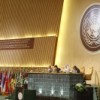
DEVELOPMENT: ‘No Bailout Plan for the Vulnerable’
"Good but not enough!" "Missed opportunity!" "Talks fail to deliver!" These were some of the reactions from civil society as the U.N. Financing for Development (FfD) talks drew to a close in Doha, Qatar, on Tuesday.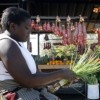
POVERTY-ZIMBABWE: Gardening Lifeline for Urban Women
Growing and selling vegetables has become a lifeline for 41-year-old Mavis Dube at a time when millions of Zimbabweans face increasing poverty and hunger after years of debilitating economic recession.DEVELOPMENT-LATAM: The Greater the Solidarity, the Lower the Cost
Football in Belize does not aim for international achievements, but that does not matter to the environmental group that uses the sport to recruit children and young people to fight for the protection of local biodiversity under threat.
DEVELOPMENT: Change Comes To Villages in Uganda
In her village they call her ‘councillor’. But Jenipher Namugwere is no ordinary councillor elected by the people to represent them in the local council.HEALTH-AFRICA: Breaking the Cycle of HIV Transmission
According to the United Nations Children's Fund, early diagnosis and treatment greatly increase survival rates for HIV-positive newborns. but fewer than one in ten infants born to HIV-positive mothers in 2007 was tested for HIV within two months of birth.DEVELOPMENT: Rights In Times of Crisis
For the past three decades, indebted developing countries have been forced by the International Monetary Fund (IMF) and the World Bank to deregulate financial and labour markets, privatise national industries, abolish subsidies, and reduce social and economic spending.DEVELOPMENT: An Opportunity to Create a New Financial Architecture
The most severe financial crisis since the Great Depression needs massive economic stimulus packages that are coherent and linked with sustainable development imperatives, asserts a new report by top U.N. economists released Monday on the sidelines of the Monterrey Review conference in Doha.Q&A: “Young People Are Invisible Until They Become a Problem”
Latin American and Caribbean countries with specific laws and policies on young people must now move on to concrete actions, international consultant Dina Krauskopf told IPS in this interview.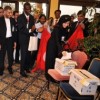
DEVELOPMENT: 'G192' Urged to Put People in Doha Talks
The demand is seemingly simple. ‘Vote for democratic, people-centred development’, advise civil society at the ongoing inter-governmental review of the Monterrey Consensus in Doha, Qatar.Q&A: "How Are We Going to Sustain Gender Approaches?"
The negative aspects of Africa's experience with structural adjustment programmes beginning in the 1990s have been well-documented - facing high debt loads, African governments agreed to liberalise their economies, privatise public enterprises, and sharply reduce social spending with often painful effects on the most vulnerable.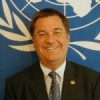
Q&A: “Less Funding Could Lead to Millions of AIDS Deaths”
The global economic crisis is threatening to undermine yet another key development goal set by the United Nations: reversing by 2015 the AIDS epidemic still devastating millions of people worldwide.AUSTRALIA: Do More Regionally to Stop HIV/AIDS Gov’t Told
While HIV infection rates remain relatively low in Australia, the peak non-governmental organisation representing the country’s community-based response to HIV/AIDS wants the government to do more to fund prevention measures here and in the region to counter rising infection rates.
UGANDA: On the Global Market Track to Prosperity
Uganda's finance ministry has ambitious plans to reduce the country’s donor dependence. With foreign funds accounting for almost 50 percent of the national budget, officials believe a slew of measures announced in the 2008/09 budget could bring that down to about 30 percent.PARAGUAY: Uncontacted Ayoreo Threatened by Deforestation
Large swathes of native forest have been turned into pasture land in the northern part of Paraguay’s semi-arid Chaco region, as large Brazilian cattle ranchers expand their property in this country.Q&A: Escalating Violence Against Women in Swaziland
Still wearing a campaign t-shirt with the slogan "FED UP: with violence against women", Dlamini-Shongwe, the public relations officer for the Swaziland Action Group Against Abuse (SWAGAA) is fresh from the Nov. 25 launch of the16 days activism against gender-based violence at Jubilee Park in Manzini.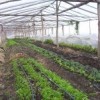
SOUTH AMERICA: Young People Want to Give Farming a Chance
Unlike so many in their grandparents’ generation, today’s young farmers in South America’s Mercosur trade bloc say they want to live off the land where they were born, and not move to cities where there is no longer a place for them.
LATIN AMERICA: Future of Private Pension Funds in Doubt
Pension funds in Latin America have suffered sometimes drastic losses as a result of the global financial crisis. Argentina decided to nationalise its private pension funds, and in Chile, Colombia and Mexico there are voices urgently calling for reforms.« Previous Page — Next Page »


