Languages
Tuesday, July 28, 2026



News and Views from the Global South
SDGs

Musical Toilets for a Few While 2.5 Billion Lack Basics
Even as the United Nations laments the fact that more than 2.5 billion people in the developing world are still without adequate sanitation, both Japan and South Korea have gone upscale: offering automated toilets and piped-in classical music.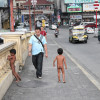
Report Finds Pattern of Inequity in Development Aid
Despite global efforts to provide development aid, the world’s poorest are getting poorer, says a new report by the Catholic Agency for Overseas Development (CAFOD).
Q&A: “The Middle Class Is Making Its Voice Heard in Brazil Today”
The protests on the streets of Brazil are the result of the expansion of the middle class, who want their demands to be heard, said Rebeca Grynspan after visiting the country to inaugurate the World Centre for Sustainable Development.
China Leads Battle Against Poverty, Says U.N.
The United Nations has singled out China - the world's most populous country with over 1.3 billion people - as one of the key success stories in the longstanding battle against poverty.
Keeping Food Security Central to U.N.’s Post-2015 Agenda
As the United Nations prepares to launch an ambitious post-2015 development agenda, the message from one of its Rome-based agencies is unequivocal: the eradication of hunger and malnutrition should remain a high priority when the current Millennium Development Goals (MDGs) end in 2015.
OP-ED: Are We at the Tipping Point for Ending Hunger and Malnutrition?
Author Malcolm Gladwell draws on the science of epidemiology in his book "The Tipping Point" to explain how ideas spread through a population, in the same way as an infectious disease can proceed from a few cases to a full-blown pandemic.
Q&A: Women Hardest Hit by Growing Austerity Measures
The widespread financial crisis in Europe, and its negative fallout in the developing world, has triggered severe austerity measures worldwide.
International Community Urged to Declare “War on Food Waste”
A quarter of all food calories grown for human consumption is being lost or wasted, either purposefully or otherwise, according to new estimates.
Battle Against Hunger Lost Without Gender Empowerment
When the United Nations launched its Millennium Development Goals (MDGs) back in 2001, two of its primary objectives were to halve extreme poverty and hunger by 2015 and promote gender empowerment worldwide.
Malnutrition Still Killing Three Million Children Under Five
Kevin’s Carter’s disturbing picture of the 1993 famine in Sudan won him a Pulitzer Prize.
U.N. Panel Projects a Poverty-Free World by 2030
A U.N.-commissioned high-level panel of eminent persons, led by three world leaders, has moved the goal posts for the halving of extreme poverty and hunger: from the current 2015 deadline to a new targeted date of 2030.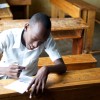
Youth Speak Loudest in Global Development Survey
Kanny Daylop, a legal practitioner and consultant from Nigeria, recalls her encounter with a woman named Joy.
OP-ED: A Global Goal on Gender Equality, Women’s Rights and Women’s Empowerment
Hardly a day goes by without a news story on some violation of women’s rights. In recent months, appalling incidents of violence against women and girls, from Delhi to Johannesburg to Cleveland, have sparked public outrage and demands to tackle these horrific abuses.
Stressed Ecosystems Leaving Humanity High and Dry
Everyone knows water is life. Far too few understand the role of trees, plants and other living things in ensuring we have clean, fresh water.
U.N. Goes Global to Set Post-2015 Agenda
The United Nations apparently lacked the online resources of the fast-growing digital age when it created its highly-touted Millennium Development Goals (MDGs) in 2001, with a targeted deadline of 2015.
Water Crisis Hitting Food, Energy – And Everything Else
How much water does it take to turn on a light? It took 10,000 litres to make your jeans. Another three big bathtubs of water was needed for your two-eggs-toast-coffee breakfast this morning.
Water and Sanitation Seek Rightful Place in Post-2015 Agenda
When the General Assembly unanimously adopted the Millennium Development Goals (MDGs) back in 2000, water and sanitation were reduced to a subtext - never a stand-alone goal compared with poverty and hunger alleviation.
The Open and Rocky Road Post-2015
What values does a Yemeni journalist who fuelled the Arab Spring hold in common with a former principal of the U.S. National Security Council? And how in turn will they see eye to eye with a Jordanian queen, or the president of Indonesia?
Q&A: The Challenges of Women’s Empowerment and Equality
Today, approximately 125 countries have laws that penalise domestic violence - a great advance from a decade ago. Yet 603 million women around the world still live in countries where domestic violence is not a crime, and up to seven in ten women are targeted for physical or sexual violence, or both.
Wrangling Begins Over New Sustainable Development Blueprint
As the Millennium Development Goals (MDGs) limp towards their target date of 2015, the United Nations is shifting its focus to another long-term action plan: a new set of Sustainable Development Goals (SDGs).« Previous Page


As world leaders look towards a world development agenda beyond 2015, they are faced with unfinished business in poverty eradication, education, gender equality and health. While some countries have made strides towards the Millenium Development Goals and managed to foster equitable growth, a trend of rising inequality within countries continues to accompany economic development. IPS reporting exposes progress and setbacks of the current MDGs and the preparation of a new post-2015 development agenda.

The Week with IPS

NEXT STOP - SDGs
Tracking global progress towards a sustainable world
Tracking global progress towards a sustainable world
