Languages
Wednesday, October 28, 2026



News and Views from the Global South
Soka Gakkai International

Toxic Air in Tanzania’s Port City Threatens Millions, Researchers Warn
On a hot afternoon in Kariakoo, Dar es Salaam’s bustling commercial hub, the air is a swirling mix of diesel exhaust, charcoal smoke and dust kicked up by the shuffle of feet. Traders tie handkerchiefs over their noses to deter haze from drifting into their throats and lungs.
Fiji’s Truth and Reconciliation Commission Aims To Restore Trust and Peace After Decades of Political Crises
Fiji, a nation located west of Tonga in the central Pacific, is renowned for its natural beauty and beach resorts. But for 38 years it has endured a political rollercoaster of instability with four armed coups that overturned democratically elected governments and eroded human rights.
Regaining Progress on Birth Registration Is Critical to Child Protection
Registering the birth of a newborn, which is taken for granted in many countries, has profound lifelong repercussions for a child’s health, protection, and well-being. But after initially increasing this century, the global birth registration rate has declined in the past ten years, with some countries in the Pacific and Sub-Saharan Africa facing significant challenges. Embracing new registration technologies, increasing political will, and increasing parents’ understanding of its importance are paramount to reversing the trend.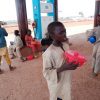
Malnutrition in Nigeria Rises Alarmingly, Urgent Action Needed
In June 2024, 26-year-old Zainab Abdul noticed her two-year-old daughter growing pale, losing weight, and battling diarrhea. She wasn’t surprised. Since jihadist-linked bandits had forced them out of their village in Kadadaba, Zamfara State, in northwestern Nigeria, her family had been living in a refugee camp with limited access to food.
Peace Talks—Delegates Turn To Climate Summit for Insights Into What Really Makes People Safe
At a time when the COP29 summit is primarily focused on climate finance as a tool to cool catastrophically high global temperatures and reverse consequences for all life on earth, delegates—alarmed and concerned by the state of world peace and stability—are seeking ways to enhance safety.
A Growing New Battle: Nuclear Weapons vs Conventional Arms
The warnings from the United Nations and from anti-nuclear activists are increasingly ominous: the world is closer to a nuclear war—by design or by accident—more than ever before. The current conflicts—and the intense war of words—between nuclear and non-nuclear states—Russia vs. Ukraine, Israel vs. Palestine and North Korea vs. South Korea—are adding fuel to a slow-burning fire.
Activists Call on World to ‘Imagine’ Peace, End Nuclear Arms
In any discussion of world peace and the future of humanity, the issue of nuclear arms must be addressed, and now. That was the message from a range of delegates at the “Imaginer la Paix / Imagine Peace” conference, held in Paris September 22 to 24, and organized by the Sant’Egidio Community, a Christian organization founded in Rome in 1968 and now based in 70 countries.
Summit of the Future: Youth Driven Action Needed to Tackle Nuclear and Climate Crises
Driving the Summit of the Future’s core messages of international solidarity and decisive action are young people who are determined to address the intersecting issues that the world contends with today.
Are the World’s Ongoing Conflicts in Danger of Going Nuclear?
The constant drumbeat of nuclear threats seems never ending—emanating primarily from the Russians, Israeli right-wing politicians and North Koreans. The threats also prompt one lingering question: Can there be a World War III without the use of nuclear weapons?
79 Years After Hiroshima & Nagasaki: A Grim Reminder of Nuclear Annihilation
The upcoming 79th anniversary of the atomic bombings of Hiroshima and Nagasaki, which took place on August 6 and 9, 1945, remains a grim reminder of the destructive consequences of nuclear weapons. The US bombings killed an estimated 90,000 to 210,000, with roughly half of the deaths occurring on the first day in Hiroshima.
New Child Marriages, Cohabitation With a Child Law in Sierra Leone Lauded
“A person shall not contract marriage with a child,” Sierra Leone’s landmark Prohibition of Child Marriage Act 2024 says, outlawing, in no uncertain terms, child marriage, giving consent to and attempted child marriage, officiating, attending and promoting child marriage, and use of force or ill-treatment of a child.
Indignity, Disease, Death—The Life of a Sewer Worker in Pakistan
A dark head emerges, followed by the torso. The balding man heaves himself up, hands on the sides of the manhole, as he is helped by two men. Gasping for breath, the man, who seems to be in his late 40s, sits on the edge, wearing just a pair of dark pants, the same color as the putrid swirling water he comes out from.
A Nuclear-Armed European Union? A Proposal Under Fire
The continued veiled threats from Russia, warning of nuclear attacks on Ukraine, have prompted some politicians in Europe to visualize a nuclear-armed European Union (EU).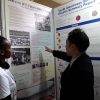
Lessons From Youth-Focused ‘Future Action Festival’ Ahead of UN Summit of the Future
The world has crossed the halfway point to the end of the Sustainable Development Goals (SDGs) era amid multiple, unprecedented, and significantly destructive global shocks. Two of the most pressing global challenges are the climate crisis and the threat of nuclear armament. Of serious concern is a severe lack of youth engagement on issues of critical global importance. Speaking to IPS during the 2024 UN Civil Society Conference, the outcome of which will inform high-level discussions when the UN hosts hundreds of world leaders, policymakers, experts, and advocates in September at the Summit of the Future in New York, Tadashi Nagai stressed the importance of coalition and movement building and youth engagement to escalate progress towards attainment of the SDGs.
A Russian Veto Threatens to Trigger a Nuclear Arms Race in Outer Space
When the 15-member UN Security Council failed last month to adopt its first-ever resolution on outer space—co-sponsored by the US and Japan—the Russian veto led to speculation whether this was a precursor for a future nuclear arms race in the skies above. The vetoed resolution was expected to “affirm the obligation of all States parties to fully comply with the 1967 Outer Space Treaty, including not to place in orbit around the Earth any objects carrying nuclear weapons or any other kinds of weapons of mass destruction, install such weapons on celestial bodies or station such weapons in outer space in any other manner.”
When the Man Who Built the Bombs Met the Man Who Dropped the Bombs…
The award-winning Hollywood movie Oppenheimer portrays the life of J. Robert Oppenheimer, who helped create the atomic bomb, which claimed the lives of an estimated 140,000 to 226,000 people and devastated the two Japanese cities of Hiroshima and Nagasaki in August 1945.
SDGs Make Room for Education for Global Citizenship
Civil society leaders and U.N. development experts gathered on Wednesday to discuss the role of education for global citizenship in the post-2015 development agenda.
When Faith Meets Disaster Management
A consortium of faith-based organisations (FBOs) made a declaration at a side event Wednesday at the 6th Asian Ministerial Conference On Disaster Risk Reduction (AMCDRR), to let the United Nations know that they stand ready to commit themselves to building resilient communities across Asia in the aftermath of natural disasters.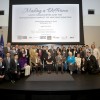
Interfaith Leaders Jointly Call to Abolish Nuclear Arms
On the eve of next week’s meeting at the U.N. headquarters in New York on the Nuclear Non-Proliferation Treaty (NPT), more than 100 representatives of 11 faith groups from around the world have pledged to step up their efforts to seek the global abolition of nuclear weapons.
Global Citizenship Key to World Peace
Nobel Laureate Betty Williams started her speech to a peace forum at the U.N. headquarters Thursday with perhaps the last thing the audience would expect her to say.
Abolitionists Want to Set a Deadline for Nuclear Ban
Countries in favour of nuclear disarmament have reached the point where they are ready to set a date for the start of formal negotiations to eliminate nuclear weapons, a decision that could be taken in Austria at the end of this year.Next Page »




The Week with IPS

NEXT STOP - SDGs
Tracking global progress towards a sustainable world
Tracking global progress towards a sustainable world
