Languages
Tuesday, November 10, 2026



News and Views from the Global South
Southern Africa

ZIMBABWE: Economic Package Being Crafted For New Government
The Southern African Development Community (SADC) is mobilising economic aid for its troubled member state Zimbabwe. The economic aid package is part of efforts by the region to help bolster the faltering political deal, widely regarded as the initial phase towards the recovery of Zimbabwe's wretched economy.WORLD FOOD DAY: Zambia's Women Farmers Demand Policy Changes
Zambia's tens of thousands of peasant farmers are crucial to the country's food security, yet they have little voice in agricultural policy. Cecilia Violet Makota is one of the rare exceptions.HEALTH-AFRICA: Time for Joint Action on HIV/AIDS and Violence
The war against HIV/AIDS, it is emerging, will not be won unless sexual and gender-based violence is tackled.
TRADE-MALAWI: The ABC of Being a Successful Business Woman
Through hard work and resilience, Malawian entrepreneur Mary Phombeya has developed her once small and struggling business outfit into a fully fledged company. She imports fashionable clothes – for women, children and men – from Dubai, Thailand and Hong Kong which she sells locally.
HEALTH-MALAWI: Help for Women with Obstetric Fistula
A group of 138 unhappy and mostly destitute women from Malawi’s lake district of Mangochi have something to look forward to this week: They will have a chance to restore their dignity and pride by accessing a medical service usually not available to them.
ZIMBABWE: Transport Costs Ground Workers, Employers
Every evening, Barbara Taruvona, the owner of New Styles Hair salon in Harare has to face a queue of her employees at the entrance to her office for their daily cash allowance for transport.MADAGASCAR: A Difficult Step For Women
The northern region of Diana is known for the beautiful beaches of the Nosy-Be district and the scent of fields of ylang-ylang flowers. But the political landscape of Diana is as extraordinary as its geography: the region's administrative head is a woman, Anjara Mantasara.POLITICS-ZIMBABWE: Jury Still Out On Power Sharing
One would have thought the signing of the power-sharing agreement in Zimbabwe would mean it was safe for 25 Movement Democratic Change supporters to gather in celebration at a shopping centre in Buhera.
POLITICS-NAMIBIA: Gender Equality – Making The Numbers Count
Namibian gender activists applaud the goal of a 50/50 split of women and men in government by 2015, but warn that the real work is only just beginning.
AGRICULTURE-SOUTH AFRICA: GM Sorghum Test Approved
As Africa grapples with the question of food insecurity, biotechnology buffs seem to have an answer: genetically modified crops that could feed a continent vulnerable to famine and food deficits. But environmentalists warn of new dangers.DEVELOPMENT-ANGOLA: Building Sustainable Water Systems
Angola may be emerging as an African super power with its plentiful oil exports and a booming property market. But look behind the façade of this boom and real entrenched poverty continues to blight millions of lives.
POLITICS-SWAZILAND: Struggling Against Tradition
The crowd ululated, whistled and danced. Their candidate had won! Last Sunday, the people of Mbabane East returned Esther Dlamini to Swaziland's House of Assembly for a second term.
POLITICS-ANGOLA: Boys’ Club No Longer
Something looked very different at the inauguration of Angola’s newly elected parliament, held Tuesday at the Talatona Convention Centre in Luanda, the capital - this is not a boys' club any longer.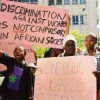
POLITICS-ZIMBABWE: Now To Share Power With Women
The ink was barely dry on the power-sharing agreement signed by Zimbabwe’s main political parties on Sep. 15 when women activists demanded a fair share of power.
SWAZILAND: Torn Social Fabric Leaves Many Exposed
An abandoned straw hut slumps amidst overgrown bushes on a somewhat deserted homestead. Only a foot path leading past it indicates that the place is still occupied. Beside it is the mis-shapen tent that is Joseph Mathe's new home.
EDUCATION-ZAMBIA: Food Insecurity Hits Schools
"Sometimes there is barely any food at home, so I only eat at school, at lunch," said Justin Banda, a 12 year old student, at Chikumboso school in Lusaka’s Ngombe township.
AGRICULTURE-SOUTHERN AFRICA: Investment, Information Keys To Productivity
Sustained investment in agriculture accompanied by effective and inclusive policies are key strategies for Southern Africa to address the global food crisis.
POLITICS-ZIMBABWE: Blazing a Trail For Women Politicians
You could spot her easily in the evening newscasts: the only woman among the grey-suited men daily accosted by reporters as they emerged, tense and tight-lipped, from the closed-door meetings.
SOUTH AFRICA: Nurse Shortage Cripples Health System
In the impoverished informal settlement of Du Noon, 20 kilometres north of Cape Town, sick residents rely on a single clinic staffed by six nurses to meet their health needs.SOUTH AFRICA: High Noon as Mbeki, 11 Cabinet Members Resign
South Africa has been in the grip of political drama for the past two years, with high-profile power mongering culminating this week in the resignation of President Thabo Mbeki on the instruction of the ruling party, the African National Congress (ANC), with a significant number of his cabinet following suit.ECONOMY-SOUTH AFRICA: Manuel, Mbeki Resignations Welcomed by Some
Minutes after the news broke today that Trevor Manuel, South African minister of finance, resigned from his post, the South African currency lost ground against international currencies, falling 20 cents against the dollar within less than an hour.« Previous Page — Next Page »





The Week with IPS

NEXT STOP - SDGs
Tracking global progress towards a sustainable world
Tracking global progress towards a sustainable world
