Languages
Tuesday, October 13, 2026



News and Views from the Global South
The Information Society
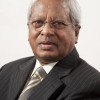
EDUCATION: Bangladeshi Humanitarian Wins Half-Million Prize
A Bangladeshi humanitarian with a British knighthood - and head of one of the world's largest non-governmental organisations (NGOs) promoting the cause of education - walked way with half a million dollars in prize money and a gold medal at the World Innovation Summit for Education (WISE) in the Qatari capital of Doha.MIDEAST: Virtually, There Are No Borders
Israeli entrepreneurs dream of a region without borders. Given their country's remoteness from its vicinity, that's a natural need. It's a dream also nurtured by their Palestinian counterparts, and a national necessity given their own encirclement by Israel. That's where high-tech comes into play...LATIN AMERICA: Public Media Expanding
The public media are growing in Latin America, with a new focus that puts an emphasis on independence from the state and the backlash from the private media, said journalists, academics and officials meeting in the Paraguayan capital.
Q&A: Doha Summit to Boost Education on World’s Political Agenda
As digital technology begins to spread across classrooms the world over, the United Nations says the next generation of children will be educated far differently from their counterparts in the past.PHILIPPINES: Prisoners Find Their E-Families
For the first time since giving birth in prison 13 years ago, Sarah, an inmate in the Philippines’ largest detention centre for female convicts, saw her daughter via Skype video chat in her prison cell.
INDIA: Kashmir’s Media Miracle Feeds on Conflict
"If one were to search for a positive outcome to the ongoing armed conflict in Jammu and Kashmir state, it would be the growth of journalism," says Prof. Shams Imran at the department of journalism, Central University of Kashmir.TUNISIA: Social Media Lift the Silence
After 23 years of enforced silence, media professionals and artists in Tunisia are enjoying a period in which their freedom of expression is being respected for the first time.MIDEAST: Media Throttled From All Sides
As media freedoms throughout the occupied Palestinian territories continue to decline, human rights groups are urging the international community to pressure Israeli and Palestinian security forces to respect and facilitate the ability of journalists to do their work.
“Pirates” Board Berlin Parliament
It was a political sensation: 8.9 percent of the 1.53 million Berliners who participated in the city-state parliamentary elections on Sep. 18 (overall turnout was 60 percent) voted for the Pirate Party (Piratenpartei).
Occupy Wall Street: “It Is a Revolution”
Since Sep. 17, hundreds of demonstrators in the Occupy Wall Street movement have transformed the quiet Zucotti Park in lower Manhattan from a place where Wall Street traders once relaxed during lunch breaks into a demonstration camp.Expanding Technologies Fail to Bridge Broadband Divide
Despite an overall increase in global internet usage and in the prevalence of information and communication technologies (ICTs), the gap between developing and developed countries remains vast when it comes to accessing broadband connections.
SOUTH AFRICA: “Secrecy Bill” Step Backwards for Africa
Critics call it "the Secrecy Bill". And it comes at a time when several African countries are adopting promising new legislation on access to information. But campaigners say South Africa's draft Protection of Information Bill represents a step backwards.GREECE: Social Media Advances Against Elite Owners
An unflattering report on Greece’s media by a former United States envoy to this country, revealed by Wikileaks, evoked little public reaction because it was taken as a faithful portrayal.Inheriting the Whirlwind of Extreme Events
The dramatic increase in extreme weather that has affected hundreds of millions across the planet is one of the clearest signs that burning billions of tonnes fossil fuels has seriously and permanently disrupted the global climate, experts say.
Low-Cost Healthcare Goes High-Tech
Cell phones and computer applications can help save the lives of thousands of mothers and children worldwide.No Unplugging This Revolution
Nabeel Rajab believes in the power of social media, and he wants his government to know it. Speaking at the CIVICUS World Assembly in Montreal, the Bahraini activist embraced such communication and specifically requested that all live- Tweeters "hashtag" his name, or include it in their posts.MEDIA-PAKISTAN: Caught Between the Army and the Taliban
Journalists covering the United States-led ‘war-on-terror’ in Pakistan’s turbulent northwest are not sure who wants them out of the way more – the Taliban or the Pakistan army.MEXICO: Murders of Reporters Heighten Despair and Shock
"And how do you escape this anxiety, this sensation that nothing we do does any good?" a Mexican journalist wrote on her Facebook page after the murder of two of her colleagues in Mexico City.OP-ED: Manipulating Social Networks
If there's one thing that net-savvy activists from Tunisia to Bahrain are aware of, it’s that the Internet isn’t always safe. From the constant threat of surveillance to the knowledge that posting the wrong picture on Facebook can get you arrested - or worse - activists have for a long time taken measures to mitigate risks, censoring themselves, using special tools like Tor, or staying off certain networks altogether.MEDIA-IRAQ: ‘Protection’ Law Offers Little Safety
When Ali Sumerian, an editor for Al-Sabah newspaper, and three local media colleagues sat down for a restaurant meal after reporting on a demonstration in Baghdad’s Tahrir Square on Feb. 25 this year, security forces detained them. "We were accused of encouraging an anti-political process," says Sumerian. It was only after their arrest triggered a media outcry, he says, were they released 12 hours later. The four were just some of the journalists attacked and arrested that day.WikiLeaks Blames Guardian Newspaper for Leaks
WikiLeaks, the whistleblowing website, has said that its massive archive of unredacted U.S. State Department cables was exposed in a security breach, which it blamed on its one-time partner - Britain's Guardian newspaper.« Previous Page — Next Page »





The Week with IPS

NEXT STOP - SDGs
Tracking global progress towards a sustainable world
Tracking global progress towards a sustainable world
