Languages
Tuesday, October 20, 2026



News and Views from the Global South
Argentina Losing Regional Leadership Position in Health
In Latin America, Argentina spends the most on healthcare. It has a vast infrastructure, highly qualified health professionals and the necessary material resources. But other countries in the region are achieving better and faster health outcomes with fewer resources.
Q&A: Climate Funding Needs Gender Equity
Gender considerations remain largely disregarded in existing climate funds, even though women are some of the hardest hit by the impacts of climate change on livelihoods and agriculture.Israeli Poll on Iran Undercuts Netanyahu on Eve of Major Meet
On the eve of a critical set of meetings here between top U.S. and Israeli officials, a new survey finds little backing among the Israeli public for a military strike against Iranian nuclear facilities without Washington's approval.Latin America, Testing Ground for Chinese Yuan
China is looking to Latin America to experiment with the yuan, or renminbi, to replace the dollar, taking advantage of the growth in Chinese trade and investment in this region. But because the volume is still insignificant, it is not yet clear what impact the currency will have on economies in the region.U.S.: A Musical Movement for Liberation
Inside a dimly lit restaurant in New York City's historic Harlem neighbourhood, on an unusually warm night in the middle of February, an audience of 120 people sits spellbound while a forgotten gem is dusted off, polished and presented to the crowd.Syria Stalls Senior U.N. Official’s Visit to War Zone
The United Nations, which remains politically deadlocked over the drawn-out crisis in Syria, has hit another roadblock, this time over humanitarian assistance to the thousands of men, women and children caught up in the 11-month-old conflict.Sri Lanka Rattled by Planned UN Rights Resolution
Strung across the main road leading away from the international airport is a banner that has an intriguing message: ‘USA, Pls Do Not Support Terrorism’.Index Offers Improved Method to Gauge Women’s Progress
If an organisation wants to monitor how its projects in the developing world are affecting women in specific areas of female empowerment, it probably can't, as it lacks the proper tools. But a new system, the "Women's Empowerment in Agriculture Index", is working to change that.
URUGUAY: Community Radios Have Innovative Law, But Are Off the Air
Uruguay took a giant step towards more democratic media when it passed a law on community radio broadcasting in 2007. But although regulations for the law were approved in late 2010, many broadcasters are now off the air and waiting to be assigned a frequency.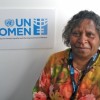
Q&A: Where Abusing Women Is “An Accepted Norm”
Violence, torture and other forms of cruel treatment are on the rise for women in the highlands of Papua New Guinea.
Caribbean Hit Hard by Sargassum Seaweed Invasion
When scientists speak of the Sargasso Sea, which occupies part of the Atlantic Ocean, there is usually little mention of things drifting out because of the immobile currents.U.S.: Obama’s 2013 Budget Slashes Aid for Working Families
The federal budget for fiscal year 2013 proposed by President Barack Obama severely cuts aid for working families by targeting at least two programmes, the Community Services Block Grant (CSBG) and Project-Based Rental Assistance (PBRA), that aid the nation's most vulnerable working families.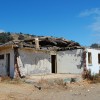
Chile’s Earthquake Reconstruction Hindered by Delays and Profiteering
Two years after the earthquake and tsunami in south-central Chile, the worst natural disaster to hit the country in half a century, thousands of families who saw their homes destroyed are still waiting for a solution.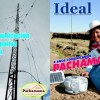
Airwaves Cut Distances in Rural Peru
The Onda Rural communication for development initiative in Peru has come up with a range of strategies to get information out to remote villages, to help them with decision-making on questions like climate change adaptation or disaster preparedness.
ZAMBIA: No Longer “Waiting for the Mangoes to Ripen”
Eight years ago when Mary Sitali’s husband divorced her, by sending a traditional letter to her parents saying that he no longer wanted her and they could "marry her to any man of your choice - be he a tall or a short man, the choice being entirely yours," she returned to her village in rural Zambia with their two children and no way of supporting them.
GHANA: Father’s Fight to Save Daughter from Genital Mutilation
When Jack Sabadgou left Ghana for Switzerland 10 years ago, he left his infant daughter behind to be raised by her mother. Now he wants his child back, and he is running out of time in a bid to save her from the banned traditional practice of female genital mutilation.
Africa’s Urban Slum Children Among Most Disadvantaged
Each day after school, nine-year-old Nelly Wangui hurries home with a bundle of firewood balanced on her head. The paper bag in which she carries her schoolbooks sits precariously on top of the stack and every now and then she reaches out to ensure that her books have not fallen down.Women Journalists in Cuba Revive Transgressive Group
More than 15 years after the "deactivation" in Cuba of the Association of Women Communicators (MAGIN), its members remain united in an informal network that transcends any specific political situation and has become a reference for the new generations.Argentina Losing Regional Leadership Position in Health
In Latin America, Argentina spends the most on healthcare. It has a vast infrastructure, highly qualified health professionals and the necessary material resources. But other countries in the region are achieving better and faster health outcomes with fewer resources.
Q&A: Where Abusing Women Is “An Accepted Norm”
Violence, torture and other forms of cruel treatment are on the rise for women in the highlands of Papua New Guinea.U.S.: Obama’s 2013 Budget Slashes Aid for Working Families
The federal budget for fiscal year 2013 proposed by President Barack Obama severely cuts aid for working families by targeting at least two programmes, the Community Services Block Grant (CSBG) and Project-Based Rental Assistance (PBRA), that aid the nation's most vulnerable working families.« Previous Page — Next Page »





The Week with IPS

NEXT STOP - SDGs
Tracking global progress towards a sustainable world
Tracking global progress towards a sustainable world
