Languages
Wednesday, July 22, 2026



News and Views from the Global South

Enough Is Enough
The turnout at the walk organised last Sunday by Citizens against Weapons (CAW) was heartening. Started in 2014 by some concerned citizens, the campaign is catching on. I had joined them at a rally on an intersection of a busy area in Karachi two years ago. There were then barely 50 protesters. On Sunday, there were 400 or so.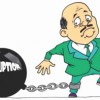
Corruption Control–Is It Feasible or a Fantasy?
December 9 is observed throughout the world as International Anti-corruption Day (IACD). On this day in 2003, the United Nations (UN) called upon governments and peoples of the world to mark the adoption of the UN Convention against Corruption (UNCAC).
Why Achieving Sdg Goal 8 on Decent Work and Economic Growth Is Critical for Kenya
In Kenya the Gini coefficient of inequality is at around 0.45%. Therefore, the economic growth statistics present an unequivocal picture of a highly unequal society, whose development strategy is largely leading to accumulation of wealth by a few and worsening the poverty of the majority.
Anti-Torture Law Helps Pay Off Chile’s Debt to Human Rights
After 26 years of democratic governments, Chile has finally passed a law that defines torture as a criminal act, but which is still not sufficient to guarantee that the abuses will never again happen, according to human rights experts.
Fiscal Austerity Has Been Blocking Economic Recovery
Instead of concerted and sustained efforts for a strong, sustained economic recovery to overcome protracted stagnation, the near policy consensus on fiscal austerity in the G7 and the G20 OECD countries, except for the US and Japan, has dragged down economic recovery in developing countries.
Gambia May Not Join African Withdrawals from ICC
The International Criminal Court (ICC) may have had a small reprieve this week from a string of African withdrawals, with Gambia’s newly elected President Adama Barrow telling various media outlets that there is no need for Gambia to leave the court.
Resilient People & Institutions: Ecuador’s Post-Earthquake Challenge
No one is really prepared for an emergency until they’ve had to live through one. And the 16 April earthquake in Ecuador put us to the test.
India Steps Up Citizen Activism to Protect Women
Last month, Delhi Police launched a unique initiative to check spiralling crimes against women in the city, also known dubiously as the "rape capital" of India. It formed a squad of plainclothes officers called "police mitras" (friends of the police) -- comprising farmers, homemakers and former Army men -- to assist them in the prevention and detection of crime and maintenance of law and order.G77 Encourages Paris Club to Consider Addis Ababa Action Agenda for Debt Management
The Group of 77 (G77) participated in a panel discussion encouraging members of the Paris Club to incorporate the Addis Ababa Action Agenda into their debt management practices.
The End of a Cycle ?
Is the demise of Renzi really a local affair? There is no doubt that a referendum on a constitutional change can be a matter of confidence in him, having personalized the issue to a point that it became basically a vote on the young Prime Minister. But if you look at the sociology of the vote, you find that the No vote was again coming from the poorest parts of Italy. A case study is Milan. Voters living in the centre voted Yes, and those in the periphery voted No. Is this not similar to what has happened in Brexit and in the US elections? And Renzi fell into the same trap like Cameron, calling for a referendum on a very complex issue and putting at stake his own credibility and prestige, to be swept away by an unexpected tide of resentment. Lamented Renzi: "I had no idea I was so hated”.
The Chief’s Choice
Incoming army chief Gen Bajwa takes over at a time when Pakistan is already on the road to recovery. Since 2010, the country has experienced a significant reduction in terrorist violence. The economy has also begun to rebound. Gen Bajwa and the civilian government could keep doing more of the same to achieve further incremental progress. But this would reflect a ‘good enough’ approach. It’ll definitely keep Pakistan out of the ICU but we’ll still be weak and frail.
What Does Democracy Mean to Bangladeshis?
December 6 is observed as 'Democracy Day' in Bangladesh, a day that marks the overthrow of military rule of General H M Ershad through a popular urban uprising in 1990. It was the culmination of years of protests demanding democracy, at least the right to express opinions without fear, to vote in freely held elections, to elect civilian governments and to hold the leaders accountable.
Climate-Resistant Beans Could Save Millions
A global food watchdog works around the clock to preserve crop biodiversity, with a seed bank deep in the Colombian countryside holding the largest collection of beans and cassava in the world and storing crops that could avert devastating problems.
Europe to Decide on Use of Mercury in Dentistry
Europe will soon decide the future of a common but controversial dental practice: mercury in tooth fillings. Three major European institutions, namely the European Commission, Parliament and Council, are due to meet on 6 December to discuss regulations on mercury, particularly its use in dentistry.
Nicaraguan Women Push for Access to Land, Not Just on Paper
A group of women farmers who organised to fight a centuries-old monopoly over land ownership by men are seeking plots of land to farm in order to contribute to the food security of their families and of the population at large.
Soil: Keeping Nutrients in Food and Carbon in the Ground
Healthy soil not only makes food more nutritious it also helps keep carbon out of the atmosphere by storing it underground.
Leave No One Behind: The Right to Development
As Human Rights Day approaches Dec. 10, it offers a moment to pause and look back at the roots of the global development process as a platform for stepping forward. On this day 30 years ago, the international community made a commitment to eliminate all obstacles to equality and inclusivity.
Transgender Health
Two cases this year — that of a transgender person dying in a Peshawar hospital as healthcare providers deliberated over which ward to put her in; and of another who, after being diagnosed as HIV positive, was forced to live near a garbage dump until she died — highlight the insensitivity that prevails towards this marginalised community.
Rethinking trade policy and protectionism in the Trump era
What kind of trade policy will the United States have under President Donald Trump? This is a hot issue, as Trump has made unorthodox pronouncements on trade issues during and after the election campaign. If he acts on even some of the positions he took, it will create a sea change in trade policy in the US and possibly the world.
A Deterrent to Regional Development
Following the end of almost fifty years of military rule in Myanmar and the release of the Nobel Laureate leader Aung San Suu Kyi in 2011, the world had looked at the country with much enthusiasm. The quasi-civilian new government brought some hope for the country to return to democracy as well as economic progress. Even with rich natural resources including land, forests, minerals, oil and gas, the country remained poor and could achieve a per capita income of only USD 1,197 in 2011. So once freed from the military regime, with a view to modernise its economy, Myanmar embraced economic openness and initiated reforms in areas such as currency exchange rates, taxation, foreign investment laws and anti-corruption. Several countries, including those which isolated the nation through economic sanctions such as the US and the European Union, saw opportunities to rebuild economic ties with Myanmar. Political leaders from the US, Europe, Japan, Australia, China, India, Thailand, Bangladesh and many other countries flew in, investors rushed and businessmen flocked into the country to explore its untapped resources. International endorsements revived the country's confidence and growth prospects. Its GDP grew by more than 7 percent in the last couple of years.
Trump Needs Lessons in Geopolitics : Musharraf
US President-elect Donald Trump has shown he has much to learn about South Asia, Pakistan’s former President Pervez Musharraf said in an interview with IPS. But he counted on Trump having an open mind.« Previous Page — Next Page »


The Week with IPS

NEXT STOP - SDGs
Tracking global progress towards a sustainable world
Tracking global progress towards a sustainable world
