Languages
Saturday, August 1, 2026



News and Views from the Global South
Politics of Numbers
The Pakistan Economic Survey 2015-16 reminds us of our ticking population bomb. We are told that today the country`s population stands at 195.4 million 3.7m more than it was the previous year. We have regressed.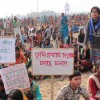
Addressing the Land Question
In a developing country such as Bangladesh, where the implementation of democracy still seems a far flung dream as national budgets blur the line between fantasy and expectation, land has come to be the defining issue of the day. It is of little surprise that a third-world country, caught in the throes of frantic industrial development, would have to deal with the issue of land. Add to it the fact that Bangladesh is the most densely populated country in the world and what you basically have is a recipe for development induced disasters. But even taking all of these challenges into account the current state of land rights in the country is appalling. Almost 56 percent of the entire population is functionally landless, getting by either through odd jobs or becoming part of the industrial division of labour. The average size of land holding is a meagre 0.6 hectare. For a country that is yet almost completely dependent on agrarianism as part of its economy, that is a terrible figure.
The Art of Covering Up in Somaliland
Amid the hustle and bustle of downtown Hargeisa, Somaliland’s sun-blasted capital, women in various traditional Islamic modes of dress barter, argue and joke with men—much of it particularly volubly. Somaliland women are far from submissive and docile.
Water Scarcity Could Impact West Asian Credit Ratings
Water scarcity, conflict and refugee exodus is the strongest megatrend in West Asia, indicating the status of current trends and how these factors may shape the future, according to UN Environment Programme’s sixth Global Environment Outlook - GEO-6 Regional Assessment for West Asia released May 2016.
‘Fujimorismo’ Defeated…But Still Powerful
It is finally official: Pedro Pablo Kuczynski won Peru's presidential elections by the thinnest of leads, and Keiko Fujimori once again just barely missed becoming president - although her party holds a solid majority in Congress, which means it will have a strong influence during the next administration.
India’s Dwindling Tiger Population Face Water Shortages

At the beginning of the 19th century there were 40, 000 tigers in the world. Today, around 4,000 tigers are left in the wild globally, 2,226 of which are in India.

A Triple Threat in the Fight Against AIDS
The exclusion of key regions, contexts and actors must be addressed in order to successfully and significantly reduce HIV and AIDS by 2020, many have noted during the High Level Meeting on Ending AIDS this week.
Uruguay Seeks Future as Oil Producer in Ultra-Deep Waters
Uruguay is just weeks away from finding out if it will have a chance to stop being totally reliant on oil imports at some point in the future, when the first offshore exploration well in national waters – which set a new world record in terms of water depth - is completed.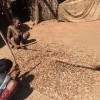
Students Journey: A Step Closer to the SDGs in Rural India
As the seventh largest economy in the world by nominal GDP, India has fared better than many. Through a mix of interventions from the public and private sector, India’s economy has promoted growth and welfare. However, in spite of these developments, the challenge of hunger and malnutrition remain.
‘What Can We Do for You?’ Aid Projects Pour Into Myanmar
International aid agencies, big and small, are beating a path to Myanmar, relishing the prospect of launching projects in a nation of 51 million people tentatively emerging from more than five decades of military rule.
Asia-Pacific Region Aims at Hunger-Free Goal by 2030
The Asia Pacific region - home to two of the world's most populous countries - faces major food security challenges. According to the Asian Development Bank (ADB), both China and India are not only two of the world's biggest producers of food but also the world's biggest consumers.
Thousands of Minor Refugees Stranded Alone in Greece
Closure of the Western Balkans route has trapped tens of thousands of refugees heading to Central and Northern Europe in Greece, including many unaccompanied minors who either escaped from war zones after having lost their relatives, or were sent ahead in hopes of helping their families follow afterwards.
Humanitarian Aid – Business As Unusual?
Big business is most often seen by human rights defenders and civil society organisations as “bad news,” as those huge heartless, soulless corporations whose exclusive goal is to make the biggest profits possible. Too often and in too many cases this is a proven fact.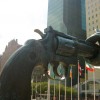
UN-Backed Findings Reveal Startling Small Arms Trade Increase
A report released by The Small Arms Survey here Monday shows the alarming rate at which the trade of small arms and light weapons has been increasing.The Ali Shuffle
There was the incredible Ali Shuffle in the 1960s when a restless young athlete danced around his opponents in the boxing ring, delivering potent blows but taking few in return, the heavyweight champion of the whole world, as he frequently liked to put it.On Secret Marriages
It happens far more often than anyone is willing to admit or acknowledge. A woman who is a widow, or whose family owes a debt, or who has caught the eye of a lecherous boss, or who is no longer very young, or who fails to fit the fair and lovely demands of the usual suitors, is approached by an older man for marriage.
New Protocol Aims to Cut Trillion-Dollar Food Waste Bill
Four years ago, 27-year-old Tsering Dorji of western Bhutan’s Satsam village took to organic vegetable farming. Since then, thanks to composted manure and organic pesticide, the soil health of his farm has improved, and the yield has increased manifold.
Polynesian Voyagers Bring Messages of Hope to UN on World Oceans Day
Polynesian voyagers who have sailed the world by canoe using ancient navigation skills will bring pledges they collected along the way to the UN on Wednesday as part of World Oceans Day celebrations.
World Bank Slightly Downgrades Global Economic Prospects for 2016
Global economic growth prospects for 2016 have been downgraded to 2.4 percent, in contrast to the initial 2.9 percent rate expected in January 2016, according to a World Bank report released here Wednesday.
“Them” and “Us”, a Metaphor for Urban Inequality
For the inhabitants of “Bajo Autopista” (Under the Freeway), a slum built under an expressway in the Argentine capital, “they” are the people who live in areas with everything that is denied to “us” – a simple definition of social inclusion and a metaphor for urban inequality.
Coral Reef Tourism in Danger as Reefs Struggle to Adapt to Warming
A recent UN Educational, Scientific and Cultural Organization (UNESCO) report on world heritage sites in danger from climate change received widespread media attention after the Australian government requested the removal of a chapter on the Great Barrier Reef.« Previous Page — Next Page »


The Week with IPS

NEXT STOP - SDGs
Tracking global progress towards a sustainable world
Tracking global progress towards a sustainable world
