Languages
Friday, October 16, 2026



News and Views from the Global South
Opinion

Earth Day to Earth Disaster
Since the first Earth Day observed on 22 April 1970, world conditions have worsened greatly across three critically interrelated global dimensions that portend a disastrous future for life on planet Earth.
Rising Food Prices: Global Risks & Vulnerabilities
The breakout of the conflict in Ukraine and the following imposition of heavy Western sanctions on Russia are causing sharp price increases in food and energy commodities —of which both Ukraine and Russia represent key exporters — as well as disruptions to global supply chains, impacting the post-pandemic economic recovery.
‘This is not about Russia, this is about Multilateralism’
Q: Liechtenstein has just initiated a resolution at the United Nations that mandates a meeting of the General Assembly whenever a veto is cast in the Security Council. What’s behind this initiative?

Earth Day is a Time to Reflect on What It Means to Invest in Our Planet
Around the world, Earth Day 2022 is being celebrated. The theme this year is “Invest in Our Planet”. To mark the day, activities such as planting trees, protests, marches, cleaning up litter, and conferences will be held to highlight the importance of investing and taking care of our planet.
Chronicle of a Tragedy Unfolded
The Karnataka court’s verdict to uphold the hijab ban has intensified the protest in the state. The row has been typically perceived by many as manufactured by the politicians pointing to the culture of politics in the state. While the jury is still out there on this, evidence on how state’s local culture constructs and deconstructs religious identity allows drawing conclusions with some definitiveness. The culture of state’s politics is one side of the coin. Considering its flip side – politics of culture, particularly of the religious cultural identity, is just as relevant.
From Rags to Riches: Power and progress in Abu Dhabi
I recently visited Abu Dhabi and my impressions became intermingled with worries about the war in Ukraine. I also happened to read Livy’s The Early History of Rome, written around the beginning of CE, coming across these lines:
Criminality in Politics Does Not Bode Well for Democracy’s Future
A trend of declining trust in governments and politicians can turn into a threat beyond some point. John Adams, an astute political philosopher and second president of the US, was emphatic: “Remember, democracy never lasts long. It soon wastes, exhausts and murders itself." This has been a subject of intense debate, with recent but mixed evidence. Is this an overly pessimistic view?
Addressing Gender-Related Barriers to COVID-19 Vaccinations to Ensure Vaccinations for All
As a global pandemic, COVID-19 and its continued impacts are unprecedented. Yet many of the challenges that emerged in public health responses to COVID-19 not only had precedence, but were predictable.
The Myth of Development by Privatisation
Oxfam’s report ‘Inequality Kills 2022’ and its India supplement (hereafter referred to as the report) revealed some shocking facts about the growing gap between the rich and poor. India, which has the third highest number of billionaires in the world, endured one of the longest-lasting COVID-induced lockdowns in 2020. Yet, the same year, the top 10 percent of India held close to 45 percent of the country’s total national wealth.
The Arrogance of Ignorance: War in Ukraine, Religion and Abiding Ethnocentrism
“The war in Ukraine is a European …and a Christian… matter... It does not require the involvement of a colourful array of religions or people”. These words were uttered and affirmed by some European Protestant men, working in interfaith circles in Europe. The ‘colourful’ encompassed other than European, mostly Christian - and likely mostly male.
Sri Lankan Economic Crisis Inflicted by Self-Serving Elite
Once deemed a basic human needs success story, Sri Lanka (SL) is now in its worst economic crisis since independence in 1948. Nonetheless, SL’s ‘moment of truth’ now offers lessons for other developing countries.
High Cost of Debt is Crippling Developing Nations: How can we Bridge the Finance Divide?
As the world is rocked by a confluence of crises, the global economic outlook for 2022 is becoming ever more uncertain and fragile. Prospects for sustainable development for all and achieving the Sustainable Development Goals (SDGs) by 2030 are bleak, particularly for developing countries.
Stop the War: Act for Justice, Climate & Peace
Russia’s war in Ukraine has left many communities facing catastrophe. In a world already wracked by multiple crises such as searing inequality and escalating climate change, this conflict is tearing through communities.
Climate Risk Insurance in Pacific Small Island Developing States: Possibilities, Challenges and Vulnerabilities
The World Bank lists Fiji, Kiribati, Marshall Islands, Federated States of Micronesia, Nauru, Palau, Samoa, Solomon Islands, Tonga, Tuvalu and Vanuatu as Pacific Small Islands Developing States (PSIDS). . Some listings also include the Cook Islands, Niue and Tokelau. In September 2019, these countries had a combined population of 2.3 million spread over hundreds of islands spread over an area roughly equivalent to 15% of the surface area of the earth. Of these, the most populated country – Fiji – has a population of 900,000. The World Bank’s World Development Indicators reveal that annual per capita GDP of these islands fell from $4,340 in 2018 to $3,768 in 2020. It has probably fallen further during the pandemic.
Global Impact of Ukraine War on Food, Energy & Finance Systems
Now, since the Russian Federation’s invasion of Ukraine, the world’s attention has been focused on the war’s terrifying levels of death, destruction and suffering.
Unintended Pregnancy Rates Highest in Africa: a Look at the Complex Reasons
The United Nations Population Fund recently released the 2022 State of World Population report. It highlights that almost half of all pregnancies between 2015 and 2019 were unintended. That amounts to roughly 121 million unintended pregnancies each year.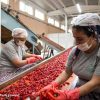
Food Systems Should Deliver Benefits in terms of Climate, Health and Society
Which country do you think best recognises the potential for changes to food systems to reduce emissions? Presumably a developed country, where agriculture is predominantly intensive, heavily subsidised and fuelled by fertilisers and irrigation, and where high consumption of animal proteins is the norm?
Tackling the Pandemic of Inequality in Asia and the Pacific
After two years of human devastation, the world is learning to live with COVID-19 while trying to balance the protection of public health and livelihoods. For countries in Asia and the Pacific, this is challenging not only because national coffers are heavily strained by record public spending to mitigate pandemic suffering, but also due to deeper structural economic issues.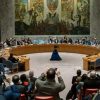
Why Africa is Divided Over the Russia-Ukraine War?
While the West has closed its ranks in response to the Russian invasion of Ukraine, the response in Africa has hardly been uniform. Following Russia’s military invasion of Ukraine on 24 February, various constituencies within the international community have reacted with a mixture of shock, anger, and trepidation as they ponder the invasion’s implications for international security.
China Debt Traps in the New Cold War
As China increases lending to other developing countries, ‘debt trap’ charges are growing quickly. As it greatly augments financing for development while other sources continue to decline, condemnation of China’s loans is being weaponized in the new Cold War.
Connecting the Dots for the Transforming Education Summit
Look around the world at this very moment. Whether we look at it in stark numbers and statistics, whether we look at it as a generational loss of basic human rights, including the right to an education, or whether we look inwardly and feel the unspeakable human suffering and devastation taking place, we all agree: we are at a historically low point in our collective humanity.« Previous Page — Next Page »





The views expressed in these articles are those of the authors and do not necessarily represent the views of, and should not be attributed to, IPS-Inter Press Service

The Week with IPS

NEXT STOP - SDGs
Tracking global progress towards a sustainable world
Tracking global progress towards a sustainable world
