Languages
Friday, October 16, 2026



News and Views from the Global South
Opinion

Today is the Time for Transformation
“I first think about my children. They are why we were forced to leave - because our children are always our first concern.” These are the moving words of Victoria, who fled the brutal war in Ukraine with her two daughters. Her eyes welling up with tears, she recalled their dangerous journey from Ukraine. She and her two school-aged daughters were forced to leave behind everything they have ever known.
A New Strategy Is Needed to Address Iran’s Nuclear Program
A revised Iran nuclear deal based on the 2015 JCPOA could provide the basis for a new Biden administration strategy that would limit Iran’s nuclear program to peaceful purposes and ensure that Tehran’s public pronouncement that it is not seeking to acquire nuclear weapons becomes a de facto reality.
Civil Society Responds — as Health-Care Facilities in Ukraine Come Under Attack
Alongside the devastation caused by bombs and bullets, the war in Ukraine has wrought another danger that can be as deadly as the violence itself: the disruption of access to health services for people who will not survive if cut off from health care.
Ukraine’s EU Membership Ambition
Before the war, Ukraine's dream to become part of the EU was exactly that – a dream. But the new political reality could make it come true. Russia’s invasion of Ukraine changed and to some extent even destroyed the familiar international political reality. Up until 24 February, Russia had been integrated into the global economy, had excellent growth prospects, and the construction of the Nord Stream 2 gas pipeline was almost finished.
Six Ways Rwanda Is Building Resilient and Sustainable Transport Systems
Over the last decade, Rwanda has invested in building efficient and resilient transport systems. Guided by the country’s Green Growth and Climate Resilience Strategy (GGCRS), the Government of Rwanda has carried out numerous initiatives to promote sustainable mobility and the green economy at large.
In Sri Lanka, Things Fall Apart
When I ended last month’s column hoping that April would not prove to be hapless Sri Lanka’s ‘cruellest month’ (in the words TS Eliot), I hardly anticipated the current turn of events.
Omicron-led Surge Tests China’s Zero Covid Policy
When the Covid- 19 pandemic first broke out in Wuhan in 2020, no one imagined that it would wreak havoc on such a large scale. With over 6.2 million lives lost, countless infected and new variants emerging, the pandemic is still raging all around the world.
Out of Africa: Rich Continent, Poor People
Capital flight from the global South is immense, with widespread adverse effects. A new book proposes measures to curb, even reverse capital flight from Africa. It also offers pragmatic lessons for many developing countries.
Bringing Seeds of Hope to Farmers
Amidst a backdrop of rising food insecurity worldwide and a global food supply chain crisis, many countries are attempting to increase the level of food self-production. One improved input for farming which is receiving renewed attention is improved seed. The two most populous countries in the world, China and India, have recently made ground-breaking moves to improve their competitive position by developing new seeds which will improve their food production and increase resilience to climate change. So far, in 2022, new regulations on using biotechnology (genetic modification and gene editing) have been put in place by both countries to ultimately allow smallholder farmers to benefit from these new seeds.
New Tactical Nuclear Weapons? Just Say No
Russian President Vladimir Putin’s brutal war on Ukraine, along with his implied threats of nuclear weapons use against any who would interfere, has raised the specter of nuclear conflict.
Commitment to African Medicines Agency Needs More Than Words
Across Africa, local manufacturing and pharmaceutical companies are responding to the urgent need for locally produced medical products and technologies despite the existing regulatory challenges. We can support manufacturing capacity by expediting the establishment and operationalisation of the African Medicines Agency (AMA).
Government Ministries Must Collaborate to End Teenage Pregnancy Crisis in Kenya
The Ministry of Health in Kenya recently reported there were 45,754 cases of adolescent pregnancies between January and February this year - that translates to 700 cases a day. Of the total number, at least 2000 of these cases resulted from sexual and gender based violence (SGBV), a figure which is likely lower than the reality.
UN Aims at People-Centered Governance in a Post-Pandemic World
The recently disseminated Zero Draft Ministerial Declaration of the High-Level Political Forum on Sustainable Development (HLPF)-- the main UN event to track the member states’ progress to achieve the Agenda 2030 slated to be held in the first half of July-- is a disappointment.
World Press Freedom Faces a Perfect Storm
Empowered by a global pandemic and the drum beats of war, the strongest despots are growing more despotic, and criminal cartels even more brazen in their violence. Extremists of various hues are also stepping out of the shadows. Just when the world most needs press freedom to thrive, the liberties that societies only really treasure when they are emasculated are coming under more pressure from different directions, old and new.
Misogynistic Online Abuse Poses Major Threat to Women Journalists
Women journalists around the world are experiencing an exponential increase in misogynistic online abuse, which poses a grave risk to women's media participation in the digital age.
Two Months after the Start of the War, Food Insecurity Continues to Grow
Two months after the start of the war, on 24 February, the data on the substantial increase in the cost of food products, the rise in prices and shortages of fertilizers, the destruction of land and plantations in Ukraine, the sanctions, the difficulties with the transport of cereals from the world’s main granary, represented by Russia and Ukraine, and the massive migrations, especially from rural areas, are just a few aspects that confirm the pessimism that had been generated after the outbreak of the conflict.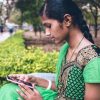
Digital Mentorship: The Key to Women’s Labour Force Participation in India?
Today, approximately 19 million young women are accessing post-secondary or tertiary education in India. Yet, such education has not translated into expected gains in female labour force participation. Only 34 percent of women in India with post-secondary education are active in the labour force, compared to 81 percent of men.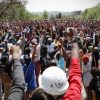
Democracy Loses Its Glow for South Africans Amid Persistent Inequality
South Africans believed that the introduction of democracy in 1994 would transform their lives for the better through equality of opportunities. This hasn’t happened.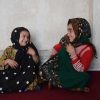
Afghan Moms Receive a Fresh Start in the United States
It was a long, harrowing road for Freshta and Shabaneh, two mothers (their names are pseudonyms) who fled Kabul, Afghanistan, late last summer before eventually settling in the southern New Jersey township of Hamilton.
The World Can Stop Capital Flight Now
Curbing capital flight from developing countries is long overdue. New sanctions against Russian oligarchs show this can be done with the requisite political will. Recent research also shows how to more effectively stop capital flight.
Earth Day to Earth Disaster
Since the first Earth Day observed on 22 April 1970, world conditions have worsened greatly across three critically interrelated global dimensions that portend a disastrous future for life on planet Earth.« Previous Page — Next Page »





The views expressed in these articles are those of the authors and do not necessarily represent the views of, and should not be attributed to, IPS-Inter Press Service

The Week with IPS

NEXT STOP - SDGs
Tracking global progress towards a sustainable world
Tracking global progress towards a sustainable world
