Languages
Saturday, November 7, 2026



News and Views from the Global South
Opinion

Water Graves: Nightmare for Mexican Fishermen
All of Erizo's nightmares are the same. Since his return from the ocean - almost unrecognizable - every bad dream is identical. A wave punches his little boat and throws him into the deep sea where everything is so dark that he can't even see his own hands.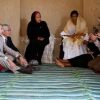
The Afghan Dilemma for the Biden/Harris Administration
President Biden and his administration confront a very challenging situation within the United States and abroad. His predecessor, Mr. Trump, refused to accept the defeat or extend any cooperation to the incoming team.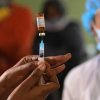
Road to Hell Paved with Good Intentions
Access to COVID-19 vaccines for many developing countries and most of their people will have to wait as the powerful and better off secure earlier access regardless of need or urgency. More profits, by manufacturing scarcity, will surely cause even more loss of both lives and livelihoods.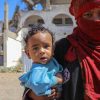
A Counter-Narrative? Ruminations Around Holocaust Memorial Day
For more than two decades, the mantra was “PVE” (preventing violent extremism) and/or “CVE” (countering violent extremism). Millions of dollars were spent, new NGOs and think tanks emerged, government policy papers were drafted, countless books and articles were published, large and small scale initiatives developed - indeed almost an entire industry in development and foreign policy spaces thrived.
Caught in Tangled Web of Vaccine Nationalism
“Oh what a tangled web we weave When first we practice to deceive”. Walter Scott’s lines, already over two centuries old, nicely sum up how pursuit of national advantage and private gain have undermined the public interest and the common good.
A Grey Cloud Over Lebanon: Mental Health Burdens
Humankind is no stranger to the destabilizing events of 2020. The state of the global economy and the outbreak of the COVID-19 pandemic hit the headlines. In this ever escalating global crisis, Lebanon, has been facing what can only be described as unimaginable hardships. For the past year the country has seen challenges which have resulted in an utter state of hopelessness and rapid deterioration in mental health of many of its citizens.
UN Humanitarian Staff in Geneva Experience Anxiety, Job Insecurity & Fear of Tomorrow
For the staff of the United Nations Office for the Coordination of Humanitarian Affairs (OCHA), 2021 is likely to be even more difficult than 2020, with job cuts, forced departures, transfers to Istanbul or The Hague, restructuring and too many rumours.
Elections in Africa go on Amid COVID-19
Central African Republic and in Niger held their presidential and parliamentary elections on 27 December 2020 to round up a challenging year where despite fears of disruption from the COVID-19 pandemic, most countries in Africa managed to stick to their scheduled elections.
“Saving Journalism: A Vision for the Post-Covid World”
In the midst of the COVID-19 pandemic, journalists everywhere are feeling the consequences; job cuts, layoffs and closures have swept the world.
An American Horror story
Occasionally some of us might suffer from a feeling of maximal overload, overwhelmed by COVID-19 and the reign of Donald Trump. It can maybe be conceived as far too euro-centric to be concerned about the disastrous situation in the U.S., with media stuffed to the brim by news about Donald Trump while the global environmental crisis is steadily getting worse and war, injustices and famine continue to agonize people in places like Darfur, Yemen, Afghanistan, and Syria.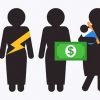
COVID-19’s Social & Economic Fallout Hits Women Harder
With over 90 million confirmed cases and 1.9 million deaths globally, and a second wave sweeping into 2021, the COVID-19 pandemic continues to hold the world hostage.
We are Facing a Climate Emergency, Warns UN Chief
We begin this year with a heightened awareness of the importance of resilience. The COVID-19 pandemic has reminded us that we cannot afford to ignore known risks.
Implementation Research to Achieve Health Related #SDGs
The Sustainable Development Goals (SDGs) aim to ensure healthy lives and promote well-being for all ages. The main focus of the SDGs is to improve equity to meet the needs of women, children and disadvantaged populations in particular.
Poor Lives Matter, but Less
Current development fads fetishize data, ostensibly for ‘evidence-based policy-making’: if not measured, it will not matter. So, forget about getting financial resources for your work, programmes and projects, no matter how beneficial, significant or desperately needed.
Closing the Gap between Developed and Developing Countries: Two Steps Forward, One Step Back
Developing countries as a group have been growing faster than developed countries for several decades. As a result the ratio between average incomes between the two sets of countries – albeit still very large - has been shrinking. This is good news. The other piece of good news is that over this period the number of people living in extreme poverty has also been dropping – from 1.9 billion in 1990 to about 650 million in recent years. China has recently declared an end to extreme poverty.
Inclusive and Equitable Education in the Pacific
In 2019, the United Nations General Assembly proclaimed 24 January as International Day of Education, in celebration of the role of education for peace and development. The United Nations’ Sustainable Development Goal 4 challenges all nations to “ensure inclusive and equitable quality education and promote lifelong learning opportunities for all” by the year 2030. As we think about this in the context of the COVID-19 pandemic, and the emerging post-COVID-19 environment, what does inclusive and equitable education look like and how do we ensure that lifelong learning opportunities are benefitted by all?
Volunteerism in the Decade of Action
After the pioneer Global Technical Meeting on Volunteerism last July, a recently-held on-line follow up helped gathering new insights from experts and practitioners from the world on how to move forward with positioning volunteering at the center of development agenda.
“Their Hope for a Brighter Future Inspires Us All”
Looking back upon 2020, we all bear the scars of a devastating year; none so much as girls and boys around the world. The COVID-19 pandemic disrupted education for over 1.6 billion children and youth globally and continues to do so. It has also deepened socio-economic inequities and heightened insecurities around the world, further impacting the lives of girls and boys everywhere. Ongoing, protracted conflicts, forced displacement and the worsening climate crisis were no less forgiving.
“Teach Us How to Become Carpenters” – South Sudanese Want to Shape Their Future
Located in Jonglei state, one of the most underdeveloped regions of South Sudan, Likuangole is a town badly hit by floods and often battered by conflict. Despite the lack of secondary schools and industry, its residents aspire to transform their lives. But real investment is needed to spur development.
Protecting Mental Health of Families in a Pandemic
Dealing with COVID-19-related city lockdowns has been exceptionally stressful, particularly for those parents who have had to balance work, personal life, children and elderly, providing home schooling or facilitating virtual learning, managing infection control within the home, and more, all while being disconnected from support services.
Biden’s Arms Control Ambitions are Welcome—but Delivering Them will not be Easy
A deadly pandemic to control. An urgent nationwide vaccination programme to roll out. An economic crisis to navigate. Political divisions and distrust deep enough to spark mob violence and terrorism.« Previous Page — Next Page »





The views expressed in these articles are those of the authors and do not necessarily represent the views of, and should not be attributed to, IPS-Inter Press Service

The Week with IPS

NEXT STOP - SDGs
Tracking global progress towards a sustainable world
Tracking global progress towards a sustainable world
