Languages
Sunday, November 8, 2026



News and Views from the Global South
Opinion

Women & Climate: Planting a Global Forest in a Connected World
In January of this year, Britain’s Prince Harry and his wife Meghan, the Duke and Duchess of Sussex, shocked much of the world when they announced they would be stepping down from their roles as senior royals.
Lessons from Nigeria in Responding to Coronavirus
Coronavirus is now a pandemic and the World Health Organization considers Europe as its new epicenter. Italy, Spain and France are on lockdown and several nations are banning travelers from countries where cases are on the rise.
Thirsting for Water Security?
Water is essential and indispensable for life on earth. We know that; and many of us have perhaps heard, written and uttered these words themselves a ‘million’ times.
Plagues and People – The Coronavirus in a Historical Perspective
The human factor is intimately involved in the origin, spread, and mitigation of the Coronavirus and we cannot afford to ignore that our future existence depends on compassion and cooperation. Response matters!
State Intervention Necessary to Overcome Covid-19 Threats
It is now clear that most East Asian government responses to novel coronavirus or Covid-19 outbreaks have been effective. In Hong Kong, Japan, Singapore and Taiwan, the number infected have remained relatively low despite their proximity and vulnerability, while containment in China and South Korea has been impressive.
Coronavirus & Water Pandemics: Doing the Math
As the COVID-19 coronavirus pandemic spreads, guidance on how wash your hands and other measures intensifies. These recommendations are important, but they are hardly of value to the 40% of humanity lacking access to even the most basic hand washing requirements — soap and water 1.
COVID-19 in Africa: Fewer Cases So Far, and More Preparation Needed
The novel coronavirus disease (COVID-19) outbreak, recently declared a pandemic by the World Health Organisation, has taken the world by surprise. The good news is that tremendous scientific and technological advances have permitted scientists to understand a lot about this virus in a short amount of time.
Use Stimulus Packages for Longer Term Progress
The coronavirus pandemic seems to have finally forced governments around the world to ditch their obsession (at least for the moment) with delivering budget surplus. As stock markets tumble, stimulus measures, worth billions of dollars, are announced to boost investor confidence and consumer spending to keep economies running.
It’s Disinformation, Stupid!
During his 1992 run, Bill Clinton, then elected US president, made "It's the economy, stupid!” a household phrase. Coined by campaign advisor James Carville, it pointed out economic and health issues as part of the strategy resulting in the accession of this relatively obscure governor of Arkansas into the White House.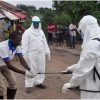
Why Nigeria Knows Better How to Fight Corona Than the US
The coronavirus disease, otherwise known as COVID-19, was first reported in Wuhan, China on the last day of December 2019. When it began to spread rapidly, the World Health Organisation (WHO) declared it a public health emergency of international concern on 30 January 2020.
Population 2020: Demographics can be Potent Driver of Pace & Process of Economic Development
“Demography is destiny” is an oft-cited phrase that suggests the size, growth, and structure of a nation’s population determines its long-term social, economic, and political fabric.
Share Buybacks Enable Predatory Value Extraction
‘Getting government out of the way’, the neoliberal ‘free market’ mantra, was supposed to boost private investment. Instead, business investment has declined as a consequence. Many economies now seem incapable of making much needed investments to sustain growth, apparently due to ‘capital allocation’ problems.
I Am Generation Equality: Storytelling for Equality
When you flip through grade one Bangla school textbooks there is very little written about the progress women have made in Bangladesh since the Beijing Conference for Women in 1995.
Polycephaly* in Afghanistan: Failure of the US or Curse of History
The fourth and last presidential election in Afghanistan on 28 September 2019 was yet another setback to the democratic process. Not only did it take months for the Independent Election Commission to announce the results but they were again marred by allegations of massive fraud that culminated with two candidates declaring themselves as winners.
Global Economic Consequences of COVID-19
The panic resulting from the events starting with the deaths in Wuhan keeps spreading globally faster than the spreading of the virus itself. Quite apart from the immediate health dangers, now a new economic danger looms large globally. We are facing the prospects of a deep and lasting global recession regardless of the health policy and economic policy measures taken by China, the US and other countries unless there is timely global cooperation and coordination. What will be the global economic impact of COVID-19 if swift and effective action is not taken globally? Is there a way to find out through some kind of rigorous model-based economic analysis?
Fight, Not Flight, Must Be the Strategy for Flattening the COVID-19 Curve
The number of coronavirus cases in Kenya has jumped to three after the government confirmed two more cases. President Uhuru Kenyatta has announced a raft of proactive measures to prevent the spread of the virus.
Norms and Prejudices are Still Holding Women Back
Two profound incidents happened the week of International Women’s Day.
A Woman Peacebuilder’s Reflections on Beijing+25 & the Generation Equality Forum
Where are the women and youth peacebuilders in the Beijing+25 and the Generation Equality Forum processes? Their absence raises serious questions about the effectivity and coherence of the work of the UN on gender equality since armed conflict is both a cause and a consequence of gender inequality.
Rural Poverty and Disability in Ethiopia
With about 109 million people, Ethiopia is the second most populous nation in Africa after Nigeria, and the fastest growing economy in the region. However, it is also one of the poorest, with a per capita income of $790.
The 2020 NPT Review Conference: From the Sublime to the Ridiculous
This year marks the 50th anniversary of the nuclear Non-Proliferation Treaty (NPT) and coincidentally the tenth quinquennial (five yearly) review conference is scheduled to be held at the United Nations in New York from 27 April to 22 May.
How will COVID-19 Affect Economies of Latin America & the Caribbean?
History shows that in Latin America and the Caribbean, volatility is the norm and not the exception and that the development trajectories of their countries are not linear.« Previous Page — Next Page »





The views expressed in these articles are those of the authors and do not necessarily represent the views of, and should not be attributed to, IPS-Inter Press Service

The Week with IPS

NEXT STOP - SDGs
Tracking global progress towards a sustainable world
Tracking global progress towards a sustainable world
