Languages
Thursday, September 17, 2026



News and Views from the Global South
New Alternative in Senegal After Wade Defeat
Analysts say that Senegal’s outgoing President Abdoulaye Wade was made to pay for his failure to respond to popular demands, particularly arising from the high cost of basic commodities, a lengthy strike by teachers, and high youth unemployment, by losing his bid for a third term of office.OP-ED: Narcotics Watchdog Turns Blind Eye to Rights Abuses
In a world where drug offences are punishable with the death penalty, torture or arbitrary detention, we must ask how far States can go to enforce the global prohibition on drugs.OP-ED: Tunisia’s Youth and Their Fight for Freedom of Expression
In Tunisia, a new debate is taking shape. Long suppressed by the authoritarian regime of former President Zine el Abidine Ben Ali, Tunisia's free expression movement for many years existed on the fringe, comprised of bloggers, software developers, media aficionados and expats whose frustration at Tunisia's Internet censorship and surveillance regime – in place for over a decade – fomented their activism.Neighbours to Confront Mali Coup Leaders
Mali's neighbours have threatened to use sanctions and a readiness to use military force to dislodge those behind last week's coup, urging them to quickly hand back power to civilian rulers.
Women Lead Poverty Reduction in Bangladesh
Kalpana Rani Pal’s pottery business is modest by any yardstick but it is small enterprises like these that are helping reduce poverty levels in Bangladesh.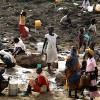
The Forgotten Emergency in Sudan’s Blue Nile State
Hamid Yussef Bashir said he walked for 17 days with his wife and five children to get to a refugee camp in South Sudan. Here in Jamam, they joined about 37,000 other people who fled from the war across the border in Sudan’s Blue Nile state.
Learning Lessons From the Khmer Rouge
For four years, Wan Preung toiled in the fields under the Khmer Rouge, unable to speak his mind. But after the regime fell in 1979, there was still one sensitive subject the teacher could seldom broach with his students: the Khmer Rouge.
Former War Zone Produces Plenty
Most things in Sri Lanka are becoming expensive these days. In early February fuel prices were increased by margins ranging from eight to 49 percent, with the all-important diesel, used widely in commercial transport and power generation, going up by 36 percent. The Sri Lankan rupee that was trading at 107 rupees to the dollar in January surpassed 130 rupees per dollar last week.
Pope Strikes Moderate Tone in Cuba
On his three-day visit to Cuba, Pope Benedict XVI has so far struck a moderate tone, although he called on Catholics in this country to fight with the "weapons" of peace and understanding for an "open, renewed society."
Argentine Baby Theft Trial Nears End
The trial for the theft of babies of political prisoners during Argentina’s 1976-1983 dictatorship is nearing its end after more than three decades of work by the Grandmothers of the Plaza de Mayo, who have so far tracked down 105 of an estimated 500 missing children.Pro-Peace Jewish Lobby Stresses Return to Stalled Talks
At the third annual conference of J Street, the "pro-Israel, pro-peace" lobby group that is widely seen as a counterweight to the more right-wing American Israel Public Affairs Committee (AIPAC), the Israel-Palestine conflict took the focus back from the ongoing tension with Iran.Climate Change Threatens the Poor in Cities
India, like other Asian countries, has focused its climate change adaptation strategies on rural and urban areas while neglecting the urban fringes, say experts.
Exit Americans, Enter Sectarian Strife
Barely three months after the pullout by U.S. troops, sectarian clashes between Sunni and Shia Muslims have begun to take a heavy toll across Iraq.Salvadoran Civil War Survivors Demand Restorative Justice
A choked-up Mercedes Alfaro told the fourth session of the International Restorative Justice Tribunal in El Salvador how she lost seven members of her family in a 1982 massacre.
Climate Change Aggravates Water Shortage in Cuba
In this eastern Cuban city, Danny Dip Leyva has begun to use her shower again after decades of hauling water into her house by hand. But in Aurora, a small neighbourhood on the outskirts of Havana, Manuel Roque still longs for a regular supply of piped water.Turkey’s Ex-Army Chief on Trial for Coup Plot
Ilker Basbug, Turkey's former army chief, has gone on trial on charges of leading a terrorist group accused of plotting to overthrow the government of Prime Minister Recep Tayyip Erdogan.
Urgent Need for “New Deal” in Equality and Sustainability
The pressing need for a global "new deal" to foster sustainable development and reduce inequalities was the conclusion of the 2012 Global Human Development Forum, a new initiative by the United Nations, held in Istanbul from Mar. 22-23.Urban Gardening Benefits Pocketbooks and Health in Guatemala
"It benefits both our finances and our health, because the vegetables help prevent illness while they nourish our children," says Lesbia Huertas, standing in the middle of her yard filled with containers sprouting vegetables in Palencia, 28 km northeast of the Guatemalan capital.OP-ED: The Key Is Youth Participation
When the secretary-general of the United Nations recently said that failing to invest in the one billion young people of the world "is a false economy", he certainly had more in mind than just a useful business idea.
The Ticket to an Education in Cote d’Ivoire
The births of tens of thousands of children during Côte d'Ivoire's eight-year rebellion were not formally recorded. Providing these children with birth certificates is one of the mundane yet vital challenges facing the authorities as they work to re-establish the country's public administration.
Freeing Childhood From Prisons
Hamza has memories no 17-year-old should. "I was desperate. I didn't talk to anyone. I didn't want to go outside the house. I was very nervous. I'd be irritated with the simplest matters."« Previous Page — Next Page »


The Week with IPS

NEXT STOP - SDGs
Tracking global progress towards a sustainable world
Tracking global progress towards a sustainable world
