Languages
Wednesday, October 28, 2026



News and Views from the Global South
Active Citizens

IPS Honours Crusader for Nuclear Abolition
Jayantha Dhanapala was awarded the IPS International Achievement Award for Nuclear Disarmament Monday at the United Nations in New York.
OPINION: The Clock Is Ticking for Nuclear Disarmament
A nuclear weapon-free world can and must happen in my lifetime. This may seem a bold and wildly Pollyannaish statement for me to make after a lifetime of work in peace and disarmament.
U.S. Missing in Child Rights Convention
On Nov. 20, the whole world will be celebrating the 25th anniversary of the world’s most universally ratified human rights treaty, the U.N. Convention on the Rights of the Child (CRC). Sadly, the United States of America won’t be at the party or will simply be watching from the sidelines.
Depression Casts Cloak of Infertility Over Kashmir Valley
It was almost midnight when Mushtaq Margoob woke up to the incessant ringing of his phone. It was his patient, a young woman whom Margoob, a renowned Kashmiri psychiatrist and head of the department of psychiatry at the only psychiatric hospital in Kashmir, had been treating for depression for many years.
Fighting the Islamic State On the Air
There is daily news broadcasting at 9 in the evening and a live programme every Tuesday, Thursday and Saturday. For the time being, that is what Mosul´s only TV channel has to offer from its headquarters in Erbil, the capital of Iraqi Kurdistan.
Pushing the Voice of Syrian Women For a New Future
For most Syrian women, the war has been a disaster. For some, it has also been liberating.
Women’s Safety Schemes Go Mobile in India
It was 9:45 pm when 23-year-old Manira Chaudhury, a final-year Master’s student in New Delhi, who was traveling home in a rickshaw, pressed a button on her smart phone that sent out emergency alerts to two of her closest friends.
Latin America Moves Towards Decarbonising the Economy
When the advances made towards curbing global warming are analysed in the first 12 days of December in Lima, during the 20th climate conference, Latin America will present some achievements, as well as the many challenges it faces in “decarbonising development”.
Dhanapala to Receive IPS Award for Nuclear Disarmament
Jayantha Dhanapala, a former U.N. under-secretary-general for disarmament affairs (1998-2003) and a relentless advocate for a world free of nuclear weapons, will be the recipient of the 2014 International Achievement Award for Nuclear Disarmament sponsored by Inter Press Service (IPS) news agency.
Ebola and ISIS: A Learning Exchange Between U.N. and Faith-based Organisations
The simultaneity presented by the outbreak of the deadly Ebola virus on one hand and militant barbarism ostensibly in the name of Islam on the other present the international development community - particularly the United Nations and international NGOs – with challenges, as well as opportunities.
Legal Vacuum Fuels Conflicts Over Water in El Salvador
Rural communities and social organisations in El Salvador agree that the lack of specific laws is one of the main hurdles to resolving disputes over water in the country.
Big Soda Challenged on World Diabetes Day
Corporations marketing unhealthy foods to poorer consumers are being challenged for their role in the growing global burden of diseases like diabetes.
Braving Dust storms, Women Plant Seeds of Hope
In the world’s largest refugee complex – the sprawling Dadaab settlement in Kenya’s North Eastern Province – women listen attentively during a business management workshop held at a hospital in one of its newest camps, Ifo 2.
As TPP Trade Talks Miss Third Deadline, Opponents Claim Momentum
For the third year in a row, government negotiators for 12 Pacific Rim countries have missed an internal deadline to reach agreement on a controversial U.S.-led trade deal.
Responding to Climate Change from the Grassroots Up
As concern mounts over food security, two community groups are on a drive to mobilise average people across Antigua and Barbuda to mitigate and adapt in the wake of global climate change, which is affecting local weather patterns and by extension, agricultural production.
Extractives Companies “Not Ready” for Transparency Requirements
The world’s largest corporations continue to publicise scant information about their global operations, according to new analysis that warns that extractives companies in particular are unprepared for pending disclosure requirements.
Women Challenged by Rising Extremism and Militarism
Ongoing military conflicts in the strife-torn Middle East - specifically in Iraq, Syria, Libya and Palestine - have resulted in widespread civilian casualties, impacting heavily on the most vulnerable in besieged communities: women and children.
El Salvador Restores Biodiversity in the Face of Climate Change
Carlos Menjívar has been ferrying people in his boat for 20 years in this fishing village in western El Salvador surrounded by ocean, mangroves and wetlands, which is suffering the effects of environmental degradation.
OPINION: Global Governance – We Need to Bring Civil Society to the Table
A poorly understood phenomenon is quietly but effectively shaping the daily lives of all citizens sharing this planet.Global Tax-Evasion Crackdown Sidestepping Poorest Countries
While a major global campaign to cut down on tax evasion is picking up momentum, anti-poverty advocates say the initiative overlooks the world’s poorest countries.
Child Poverty in Spain Seen Through the Eyes of Encarni
“I would like to have a big house, and I wish my family didn’t have to go out and ask for food or clothes,” Encarni, who just turned 12, tells IPS in the small apartment she shares with five other family members in a poor neighbourhood in the southern Spanish city of Málaga.« Previous Page — Next Page »





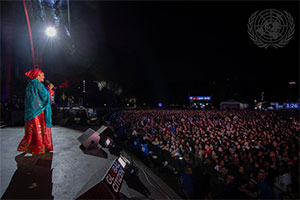 Global Citizen Festival in New York. Credit: UN Photo/Eskinder Debebe
Active citizens are committed to social change because they know that it is achievable. However, major political challenges face active citizens across the world. For example, in authoritarian regimes in Latin America where the hegemonic party has been in power for decades on end, protestors and human rights activists face enormous repression and struggle to materialize their advocacy into concrete results. The same can be said for Africans, where a shift towards elected government in recent decades has yet to translate into an effective voice in decision-making. Now, the Strengthening Citizen Demand for Good Governance, which uses evidence-based approaches – funded by DFID's Governance and Transparency Fund – seeks to raise their voices.
In 2025, the CIVICUS Monitor’s People Power Under Attack report revealed that civic freedoms are severely limited in 122 of 198 countries and territories, and only 7.2% of the global population now lives in countries where civic space is open. Through partnership with the Overseas Development Institute (ODI) and CIVICUS, IPS reporters across the continent will seek to define the extent and limits of state capability, government accountability and the responsiveness of leaders to the needs of citizens.

The Week with IPS

NEXT STOP - SDGs
Tracking global progress towards a sustainable world
Tracking global progress towards a sustainable world
