Languages
Saturday, October 17, 2026



News and Views from the Global South
Civil Society
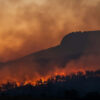
The Overlooked Fast Track for Cutting Planetary Warming
Among the three of us, we have 15 decades of high-level experience in climate science, policies and actions, and we have never been more alarmed than we are at this moment. The United Nations has just officially declared that the world has failed in limiting global warming to a safe level. During the last decade, heat-trapping pollutants nearly doubled the rate that heat is being added to the planet—a rate that will push temperatures across the 1.5°Celsius threshold in five years or less and breach the first barrier of the Paris Agreement. This will further destabilize natural climate systems and amplify weather extremes, which are already costing the world economy more than $ 2 trillion annually. At the current rate of warming, the global temperature is likely to cross 2° Celsius in about 15 years, the outer limit of the Paris Agreement, taking us into a climate not witnessed by homo sapiens, ever.
IRAQ: ‘Art Is the Only Weapon That Doesn’t Hurt or Kill’
CIVICUS discusses public art, gender-based violence and censorship in Iraqi Kurdistan with Tara Abdullah, a multidisciplinary visual artist from Sulaymaniyah who is currently based in Oslo, Norway as part of the Safemuse – Safe Havens for Artists residency.

Floods, Hunger and Disease Pile on Myanmar’s Civil War Misery
Isolated and at constant war with itself, Myanmar’s humanitarian crisis is deepening as global challenges far exceed the capacity to respond of a military regime increasingly focused on its own survival.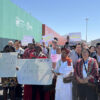
What Isn’t Named Isn’t Protected and being Named Isn’t Enough
Rightsholders came to Ulaanbaatar from across the world, carrying declarations, demands and years of experience defending the lands on which their communities depend. Indigenous Peoples, local communities, Afro-descendant Peoples, women and youth were equally clear about what they needed from COP17. But being in the room is not the same as having power in the room.
Climate Week NYC Kicks off With World Leaders’ Commitments to Action
The Climate Group’s annual conference in New York City has attracted thousands of attendees this year, among them world leaders, corporate heads, philanthropists, and climate advocates. Those leaders present at the opening ceremony of Climate Week have made clear calls to collectively tackle climate issues.
Life-Changing Humanitarians Empower Women Against Violence in Papua New Guinea’s Highlands
In the remote Highlands region of Papua New Guinea (PNG), humanitarians are life-saving beacons to women and girls facing myriad forms of violence. Despite years of awareness programmes and advocacy, the incidence of domestic and sexual violence is not declining. But Janet Kilea is one survivor who has rejected the fear and stigma of her experience and now dedicates her energy to transforming other women’s lives.
Sudan: Blood on Foreign Powers’ Hands
Sudan’s civil war grinds on. It’s close to three and a half years since the Sudanese Armed Forces (SAF) and the Rapid Support Forces (RSF) militia began their battle for supremacy, and the two forces and their allies continue to slaughter civilians with impunity. As a recent UN report makes clear, the killing is enabled by numerous foreign powers that continue to supply weapons, personnel and logistical support. They have made a civil conflict their proxy war, and their self-interest is sustaining the killing.
Outpacing Foreign Aid, Migrant Remittances Are a Lifeline Ensuring Families Are Fed and Healthy, Says IFAD
Migrants now send home more money than foreign aid, and this is pulling rural families out of poverty, according to the International Fund for Agricultural Development (IFAD).
ETHIOPIA: ‘Reporting on Abuses Shouldn’t Be Treated as a Threat to National Interest’
CIVICUS discusses renewed conflict and a growing crackdown on independent media in Ethiopia with Yonas Kedir, Editor-in-Chief of the independent news outlet Addis Standard, who was recently abducted and detained by government forces.

African Farmers Demand Affordable Finance as Governments Fall Short on Funding
Agriculture remains underfunded in Africa as governments struggle to deliver on decades-old promises to dedicate 10% of national income to agriculture.
Killing of Environmental Defenders Reflects Power Struggle Over World’s Resources
At least 124 land and environmental defenders were killed around the world in 2025 while protecting forests, rivers, farmland and Indigenous territories, according to a new report by Global Witness that warns violence against activists remains widespread even as recorded killings have declined from previous years.
One Man’s Quest to End Female Genital Mutilation (FGM) in Mali
In Mali, an estimated nine out of ten women and girls have undergone female genital mutilation (FGM). And for years, Sidi Haidara, a father and recognized leader in his community, believed the practice was simply part of life.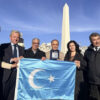
Transnational Repression: A World Without Refuge
On 24 August, I took part in a human rights conference in Buenos Aires, Argentina. Days before it opened, the city legislature cancelled the intended venue after the Chinese ambassador complained to the Argentine government about the participation of prominent Uyghur human rights defenders, including Dolkun Isa, an activist exiled in Germany. Beijing has waged a campaign of mass detention and forced assimilation against the mostly Muslim Uyghur population for years.
Global Survey Finds Deep Crisis of Trust as Majority Say Economic System Favours the Rich
An international survey released by Earth4All has found a growing crisis of trust in governments, widespread anger over inequality, and strong public support for major economic reforms, suggesting that many people across the world believe current political and economic systems are failing to serve ordinary citizens.
A Spectre is Haunting Europe — the Spectre of Ultra-Nationalism
During summer months there is a certain news drought. Nevertheless, this year social media has been crowded with news from wars in the Middle East and Ukraine, while customary tales about grisly murders have not been neglected. In Sweden it is election year and summer reporting has been supplemented by a debate about “hate speech against ethnic groups”. If individual tragedies connected with murders upset people, many seem to be indifferent to the fact that entire population groups are targeted by politicians. Swedish social media is overloaded with outcries about “Muslim” immigration and concerns about Sweden becoming “Islamized” and in danger of being transformed into a new Afghanistan.
Investment in Irrigation Systems Is Vital in Preparing for the Next Climate Shock
When the African continent experiences erratic rains, crops fail, leaving millions of people facing hunger.
PHILIPPINES: ‘Responding to Disinformation Can’t Mean Giving the Government a Mandate to Police Truth’
CIVICUS discusses the implications of the Philippines’ proposed anti-disinformation bill with Josalee Deinla, Secretary-General of the National Union of Peoples’ Lawyers, a civil society organisation that defends civil liberties in the Philippines.
US Plans to Restrict Foreign Journalists Trigger Rising Protests
First, it was the mass deportations of undocumented aliens, then a crackdown on liberal-minded academics from prestigious US Universities, and now, restrictions on foreign journalists based in the US.
Lawmakers Need to Grapple With the ‘Human Story’ of the Aged, Youth, Women and Girls when Making Policy
"As parliamentarians, we should understand that behind every demographic indicator is a human story,” Kamikawa Yoko, MP Japan and Chair of AFPPD, reminded lawmakers in her opening address to the Asian Forum of Parliamentarians on Population and Development (AFPPD) annual conference held in Kuala Lumpur, Malaysia.
Development Goals Falter as Civil Society Is Shut Out
When the UN High-level Political Forum on Sustainable Development (HLPF) ended in New York in July, it took two recorded votes for states to pass a ministerial declaration that, until recently, would have been adopted without controversy. Uruguay, speaking for the Group of 77 developing countries plus China, pushed through the deletion of a reference to the agreement reached at the COP28 climate summit. Israel forced a vote on a paragraph about self-determination for people under occupation. Russia dissociated itself from the passage on peace and security. The wrangling revealed the extent to which the consensus that in 2015 saw all 193 UN states agree the Sustainable Development Goals (SDGs) – a common blueprint to end poverty, tackle climate change and build accountable institutions by 2030 – has been eroded.
The USA and Dictatorship – Gödel’s Loophole
Observing some of the changes over the last year and a half in the Government of the USA, one question that comes to mind is whether the greatest democracy in the world turning into a dictatorship? And, if so, how is this possible in a country with one of the most articulate and thoughtful constitutions ever written –a constitution which clearly sets out checks and balances precisely to avoid undue concentration of power.« Previous Page — Next Page »





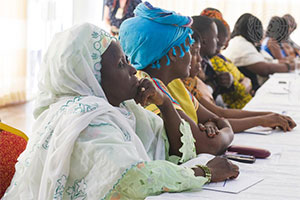 Representatives of Civil Society, Sierra Leone. Credit: UN Photo/Eskinder Debebe
Civil society faces mounting threats worldwide, even as it remains essential for democratic accountability, especially in countries struggling with economic instability and social inequality. However, at the same time, nations with weak democratic governance structures also systemically suppress the power of civil society. Human rights activists across the Global South frequently challenge issues such as political persecution and gender oppression, but in return face state-sanctioned punishment for their advocacy. Imprisonment and exile are common mechanisms of punishment that seek to erode the strength of civil society. The 2026 World Press Freedom Index has reached its lowest level in 25 years, with more than half of the world’s countries now falling into the "difficult" or “very serious” category for press freedom. IPS seeks to highlight the work of civil society across the Global South as well as the challenges that they face.
Updated by Yilan Batista and Shuli Wong August 2026

The Week with IPS

NEXT STOP - SDGs
Tracking global progress towards a sustainable world
Tracking global progress towards a sustainable world
