Languages
Monday, November 23, 2026



News and Views from the Global South
Civil Society
Trans-Pacific Trade Talks Grind On
The 14th round of negotiations for the Trans-Pacific Partnership (TPP), the proposal for a massive free-trade area spearheaded by the United States, got underway here over the weekend.
Small Dams – from Heroes to Villains in Brazil
A recent Brazilian court decision to suspend construction of small hydroelectric dams along the Paraguay River has highlighted the doubts raised about a growing alternative source of energy that until recently was considered one of the most environmentally-friendly sources.Despite War Anxiety, a Cooperative Mood in Iran
More than three years after the contested 2009 presidential election, many Iranians continue to mistrust their government. But rather than stand on the sidelines, they are still trying to better the conditions in the country.
Exchanging Peace, One Postcard at a Time
When Ross Holzman packs for a work trip, he brings three bags with him: One with blank postcards, one with crayons, and one with thousands of artworks created by children around the world.Belarus Heads for Election, not Democracy
Belarusians will vote for a new, but still regime-controlled parliament on Sep. 23. At least those who do not respond to calls for boycotting the poll.
Syrian Kurds Find the Language of Freedom
"I want to learn how to read and write in my own language," says Manal, a young Kurd from Syria. Neither she nor any of Manal’s 30 classmates have ever been so close to achieving their goal.Microfinance Brings Hope to Myanmar’s Farmers
After decades of grinding poverty under successive military dictatorships, Myanmar’s rice farmers have a chance at a better future through rural reforms ushered in by the country’s quasi-civilian government. Microfinance is at the root of it.
Losing Land, and Finding a Roof
Asmahan Ramadan and her family have taken thousands of photos on the rooftop of their home. Not of themselves, or of the overcrowded Dheisheh refugee camp they see every day.Kyoto Protocol May End With the Year
As government negotiators from the world’s poorest countries ended a round of United Nations climate change talks in the Thai capital, they sounded a grave note about what appears imminent when they assemble in November in Doha – the reading of the last rites of the Kyoto Protocol.
Culture of Peace Should Replace Culture of Violence
When U.N. Secretary-General Ban Ki-moon addresses the High-Level Forum on Culture of Peace later this week, he will transmit a message that underlines his political philosophy: all disputes need to be resolved by peaceful means, not through military might.Getting Into the Business of Environment
Regulations that stand in the way of conservation programmes lower their likely success, experts warned at the World Conservation Congress of the International Union of Conservation of Nature (IUCN) in Jeju, South Korea.
Taliban Need No Education
Samina Afridi, a lecturer at the University of Peshawar, regrets that down history the leaders of the Pashtun (also Pakhtun) tribes have conspired to keep them away from education and literacy. The Taliban are only the latest example.
Peace in Afghanistan, the Civil Society Way
More than a decade after the fall of the Taliban, Afghanistan is still in the midst of an irregular war. Talking peace is difficult because no one quite knows who to talk to.
Environment Congress Looks First at the Island It’s Meeting On
Before business could get under way, the controversy had to be dealt with. That appeared to be the strategy of the South Korean government just before the opening of the high profile International Union of Conservation of Nature (IUCN) World Conservation Congress here on Thursday.
Amidst Rising Xenophobia, U.N. to Reiterate Culture of Peace
Amidst growing attacks on religious groups and a rising intolerance toward migrants and minorities worldwide, the 193-member General Assembly will hold a High-Level Forum next week to discuss one of the key issues on the U.N. agenda aimed at promoting social, economic and political harmony: a culture of peace.
Israeli Women Fight Orthodox Curbs
After filing the first-ever class-action lawsuit on the issue of gender segregation in Israel, a local religious women’s rights group says it hopes to protect the rights of women in the public sphere of Israeli society.
Climate Adaptation Troubles Karachi’s Planners
Climate proofing this bustling port city is a daunting task for planners who must consider factors ranging from proneness to flooding and administrative malaise to the fact that 60 percent of its 18 million people live in slums.
Tibet Burns, On the Backburner
Two Tibetan teenagers set themselves on fire and took to the streets of Aba in southwestern China last week, managing to walk only a short distance before collapsing. They both died the following day.U.S.: Rights Activists Call on U.S. to Revise Bahrain Policy
Human rights activists are calling on the administration of President Barack Obama to radically revise its policy toward Bahrain in light of the decision by an appeals court in the kingdom this week to confirm harsh prison sentences against 13 opposition activists.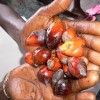
U.S. Company Accused of Greenwashing Cameroon ‘Land-Grab’
Environment groups are accusing a New York-based agricultural company, Herakles Farms, of going forward with plans for a 73,000-hectare palm-oil plantation and refinery in southwest Cameroon despite a lack of government authorisation, two court injunctions, and in the face of significant community opposition.
Indigenous Consultations in Peru to Debut in Amazon Oil Region
Peru will debut a new mechanism for prior consultation with indigenous peoples by seeking their approval for a new stage of oil drilling operations in the infamous Lot 1AB in the northeastern Amazon region of Loreto.« Previous Page — Next Page »


 Representatives of Civil Society, Sierra Leone. Credit: UN Photo/Eskinder Debebe
Civil society faces mounting threats worldwide, even as it remains essential for democratic accountability, especially in countries struggling with economic instability and social inequality. However, at the same time, nations with weak democratic governance structures also systemically suppress the power of civil society. Human rights activists across the Global South frequently challenge issues such as political persecution and gender oppression, but in return face state-sanctioned punishment for their advocacy. Imprisonment and exile are common mechanisms of punishment that seek to erode the strength of civil society. The 2026 World Press Freedom Index has reached its lowest level in 25 years, with more than half of the world’s countries now falling into the "difficult" or “very serious” category for press freedom. IPS seeks to highlight the work of civil society across the Global South as well as the challenges that they face.
Updated by Yilan Batista and Shuli Wong August 2026

The Week with IPS

NEXT STOP - SDGs
Tracking global progress towards a sustainable world
