Languages
Saturday, November 28, 2026



News and Views from the Global South
Civil Society
RIGHTS: Swazi Law And Custom Under Pressure
When the women's movement in the southern African kingdom of Swaziland took to the streets in August to challenge what they called extravagance by the royal family, Swazi traditionalists were livid.
COLOMBIA: Oil Palms, Right Abuses Hand in Hand in Northwest
As of this week, there is one less human rights defender in the northwestern Colombian region of Bajo Atrato. Jimmy Jansasoy of the Inter-Church Justice and Peace Commission was forced to flee the area, where oil palm plantations have encroached on the collectively-owned jungle territories of traditional black communities.
RIGHTS-SOMALIA: Building Women’s Leadership
The moderator raps her pen on the table to hush the boisterous assembly of Somali women gathered in Bagamoyo, on the Indian Ocean coast of Tanzania. Their voices drop for a moment before the sound level rises again to a heated crescendo.
RIGHTS-NEPAL: Truth, Reconciliation in Limbo
When Nepal's Supreme Court directed the government in June 2007 to form a commission to investigate cases of forced disappearances, during the 1996-2006 civil war, it extended hope to many survivors. More than a year later the idea of a truth and reconciliation commission (TRC) is still in limbo.MEDIA-THAILAND: Satellite TV Boosts Anti-Gov’t Protests
On first impressions, Thailand’s political crisis appears to be an attempt to shape the future of democracy in a kingdom that has witnessed 18 military coups. But the anger that drives a protest movement to topple an elected administration has pitted it against the old media order.CULTURE-CUBA: The Debate Continues
After an interruption of over a year, the Criterios theoretical-cultural centre has resumed a series of lectures analysing the impact of the Cuban government's cultural policy on the arts, one of the tangible outcomes of the debate that shook society here in early 2007.BOLIVIA: Divisions Emerge in Opposition Strategy
Major discrepancies emerged among the rightwing authorities and landowning and business interests opposed to Bolivia’s leftist President Evo Morales in a 10-hour meeting held to coordinate a strategy aimed at the economic suffocation of the government.RIGHTS-CUBA: Dissidents Work for Racial Integration
Dissident groups in Cuba are attempting to open up a debate on the problem of racism in the country, in order to promote "full integration" of all the island's citizens, without discrimination on the grounds of ethnicity or skin colour.
RIGHTS-INDIA: Kashmiris See Power in Peaceful Protests
Firefights between India's armed forces and separatist militants, a feature of life in Jammu and Kashmir state, have now given way to a different type of confrontation - paramilitary troops facing mass protests by peaceful, unarmed demonstrators demanding freedom.
MEDIA-MALAYSIA: Crackdown Follows Electoral Setback
Abandoning a decade-old promise to maintain Internet freedom, the government has closed down the popular and controversial ‘Malaysia Today’ web portal, known for consistently exposing the misdeeds of officialdom and the failings of individual leaders.CHILE: Salmon Farm Workers Left Out in the Cold
While non-governmental organisations appreciate the Chilean government's efforts to improve hygiene and environmental conditions in the salmon industry, they are calling for an end to the expansion of salmon farming and solutions for thousands of workers who lost their jobs because of a crisis in the sector.
DEVELOPMENT: Coming Together To Aid the Poor
In what is turning out to be hard-fought negotiations between rich and poor nations, more than 1,000 government and civil society delegates are gathered in the Ghanaian capital to agree the best ways to deliver and administer aid.NICARAGUA: Name and Identity for Thousands of Indigenous Children
Some 250,000 indigenous children and adolescents who had no legal identity in Nicaragua are in the process of being registered - an essential step towards achieving recognition of their basic human rights.
SIERRA LEONE: Building Peace
Sierra Leone has been a major recipient of foreign aid since the end of a devastating 11-year civil war in 2002. But government, donors and citizens are all questioning how effectively this aid is being used.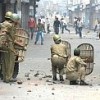
INDIA: Dialogue Missing as Kashmir Erupts
Even as the Jammu region of the strife-torn Indian state of Jammu and Kashmir is settling down to normality and peace, a two month-old turmoil in the Muslim-majority Kashmir Valley shows no signs of abating.CHILE: Keeping Indigenous Languages Alive
"Mari, mari!" shout the excited group of 20 Chilean, Peruvian and Ecuadorean three- and four-year-olds, using the Mapuche language greeting to welcome a visitor to their intercultural day care centre in Santiago.
DEVELOPMENT: Accra Agenda for Action – A Step Backwards?
Ahead of the Third High Level Forum on Aid Effectiveness (HLF3), opening in Accra on September 2nd, representatives of civil society at a parallel forum have raised concerns that the HLF could represent a step backwards in efforts to improve aid effectiveness.RIGHTS-GUINEA: “We Can Forgive, But We Have To Know The Truth”
Kadiatou Diallo Sylla shares a shack with her family in Bambeto, a Conakry suburb. She is haunted by memories of her 14-year-old son, an only child: he was killed by the military during anti-government demonstrations in January 2007.POLITICS-THAILAND: Talk of Anarchy
The tense political drama playing out in the Thai capital that has pitted anti-government protestors against a democratically elected dispensation is threatening this relatively prosperous South-east Asian country with anarchy.SOUTH PACIFIC: Climate Change Refugees Look to Australia, N.Z.
With the apparent effects of global warming already being felt among Pacific island nations, Australia and New Zealand are being urged to do more to prepare for ‘climate change refugees’.
PAKISTAN: Giving Democracy a Chance
As Pakistan appears to lurch from one political crisis to another, there may be a silver lining in the army continuing to keep its distance from politics and the political leadership affirming the democratic process, despite the setbacks.« Previous Page — Next Page »


 Representatives of Civil Society, Sierra Leone. Credit: UN Photo/Eskinder Debebe
Civil society faces mounting threats worldwide, even as it remains essential for democratic accountability, especially in countries struggling with economic instability and social inequality. However, at the same time, nations with weak democratic governance structures also systemically suppress the power of civil society. Human rights activists across the Global South frequently challenge issues such as political persecution and gender oppression, but in return face state-sanctioned punishment for their advocacy. Imprisonment and exile are common mechanisms of punishment that seek to erode the strength of civil society. The 2026 World Press Freedom Index has reached its lowest level in 25 years, with more than half of the world’s countries now falling into the "difficult" or “very serious” category for press freedom. IPS seeks to highlight the work of civil society across the Global South as well as the challenges that they face.
Updated by Yilan Batista and Shuli Wong August 2026

The Week with IPS

NEXT STOP - SDGs
Tracking global progress towards a sustainable world
