Languages
Wednesday, November 11, 2026



News and Views from the Global South
Civil Society
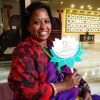
Taking Bangladesh to Zero-Leprosy, One New Case at a Time
Sandhya Mandal has never felt so vindicated. For the past four years, the 36-year-old community health worker from Meherpur – a rural district bordering India – has been traveling 50 km every day along dusty roads on an old motorbike, searching for leprosy patients who needed urgent treatment. But in her community, instead of compliments, neighbours and relatives raised questions about her work and her character. “They ask why I come home so late and what is this ‘work’ that I really do. Some even imply that I might be doing something like prostitution,” Mandal tells IPS.
Nippon Foundation Announces US$ 2m Support for the Education of Rohingya Children in Bangladesh
In the light of limited access to education for displaced Rohingya children, the Nippon Foundation has announced US$ 2 million support to BRAC to launch a project to ensure educational facilities to both Rohingya and local community children.
Bangladesh Can Be Leprosy-Free by 2030 Says Leprosy Activist
 Despite its efforts to eliminate leprosy as a public health threat, Bangladesh's leprosy burden ranks fourth-highest in the world. Four thousand new cases are detected annually – an average of 11 to 12 cases per day over the last 10 years.

Bangladesh Can Be Leprosy-Free Before 2030 Prime Minister Tells National Zero Leprosy Conference
Leprosy is not a curse but should be detected and treated early, Bangladeshi Prime Minister, Sheikh Hasina, has told delegates at a gathering in her country's capital to discuss the elimination of the disease.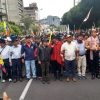
Human Rights and the Global Protests: Addressing Systems as Well as Symptoms
Human rights advocates should be as concerned with the economic injustices giving rise to recent worldwide demonstrations as with the repressive responses to them.
Social Summit Demands Stronger Commitments in Climate Talks
As the COP25 deliberations enter the decisive final week, representatives of environmental and social organisations gathered in a parallel summit are pressing the governments to adopt stronger commitments in the face of a worsening climate emergency.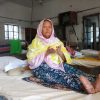
Building a Leprosy Free Bangladesh
Despite having remarkable success in leprosy control in the last decades, the Bangladesh government is now moving forward with a vision to build a leprosy- free country.Volunteerism – An Antidote to a World in Flux
As the world warms, as inequality widens and as an increasing number of societies suffer from instability and conflict, many people are left wondering what they can do about it.
Indigenous Knowledge, a Lesson for a Sustainable Food Future
Local knowledge systems rooted in traditional practices and culture passed down generations provide sustainable solutions to food and nutritional insecurity on the back of climate change, a conference heard this week.
Fixing the Business of Food
Milan is the city where Leonardo da Vinci painted his iconic Last Supper. Frozen in time is the moment Christ told his disciples there was a traitor among them. Visitors to the painting can examine the expressions on the faces of the disciples and look the food they might have eaten – the bread and wine, and of course the spilt salt. As one delegate to the 10th International Forum on Food and Nutrition noted, the diet did not seem varied or healthy.
Zimbabwe Food Crisis: Time to Act Is Now, Says UN Special Rapporteur
 Global food systems are ripe for transformation if people are to be nourished and the planet sustainable, says Hilal Elver, Special Rapporteur of the Right to Food of the United Nations Human Rights Council.
Tradition and Technology Take Centre Stage at BCFN Food Forum
A coffee producer will receive a cent and a half from a $2.50 cup of coffee. This one stark fact stood out as scientists, researchers, activists and grappled with solutions for change in food and nutrition practises, which would benefit the greater community.
Climate Summit Kicks Off, Caught Between Realism and Hope
Tens of thousands of delegates from state parties began working Monday Dec. 2 in the Spanish capital to pave the way to comply with the Paris Agreement on climate change, while at a parallel summit, representatives of civil society demanded that the international community go further.
Under Pressure. Can COP25 Deliver?
Mass public pressure backed by the weight of scientific reports is starting to bring governments to their senses as the annual UN climate summit kicks off in Madrid today.
Africa’s Civil Society Calls for Action as COP25 Kicks off in Madrid
During the 25th round of climate change negotiations starting today in Madrid, Spain, African civil society organisations will call on governments from both developing and developed nations to play their promised roles in combating climate change.
Water Is Worth More than Milk in Extrema, Brazil
"They called me crazy" for fencing in the area where the cows went to drink water, said Elias Cardoso, on his 67-hectare farm in Extrema, a municipality 110 km from São Paulo, Brazil's largest metropolis.
IDB Modernises Crucial Social and Environmental Safeguards
The Inter-American Development Bank (IDB) is in the process of modernising the social and environmental safeguards that govern the financing of projects considered vital for the construction of sustainable infrastructure in the Latin American region.
We Shouldn’t Expect Philanthropists to Fund Activism
Since philanthropists are unlikely to fund anything that destabilises their businesses, building independent institutions can be an effective approach to create lasting impact.
Achieving the Possible: “Weapons of Mass Destruction Free Zone in the Middle East”
A historic conference on the Middle East opened at the United Nations in New York on 18th November and will continue until 22nd November. The Conference on the Establishment of a Middle East Zone Free of Nuclear Weapons and Other Weapons of Mass Destruction is presided over by Ambassador Sima Bahous of Jordan.
With the UN Security Council in Paralysis, Are there New Hopes for Rohingya Muslims?
The 15-member UN Security Council (UNSC) stands virtually paralyzed in the face of genocide charges against the government of Myanmar where over 730,000 to one million Rohingya Muslims have been forced to flee to neighboring Bangladesh since a 2016 crackdown by Myanmar’s military.
End Rape—an Intolerable Cost to Society
If I could have one wish granted, it might well be a total end to rape. That means a significant weapon of war gone from the arsenal of conflict, the absence of a daily risk assessment for girls and women in public and private spaces, the removal of a violent assertion of power, and a far-reaching shift for our societies.« Previous Page — Next Page »





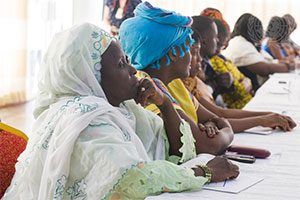 Representatives of Civil Society, Sierra Leone. Credit: UN Photo/Eskinder Debebe
Civil society faces mounting threats worldwide, even as it remains essential for democratic accountability, especially in countries struggling with economic instability and social inequality. However, at the same time, nations with weak democratic governance structures also systemically suppress the power of civil society. Human rights activists across the Global South frequently challenge issues such as political persecution and gender oppression, but in return face state-sanctioned punishment for their advocacy. Imprisonment and exile are common mechanisms of punishment that seek to erode the strength of civil society. The 2026 World Press Freedom Index has reached its lowest level in 25 years, with more than half of the world’s countries now falling into the "difficult" or “very serious” category for press freedom. IPS seeks to highlight the work of civil society across the Global South as well as the challenges that they face.
Updated by Yilan Batista and Shuli Wong August 2026

The Week with IPS

NEXT STOP - SDGs
Tracking global progress towards a sustainable world
Tracking global progress towards a sustainable world
