Languages
Monday, October 5, 2026



News and Views from the Global South
Education

African Languages Matter: Is There Still Time to Prevent Cultural Genocide?
As a 10 year-old newly arrived in Lagos from England, I recall listening intently to how the Yoruba language - my father's language - was spoken. I would constantly repeat in my head or verbally repeat what I thought I had heard. I was not always successful. Many times, what would come out of my mouth would throw my friends into fits of laughter.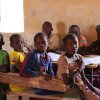
Promoting Peace in Mali
Despite the various challenges they face, teachers are showing incredible dedication to their profession, writes Leandro Salazar-Lievano, our education expert deployed to UNHCR Mali.
Despite Conflict and COVID-19, Children Still Dream to Continue Their Education in Afghanistan
As if four decades of war were not enough, then came the pandemic. For each of the past five years, Afghanistan has been identified by the United Nations as the world’s deadliest country for children and, despite progress made in peace talks between the government and the Taliban, child and youth casualties from the ongoing conflict continue to mount in 2020.
Education Cannot Wait Interviews LEGO Foundation CEO John Goodwin
John Goodwin joined the LEGO Foundation as CEO in April 2017 to pursue a career where he could combine his business skills with his passion for philanthropy and driving positive social impact.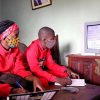
Television Education in Mozambique
"We missed our teachers, they were very friendly and helped us solve the complex exercises, but with the coronavirus, we need to adapt and learn to solve our exercises alone at home," says Alzira Ngomane, 17 years old, and her brother Amilcar Ngomane, 14, from the Albazine district, in the city of Maputo, Mozambique.
Nepal Needs to Bridge the Gap Between Legal Provisions Against Child Marriage and Social Norms
Mohan and Sarita (name changed) studied together in the same school from Grade 6 onwards. They were friends initially, but fell in love and wished to be together, though underage.
$280m ‘Dark Money’ Spent by US Christian Right Groups Globally
US Christian right groups, many with close links to the Trump administration, have spent at least $280m in ‘dark money’ fuelling campaigns against the rights of women and LGBTIQ people across five continents, openDemocracy can reveal today.
The United Nations, 75 Years Young: Engaging Youth Social Entrepreneurs to Accelerate the SDGs
This year, the United Nations is marking its 75th anniversary – a milestone of extraordinary economic and social progress in Asia and the Pacific. While the Organization enjoys a lifespan almost equal to the world’s improved average life expectancy, the future lies with those who have recently embarked on theirs: our young people.
Reaching Remote Women Through Inclusive Technology
The coronavirus pandemic has impacted the way people value working from home, career building, and their overall approach to utilising downtime. It has blurred out the lines between hobby, casual reading, and how time is spent away from work.
Mahatma’s Non-Violence: Essence of Culture of Peace for New Humanity
I will begin by presenting to you excerpts from the message from UN Secretary-General António Guterres on the International Day of Non-Violence.
Education: Act Now, Don’t Wait for the Bill
School reopening doesn’t mean that education is back on course. For a start, schools remain closed in over 50 countries, affecting more than 800 million students. The poorest ones may never make it back to school, driven by poverty into child labour or early marriage. Distance learning has been out of reach for one third of the 1.6 billion students affected worldwide by school closures. They may disengage altogether if school closures continue.
Changing the Lives of Bangladesh’s Rural Girls by Giving them a Tertiary Education
Nila Kispotta, a 19-year-old rural girl from the Oraon ethnic community, has become a figure of exceptional achievement to the small, poverty-stricken village in Thakurgaon in northwest Bangladesh that she grew up in. Born into a family of daily wage earners, Kispotta dreamt of a different life. So when she enrolled in tertiary education to pursue a diploma in Nursing Science and Midwifery — she achieved something her family and community hadn’t even dreamed was possible.
Improving People’s Lives with Digital Technology during COVID-19
Digital technology has been crucial in ensuring community and connection during the coronavirus pandemic and subsequent lockdowns. And its shown that collaboration between the private and public sector can ensure that digital technology continues to advance in a way that improves people’s lives under crises, experts said on Tuesday, Oct. 13.
Building Back Better: Education Cannot Wait
 The United Nations General Assembly adopted Resolution 66/170 declaring October 11 as the International Day of the Girl Child, to recognize girls’ rights and the unique challenges girls face around the world.

Scaling Up SDG4 in Crises
Out of global crises spring opportunities for change. In crisis, change is not an option. It is a necessity. And, as Plato famously noted: “Necessity is the mother of invention.” Education Cannot Wait (ECW) is an invention that sprang out of crisis and was borne of necessity.
On the Occasion of World Teachers’ Day, ECW, GPE, UNESCO & UNICEF Call for the Resumption of Salary Payments for Teachers for the Coming School Year in Yemen
This World Teachers’ Day, celebrated under the theme, “Teachers: Leading in crisis, reimagining the future”, the Global Partnership for Education, Education Cannot Wait, UNESCO and UNICEF are calling for the resumption of salary payments for around half of the Yemeni teachers and school-based staff (estimated 160,000) who have not received regular salary payments since 2016. With suspended salary payments and schools regularly coming under attack, many teachers have been forced to find alternative sources of income to provide for their families.
Teachers Shoulder the Burden: Improving Support in Crisis Contexts
Teachers are at the heart of children and young peoples’ educational experiences. Teachers play multiple roles in their students’ lives by supporting their learning, providing them with inclusive and safe environments to grow and develop, and helping them become more confident as they make their way in the world. As we commemorate World Teachers’ Day on Monday, 5 October and its theme--Teachers: Leading in Crisis, Reimagining the Future--we must recognize the inspiring and transformative role that teachers working in armed conflicts, forced displacement, climate change induced disasters and protracted crises play in their students’ lives.
30th anniversary of World Summit for Children – Today Children Need a New Initiative
On the eve of the UN's 75th anniversary, Antonio Guterres, the UN’s Secretary-General has declared that the coronavirus pandemic is the world's top security threat. He has called for action - for greater international co-operation in controlling outbreaks and developing an affordable vaccine, available to all. Such action is needed and possible -even in the absence of a large gathering of world leaders in New York to celebrate the anniversary. But children today in every country need more.
Peace in the Middle East
After the fall of the Ottoman Empire at the end of WWI, The League of Nations mandated that Britain administer Palestine. The London administration was quite ineffective, in part, due to the contradictory promises which were made to the Arabs, to the Zionists and to France, the other colonial power which divided the territory with Britain.
Fighting India’s Bonded Labour During the COVID-19 Pandemic – Part 1
One of the worst fallouts of the COVID-19 pandemic has been the closure of industries in India, which caused thousands of migrant labourers to return home to villages in Uttar Pradesh, Bihar and Bengal. In a region where the poorest have always been subjected to bonded labour, child labour and slave trafficking, it has meant revisiting the past.
Central Sahel – Shaping peace together with women and young people Statement for International Peace Day
The countries of Central Sahel—Burkina Faso, Mali, and Niger—face an unprecedented crisis, marked by violent extremism, forced displacement, and rising insecurity. The sharp increase in armed attacks on communities, health centres, schools and other public institutions and infrastructure has disrupted livelihoods and access to social services. The impact on affected people is devastating.« Previous Page — Next Page »


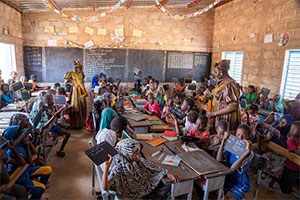 Two teachers work in a classroom in Forces Vives School in Dori, Burkina Faso. Credit: UNICEF/UNI978361
Safe and uninterrupted education is a fundamental right for all children. Education is paramount to global development, as it has been proven that investing in education – especially for girls and children – contributes significantly to economic growth and prosperity. Although more than 1 billion children go to school, many are subjected to conditions that are not conducive to a proper learning environment, including makeshift facilities, a lack of supplies, violence in classrooms, inadequate sanitation, untrained instructors, and widespread school closures. Since 2015, there have been immense gains in education with an increase of 109 million children in school. However, as of 2023, 272 million children are still out of school.
High poverty levels in developing countries also impede children’s access to a proper education. For example, from the early to mid 2000s, Sub-Saharan African nations witnessed a dramatic decline in trained teachers due to inadequate funding in the education sector. Furthermore, major cuts to United States international aid threaten an estimated 23 million additional children's access to education, as USAID‑funded school programmes across Africa and Asia face closure.
Various other factors contribute to the decline of education, notably hunger, which has increased as conflict and climate change interfere with global food production and dissemination. Meanwhile, certain social and cultural practices also impede children’s access to education, with gender inequality, discrimination, child labour, and child marriages preventing millions of children from attending school. Economic conditions such as the inaccessibility of higher education also affect disenfranchised communities across the world. In extreme situations, such as warfare where educational facilities are destroyed in their totality, notably in Gaza and Sudan, entire generations of children might grow up without access to education. Rebuilding educational infrastructure is a long and arduous process, especially when violence persists across generations, and this significantly stunts the development of societal prosperity and stability.
IPS is dedicated to telling the shocking truths about worldwide education through impassioned opinion pieces and comprehensive articles, highlighting global issues that impede worldwide education and the courses of action being taken by organizations such as UNICEF and Education Cannot Wait.

The Week with IPS

NEXT STOP - SDGs
Tracking global progress towards a sustainable world
Tracking global progress towards a sustainable world
