Languages
Tuesday, September 22, 2026



News and Views from the Global South
Energy

Caring for Water Is a Must for Brazil’s Energy Industry
As they build huge hydropower dams, the Brazilian government and companies have run into resistance from environmentalists, indigenous groups and social movements. But the binational Itaipú plant is an exception, where cooperation is the name of the game.
And Now This Filthy Flood
Wearing tattered shoes and hopping between dirty puddles, 14-year-old Sabeh manages to find his way to the market at the Al Shati refugee camp, one of Gaza’s most heavily populated and poor areas.
Nevis Embarks on Geothermal Energy Journey
The tiny island of Nevis in the northern region of the Lesser Antilles is one of the few remaining unspoiled places in the Caribbean. It is now seeking to become the greenest, joining a growing list of Caribbean countries pursuing clean geothermal power.
Mexico Needs a Bouncer at the Oil Industry Door
As Mexico is about to open its oil industry up to foreign investment, it will need penalties for negligence and regulations that force private firms to follow best practices in order to avoid problems like oil spills, analysts say.
World Bank Raises 52b Dollars for Poorest Countries
The World Bank has raised some 52 billion dollars, a record amount, for its fund for development in the world’s poorest countries, though some are expressing concerns over the terms under which some of this money is being offered by donor governments.
Nuclear Energy Small but Strategic in Brazil
Brazil has continued to develop nuclear energy despite the costs involved and the fact that the industry will never account for more than a small portion of the country’s energy production.
Dam the Fish
“I prefer the dam to the fish,” says middle-aged farmer Ton Noun, when asked his opinion on a proposed 400 megawatt dam on Sesan river near his home in northeastern Cambodia. Then he chuckles and asks, “What fish?”
U.S. Wind Industry Buffeted by Uncertainty
The U.S. wind industry looks set to enter a period of uncertainty, with an important government subsidy expiring at the end of the month and no clear plan for lawmakers to work towards an extension.
Mundurukú Indians in Brazil Protest Tapajós Dams
It took them three days to make the 2,000-km journey by bus from their Amazon jungle villages.
Poll Finds Iranians Sceptical of Rouhani Government
A new poll following the election of President Hassan Rouhani says that a majority of Iranians oppose Iran’s intervention in Syria and Iraq and believe that Iran is seeking nuclear weapons despite their government’s claims to the contrary.
The Carbon Warrior
Watching the colossal destruction of Typhoon Haiyan over the past month, Columbia University Professor Graciela Chichilnisky knows one thing for sure: climate change will likely result in more of these massive storms, threatening the very existence of humanity.
Arab World Sinks Deeper into Water Crisis, Warns UNDP
The Arab world is widely perceived as blessed with an embarrassment of riches: an abundance of oil (Saudi Arabia), one of the world’s highest per capita incomes (Qatar), and home to the world's tallest luxury building (United Arab Emirates).
In Haiti, Planting Trees Is No Simple Matter
Reforestation and soil conservation programmes costing many thousands of dollars in this rural community have resulted in hundreds of small ledges built of straw or sacks of earth. In certain areas, the earthworks seem to be lasting, but in others, they are disintegrating.
U.S. Unveils Military Strategy for Arctic
The United States is calling for greater cooperation in the Arctic, even as it warns that it will defend its sovereignty in the face of strengthening international interest in newly opening shipping lanes and natural resource extraction opportunities as the region’s ice disappears.
South Scores 11th-Hour Win on Climate Loss and Damage
The U.N. climate talks in Warsaw ended in dramatic fashion Saturday evening in what looked like a schoolyard fight with a mob of dark-suited supporters packed around the weary combatants, Todd Stern of the United States and Sai Navoti of Fiji representing G77 nations.
Multinationals’ Interest Grows in Sustainable Bioplastics
Eight major multinational consumer products companies have come together to investigate whether it is possible to produce a sustainable form of “bioplastic”, made from plants rather than petroleum products.
Legal Battles Against Opening Up Mexico’s Oil Industry
As Mexico moves towards a controversial reform that would be the largest opening of the oil industry to foreign investors in decades, local communities and non-governmental organisations are fighting in court against earlier contracts with foreign companies, which have been possible since 2008.
Trinidadian Fishers Choose Jail over “Seismic Bombing”
The demonstration took place on land and sea simultaneously. In the end, police had arrested three people, including Gary Aboud, president of the Trinidadian NGO Fishermen and Friends of the Sea (FFOS), but protesters were undaunted. They would be back.
U.N. Climate Meet Becomes About “Not Losing Ground”
Diann Black-Layne grew up in a single parent home with nine siblings on the tiny Caribbean island of Antigua. Still, life was easygoing and enjoyable, she recalls. For her, it was paradise.
Carbon Emissions on Tragic Trajectory
Burning of fossil fuels added a record 36 billion tonnes of CO2 to the atmosphere in 2013, locking in even more heating of the planet.Obama Gets More Time for Iran Nuclear Deal
The administration of President Barack Obama appears to have succeeded in preventing Congress from enacting new sanctions against Iran before the next round of nuclear-related talks between the U.S. and other great powers and Tehran scheduled for Geneva Nov. 20.« Previous Page — Next Page »


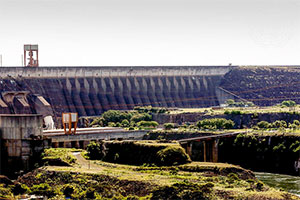 UN Power Plant, Paraguay. Credit: UN Photo/Evan Schneider
Energy has posed a great challenge for economies around the world. As global energy consumption skyrockets throughout the years, so does the need for sustainable solutions. The Sustainable Development Goals are essential in providing people with access to safe, affordable, and sustainable energy sources that minimize harm on the planet. Progress towards these goals opens the door for an advancement in modernization for communities on a global level and allows for a potential mitigation of tensions between nations.
The UN’s Summit of the Future in 2024 offered new initiatives that are being taken to achieve these goals, including a decreased reliance on fossil fuels, a switch to renewable energy sources, and improved climate financing.
IPS is well positioned to provide relevant, insightful, and compelling analysis of recent updates and measures being taken around the world to achieve a cleaner future.

The Week with IPS

NEXT STOP - SDGs
Tracking global progress towards a sustainable world
Tracking global progress towards a sustainable world
