Languages
Tuesday, October 6, 2026



News and Views from the Global South
Energy

U.S. Unveils Military Strategy for Arctic
The United States is calling for greater cooperation in the Arctic, even as it warns that it will defend its sovereignty in the face of strengthening international interest in newly opening shipping lanes and natural resource extraction opportunities as the region’s ice disappears.
South Scores 11th-Hour Win on Climate Loss and Damage
The U.N. climate talks in Warsaw ended in dramatic fashion Saturday evening in what looked like a schoolyard fight with a mob of dark-suited supporters packed around the weary combatants, Todd Stern of the United States and Sai Navoti of Fiji representing G77 nations.
Multinationals’ Interest Grows in Sustainable Bioplastics
Eight major multinational consumer products companies have come together to investigate whether it is possible to produce a sustainable form of “bioplastic”, made from plants rather than petroleum products.
Legal Battles Against Opening Up Mexico’s Oil Industry
As Mexico moves towards a controversial reform that would be the largest opening of the oil industry to foreign investors in decades, local communities and non-governmental organisations are fighting in court against earlier contracts with foreign companies, which have been possible since 2008.
Trinidadian Fishers Choose Jail over “Seismic Bombing”
The demonstration took place on land and sea simultaneously. In the end, police had arrested three people, including Gary Aboud, president of the Trinidadian NGO Fishermen and Friends of the Sea (FFOS), but protesters were undaunted. They would be back.
U.N. Climate Meet Becomes About “Not Losing Ground”
Diann Black-Layne grew up in a single parent home with nine siblings on the tiny Caribbean island of Antigua. Still, life was easygoing and enjoyable, she recalls. For her, it was paradise.
Carbon Emissions on Tragic Trajectory
Burning of fossil fuels added a record 36 billion tonnes of CO2 to the atmosphere in 2013, locking in even more heating of the planet.Obama Gets More Time for Iran Nuclear Deal
The administration of President Barack Obama appears to have succeeded in preventing Congress from enacting new sanctions against Iran before the next round of nuclear-related talks between the U.S. and other great powers and Tehran scheduled for Geneva Nov. 20.
Lavrov Reveals Amended Draft Circulated at “Last Moment”
Russian Foreign Minister Sergey Lavrov revealed a crucial detail Thursday about last week's nuclear talks with Iran in Geneva that explains much more clearly than previous reports why the meeting broke up without agreement.
Japan Bails Out on CO2 Emissions Target
Japan announced Friday that it will renege on its carbon emissions pledge, likely ending any hope global warming can be kept to 2.0 degrees C.
Brazil Headed Towards an Energy Revolution
Energy consumption and production are undergoing fundamental shifts but the world is still on course to a 3.6 degree C hotter climate according a report released during the U.N. climate talks in Warsaw.
U.N. Climate Meet: “It’s About Survival”
For the small island developing states of the Caribbean, there is nothing more important than the United Nations Climate Change Conference taking place here at the national stadium of Poland from Nov. 11-22.
St. Vincent’s Volcano Holds More Promise Than Peril
Weary of sky-high electricity prices, St. Vincent is following in the footsteps of another, decidedly un-tropical island nearly 4,000 miles away in its quest to harness clean geothermal power.
For Poland the Right Way Is Coal
These are busy days in the Polish capital Warsaw, even if it doesn’t show. The United Nations Climate Change Conference COP 19 has opened at the National Stadium, while on the other side of the river Wisla the Polish far right gathered for their annual march on Independence Day on Monday.
Ethiopia’s Indigenous Excluded from Rapid Growth
As the construction of a major transmission line to export electricity generated from one of Ethiopia’s major hydropower projects gets underway, there are growing concerns that pastoralist communities living in the region are under threat.
Libya’s Berbers Close the Tap
"Oil tankers won´t get crude from this port until Tripoli finally meets our demands," says Younis, one of the Amazigh rebels today blocking one of Libya´s largest gas and crude oil plants.
World Headed for a High-Speed Carbon Crash
If global carbon emissions continue to rise at their current rate, humanity will eventually be left with no other option than a costly, world war-like mobilisation, scientists warned this week.
Uganda Needs to Exploit its Own Mineral Riches
This year, as Uganda gears up to start producing the nearly two billion barrels in oil reserves that were discovered near its western border, critics say that little is being done to exploit the rich mineral resources located in some of the country’s poorest areas.
South America – From Granary to Megaprojects for the World
South America has gone from the world’s granary to the site of innumerable international infrastructure, energy and mining megaprojects. It is now facing a new dilemma: bolstering the economy with the promise of reducing inequality, in exchange for social and environmental costs that are taking their toll.
Nuclear Called a Lesser Evil than Fossil Fuels
Four prominent climate and energy scientists are calling on environmentalists to rethink their longstanding opposition to nuclear energy, warning that there is no “credible path to climate stabilization that does not include a substantial role for nuclear power”.
New Policies Beyond Austerity and Stimulus
It is time to move the global policy debate beyond the binary options of “austerity” versus “stimulus.” Both these macroeconomic policies have caused untold harm to millions and produced dangerous policy stalemates in Europe and the U.S., Japan and other countries.« Previous Page — Next Page »





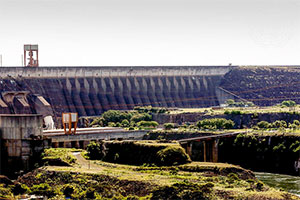 UN Power Plant, Paraguay. Credit: UN Photo/Evan Schneider
Energy has posed a great challenge for economies around the world. As global energy consumption skyrockets throughout the years, so does the need for sustainable solutions. The Sustainable Development Goals are essential in providing people with access to safe, affordable, and sustainable energy sources that minimize harm on the planet. Progress towards these goals opens the door for an advancement in modernization for communities on a global level and allows for a potential mitigation of tensions between nations.
The UN’s Summit of the Future in 2024 offered new initiatives that are being taken to achieve these goals, including a decreased reliance on fossil fuels, a switch to renewable energy sources, and improved climate financing.
IPS is well positioned to provide relevant, insightful, and compelling analysis of recent updates and measures being taken around the world to achieve a cleaner future.

The Week with IPS

NEXT STOP - SDGs
Tracking global progress towards a sustainable world
Tracking global progress towards a sustainable world
