Languages
Friday, October 2, 2026



News and Views from the Global South
Energy
Netanyahu Budging Slightly on Iran
Israel keeps urging the group of six major powers to agree nothing less than a full dismantlement of Iran’s nuclear capability. Yet Israeli Prime Minister Benjamin Netanyahu might have to come to terms with settling for an agreement which, though sustainable, falls short of his longstanding demand.
No Safe Havens in Increasingly Acid Oceans
Oil, gas and coal are contaminating the world's oceans from top to bottom, threatening the lives of more than 800 million people, a new study warns Tuesday.
Not Fukushima Again
Two and a half years ago, Ayako Oga, now 30, found herself helpless as an earthquake and the tsunami it triggered hit Japan and crippled four reactors at the Fukushima Daiichi nuclear plant. She and her husband were forced to abandon their village Ookuma Machi, barely five kilometres away.
U.S. Science Reporters Becoming an Endangered Species
The news for environmental journalism in the United States is grim and getting grimmer.
Iran Talks to Resume Amid Guarded Optimism
Almost exactly four months after the election of Iran’s new president, Hassan Rouhani, talks over the Islamic Republic’s controversial nuclear programme will resume here on Tuesday.
Brazil in Reverse
In the last five years, Brazil has joined the ranks of the world’s big polluters, whose main source of greenhouse gases is the burning of fossil fuels.
Energy Hits New Rocks in Mongolia
Mongolia, 90 percent dependent on fuel imports from Russia and vulnerable to price hikes, is seeking to develop its oil shale deposits of at least 800 billion tons.
Chile’s Mining Industry Turns to Sunlight to Ease Energy Shortage
The mining industry in the north of Chile, the world’s leading producer of copper, is trying to partially satisfy its insatiable appetite for energy with a renewable, ever-available source: the sun.
Small Island Economies Battered by Erratic Weather
Malcolm Wallace always knew on which side his bread would be buttered.
How to Tell the Biggest Stories of Our Times
What does gorilla conservation have in common with the provision of contraceptives to women? How does rural-urban migration contribute to global warming? What does city planning in Kenya have to do with coastal erosion in the Philippines?
Mayors Leading an Urban Revolution
With presidents and prime ministers failing to take meaningful action to avert a planetary-scale climate crisis, the mayors of cities and towns are increasingly stepping up to enact changes at the local level.
Q&A: The Eleventh Hour for Climate Justice
Climate justice – the nexus between human rights and climate change – must be a pillar of the post-2015 development agenda, says former Irish president Mary Robinson.
Push for Transparency in U.S.-Mexico Drilling Agreement
As lawmakers here prepare to take up legislation that would green-light a U.S.-Mexico agreement on oil-and-gas drilling in the Gulf of Mexico, development and rights groups are urging them to reject a proposal that would exempt involved companies from new disclosure requirements.
CO2 Reshaping the Planet, Meta-Analysis Confirms
Greenland will eventually truly become green as most of its massive ice sheet is destined to melt, the authoritative U.N. Intergovernmental Panel on Climate Change (IPCC) reported Friday.
U.S. Projects 17-Percent Emissions Cut by 2020
The United States has formally told the United Nations that it is on track to reduce its greenhouse gas emissions by 17-percent by the end of the decade, assuming that currently proposed regulations are implemented.
Sunshine Gets Slowly More Energetic in Zimbabwe
On top of a small wooden cabin in Norton, a dormitory town outside the capital of Zimbabwe, is a solar panel that Silvester Ngunzi uses to light up his household.
Tallying the Benefits of Climate Action
More than a half-dozen governments on Tuesday launched a yearlong collaborative investigation into the economic benefits of taking broad action to combat global climate action.
Pressure Mounts to Cap Airline Emissions
A contentious global agreement on how to limit greenhouse gas emissions from the global airline industry will be at the top of the agenda over the next two weeks at an international summit, potentially solidifying details that have yet to emerge after more than a decade and a half of talks.
U.S. Proposes Landmark Cap on CO2 from Power Plants
Regulators here have taken the first major step of President Barack Obama’s second term to scale back U.S. carbon emissions, proposing first-ever rules to dramatically reduce allowable greenhouse gas pollution for future power plants.
Street Power Takes On Gold
Street protests are snowballing in Romania against a Canadian-led gold mining project in the Rosia Montana area in the Apuseni Mountains. More than 20,000 people joined a protest march in Bucharest on Sunday, and thousands in other Romanian cities took to the streets.Proposed Global Accord Called a Disaster for Public Services
Nearly 350 international civil society organisations are urging countries taking part in new negotiations towards an agreement on “trade in services” to abandon the effort, warning that the accord would negatively impact on universal access to and national regulation of public services.« Previous Page — Next Page »


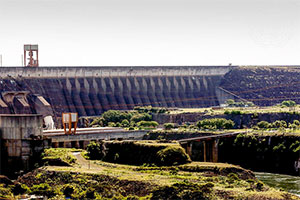 UN Power Plant, Paraguay. Credit: UN Photo/Evan Schneider
Energy has posed a great challenge for economies around the world. As global energy consumption skyrockets throughout the years, so does the need for sustainable solutions. The Sustainable Development Goals are essential in providing people with access to safe, affordable, and sustainable energy sources that minimize harm on the planet. Progress towards these goals opens the door for an advancement in modernization for communities on a global level and allows for a potential mitigation of tensions between nations.
The UN’s Summit of the Future in 2024 offered new initiatives that are being taken to achieve these goals, including a decreased reliance on fossil fuels, a switch to renewable energy sources, and improved climate financing.
IPS is well positioned to provide relevant, insightful, and compelling analysis of recent updates and measures being taken around the world to achieve a cleaner future.

The Week with IPS

NEXT STOP - SDGs
Tracking global progress towards a sustainable world
Tracking global progress towards a sustainable world
