Languages
Friday, October 2, 2026



News and Views from the Global South
Energy

U.S. Debates Climate Impact of Development Investments
A debate is heating up here over the extent to which U.S. government-facilitated private-sector development investments should be required to take into account how those ventures impact on climate change.
Hopeful but Homesick in Peshawar Schools
“I miss my mother and cry every night,” eight-year-old Afaq Ali tells IPS. He is a Class 5 student at the University Public School in Peshawar, capital of Pakistan’s Khyber Pakhtunkhwa province and the administrative centre for the Federally Administered Tribal Areas (FATA) to its west.
Q&A: “The Last Great Exploration Is to Survive on Earth”
Newly arrived from London, Robert Swan is facing a promise he made to famed marine researcher and conservationist Jacques Cousteau decades ago.
Q&A: Room for Negotiation in Decisive Battle over the Amazon
Everything indicates that the decisive battle between harnessing hydropower and preserving the Amazon will play out in the Tapajós river basin in Brazil. At stake there are a potential of nearly 30,000 MW and a vital part of the Amazon rainforest.Broad Coalition Pledges to Cut “Super Greenhouse Gases”
An international coalition has agreed to begin working towards domestic regulation aimed at reducing the use of HFCs, compounds commonly used as refrigerants but referred to as “super greenhouse gases” for their particularly negative impact on global warming.
Brazilian Hydroelectricity Giant Promotes Biogas
The massive Itaipú hydroelectric dam, shared by Brazil and Paraguay, has now become a model for the micro-scale production of an energy source that is not only clean, but also helps to reduce pollution and promote local development: biogas.
Water Scarcity Could Drive Conflict or Cooperation
When the General Assembly declared 2013 the International Year of Water Cooperation (IYWC) three years ago, the U.N.'s highest policy-making body was conscious of the perennial conflicts triggered by competition over one of the world's most critical finite resources.
Native Americans Take Lead in Tar Sands Resistance
Native American tribes in the United States have taken the lead in opposing the expansion of the Athabasca Tar Sands in Alberta, Canada, engaging in civil disobedience to the point of arrest and attempting to physically block shipments of construction equipment from passing through their native lands.
West Cold-Shoulders Rebuilding Southern Africa
The Southern African Development Community has had to revisit its plans to raise funding for its ambitious regional development plan in the wake of a cold-shoulder from western nations and multilateral finance institutions.
German Sun Beats Swiss Water
Water power is the backbone of Alpine countries' energy supply. Despite its important role in Europe's energy shift, further development of hydroelectric infrastructure in Austria and Switzerland is on hold.
Q&A: Everyone Loses in War Over Amazon Dams
In the war over major hydropower dams in the Amazon jungle, everyone loses - even the winners who manage to overcome the opposition and build them, but who suffer delays, costs that are difficult to recoup, and damage to their image.
Uruguay Prepares for Iron Rush
A bill that would regulate large-scale mining operations is making its way through Uruguay’s two houses of parliament, despite a lack of political consensus and vocal opposition from environmental organisations and other sectors of civil society.
Civil Society Calls for Vote on Drilling in Ecuador’s Yasuní Park
The Ecuadorean government’s decision to allow oil drilling in the Yasuní National Park, one of the most biodiverse areas of the planet, has caused alarm among environmentalists and indigenous people, who are calling for a referendum on the issue.Cheap Power Stymies Renewables in Kyrgyzstan
Almost five years ago, as his village in northern Kyrgyzstan endured daily power outages, rays of light always emitted from Sabyr Kurmanov’s garage. They came from his egg incubator, a 12-volt contraption powered by something he and his neighbours have in abundance – wind.
Five Caribbean States Join Pilot for Energy Efficiency
Every year, the Caribbean's electric sector burns through approximately 30 million barrels of fuel. Overall, the region imports in excess of 170 million barrels of petroleum products annually.
Civil Society Trial Finds Oil Corp Guilty in Colombia
An “ethical and political trial on pillaging of natural resources” in Colombia condemned three foreign corporations, including Canada’s Pacific Rubiales Energy, which has dozens of oil and natural gas operations around the country.
Washington’s Worries Grow Over Saudi Ties
As the administration of President Barack Obama continues wrestling with how to react to the military coup in Egypt and its bloody aftermath, officials and independent analysts are increasingly worried about the crisis's effect on U.S. ties with Saudi Arabia.
OP-ED: Rising Temperature, Rising Food Prices
Agriculture as it exists today developed over 11,000 years of rather remarkable climate stability. It has evolved to maximize production within that climate system. Now, suddenly, the climate is changing. With each passing year, the agricultural system is becoming more out of sync with the climate system.
U.S. Task Force Urges Climate Change Preparations
The United States government is recommending new preparations aimed at protecting vulnerable communities from climate change-related disasters, a year after a major hurricane devastated swaths of the country’s East Coast.
Opponents of Fracking Seek to Thwart Shale Gas Finance
Non-governmental organisations are putting pressure on multilateral financial institutions not to finance production of shale gas by hydraulic fracturing or fracking because of the high environmental costs they say are associated with this method.
Critics Push to Stall New Obama “Social Cost of Carbon” Calculations
The U.S. Department of Energy has announced it is accepting a petition from a conservative advocacy group critical of a recent substantial increase to official calculations of the so-called “social cost of carbon”.« Previous Page — Next Page »


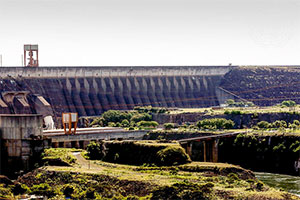 UN Power Plant, Paraguay. Credit: UN Photo/Evan Schneider
Energy has posed a great challenge for economies around the world. As global energy consumption skyrockets throughout the years, so does the need for sustainable solutions. The Sustainable Development Goals are essential in providing people with access to safe, affordable, and sustainable energy sources that minimize harm on the planet. Progress towards these goals opens the door for an advancement in modernization for communities on a global level and allows for a potential mitigation of tensions between nations.
The UN’s Summit of the Future in 2024 offered new initiatives that are being taken to achieve these goals, including a decreased reliance on fossil fuels, a switch to renewable energy sources, and improved climate financing.
IPS is well positioned to provide relevant, insightful, and compelling analysis of recent updates and measures being taken around the world to achieve a cleaner future.

The Week with IPS

NEXT STOP - SDGs
Tracking global progress towards a sustainable world
Tracking global progress towards a sustainable world
