Languages
Friday, October 2, 2026



News and Views from the Global South
Energy

Critics Push to Stall New Obama “Social Cost of Carbon” Calculations
The U.S. Department of Energy has announced it is accepting a petition from a conservative advocacy group critical of a recent substantial increase to official calculations of the so-called “social cost of carbon”.
A Stark Choice: Extreme Heat or Dirty Fuels
Two reports released Wednesday reveal the dangerous gap between science and politics. New climate research shows that extreme events such as the severe heat wave in the U.S. last year will double in 2020, increase 400 percent by 2040, and then get far worse without significant carbon reductions.
India and China Oil Palms Dangerously
When there is feasting in India, Pakistan and Bangladesh, there could just be a connection between the celebrations and the fires on Indonesia’s Sumatra Island that trigger frequent transboundary smog.
Govt, Energy Industry Accused of Suppressing Fracking Dangers
New signs have emerged in recent days which indicate that extreme measures are being taken in order to suppress evidence of the pernicious effects of the energy extraction method known as hydraulic fracturing, or “fracking".
New York Wants Your Potato Peels
Ask a random New Yorker what their city is famous for and “composting” is about as likely to make the list as “cheap housing” and “warm winters”. But if it is up to Mayor Michael Bloomberg, this will soon change.
Alberta’s Oil Sands Bring Jobs, Services and Despair
“First the bugs began to disappear,” says Eriel Deranger, spokesperson for Athabasca Chipewyan First Nation.
Geothermal Energy Stuck in a Hole in Switzerland
An accident in a flagship project threatens the future of geothermal energy in Switzerland. The mishap that was followed by earthquakes has come as a warning that geothermal deep drilling still has a long way to go.Ex-Envoy’s Account Clarifies Iran’s 2003 Nuclear Decision
Newly published recollections by the former French ambassador to Iran suggest that Iran was not running a covert nuclear weapons programme that it then decided to halt in late 2003, as concluded by U.S. intelligence in 2007.
Biochar Could “Turn Back Clock” on Climate
Even as policymakers around the world wrestle with how to cut future emissions of global greenhouse gases, some scientists and environmentalists are increasingly turning their attention to the carbon dioxide that is already in the atmosphere, trying to discern ways that this level can be efficiently and safely brought down.
Poland’s Shale Gas Bubble ‘Bursting’
Since Jun. 3, inhabitants of the village Zurawlow in Grabowiec district in southeastern Poland have been occupying a field in their locality where the U.S. company Chevron plans to drill for shale gas. The farmers’ resistance is just the latest blow to shale gas proponents in the country.
U.S., U.K. Accused of Ignoring, Facilitating Abuses in Ethiopia
The U.S. and U.K. foreign assistance offices are being accused of ignoring, mischaracterising or downplaying testimony offered by ethnic communities in Ethiopia who accuse the Addis Ababa government of forcefully evicting them from their lands and violating their human rights in the name of mass development projects.
Caribbean Launches New Tool to Deal with Climate Change
If the studies conducted by the International Code Council (ICC) are true, then by 2025, Caribbean countries will witness a significant increase in Category 4 and 5 hurricanes from the present level of 1.4 annually to four.
Q&A: Will the Iranian Nuclear Conflict Change With Rouhani?
The Jun. 14 election of Hassan Rouhani, nicknamed the "diplomatic sheik" during his service as Iran's chief nuclear negotiator from 2003-2005, to Iran's presidency was met with hopeful celebrations within the country but much cooler reactions from key world leaders.
EU Bank ‘Funding Polluters’
The European Investment Bank, the largest institutional bank in the world, is facing criticism for its funding of fossil fuel projects and for weaker standards for lending to coal plants than currently proposed in both the U.S. and Canada.
Biofuels Get a Dubious Boost
In an unexpected move, European parliamentarians have approved a new biofuel regulation that will take emissions from indirect land use change into account. The new text allows the biofuel sector to expand, sending a clear signal to world food markets and jeopardising food security for the world's poorest.
Climate Change Takes Centre Stage in U.S.-China Talks
The United States and China have agreed on a suite of potentially far-reaching initiatives aimed at cutting greenhouse gas emissions in the world’s two largest economies and largest polluters.
Over a Barrel, Caribbean Seeks Finance for Clean Energy
When James Husbands, a 24-year-old Barbadian businessman, began weighing the possibility of manufacturing solar water heaters, there was already a prototype on the island that had been designed and installed by an Anglican priest living there in the early 1970s.
U.S. Navy’s “Green Fleet” Sparks Praise and Cynicism
The United States military, an organisation that consumes 90 percent of the country's federal oil allowance, is trying to become a greener institution.
U.S. Court Overturns Key Extractives Transparency Rule
A federal judge here on Tuesday struck down a key new regulatory provision that would require large U.S.-listed extractives companies to disclose payments made to foreign governments, a rule that rights groups had long pushed as a way to cut down on corruption in developing countries.
Obama Plan to Electrify Africa Offers a “New Model” of Aid
During an eight-day trip to Africa, President Barack Obama unveiled an ambitious plan to improve access to electricity across the continent, a move the White House says is designed to lift Sub-Saharan Africa out of poverty and help the region develop a stable middle class.
Tunisia Now Searches an Economic Spring
Nearly two-and-a-half years since the toppling of the autocratic regime of Zine el-Abidine Ben Ali in the first regime change of the now famous Arab Spring, the high expectations of change to come with the revolution have hardly been met.« Previous Page — Next Page »


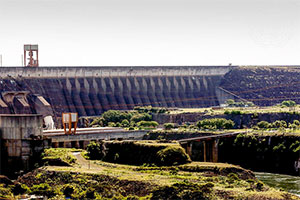 UN Power Plant, Paraguay. Credit: UN Photo/Evan Schneider
Energy has posed a great challenge for economies around the world. As global energy consumption skyrockets throughout the years, so does the need for sustainable solutions. The Sustainable Development Goals are essential in providing people with access to safe, affordable, and sustainable energy sources that minimize harm on the planet. Progress towards these goals opens the door for an advancement in modernization for communities on a global level and allows for a potential mitigation of tensions between nations.
The UN’s Summit of the Future in 2024 offered new initiatives that are being taken to achieve these goals, including a decreased reliance on fossil fuels, a switch to renewable energy sources, and improved climate financing.
IPS is well positioned to provide relevant, insightful, and compelling analysis of recent updates and measures being taken around the world to achieve a cleaner future.

The Week with IPS

NEXT STOP - SDGs
Tracking global progress towards a sustainable world
Tracking global progress towards a sustainable world
