Languages
Tuesday, September 1, 2026



News and Views from the Global South
Energy

U.S. Moves Towards Approval of Keystone Pipeline
The U.S. government has taken a significant step towards approving the Keystone XL oil pipeline, a highly contentious project that has unified environmental groups here in opposition to what they say would be a climate catastrophe.
Caribbean Walks the Talk on Clean Energy Policy
Despite having an abundance of wind and sunshine, Caribbean countries have found that going green is requiring significant shifts in policy, and most importantly, significant financing.
U.S. Tightens Development Safeguards
Development activists and rights watchdogs are applauding a surprise strengthening of environmental and human rights policies governing U.S. development funding and overseas financial assistance.Switching Off Market ‘Reforms’ in the Philippines
After two decades of aggressively privatising its public services, the Philippines is beginning to realise the cost of mindless market reforms.U.S. Agency Accused of Safeguards Failure in Liberia Investment
Hundreds of Liberians have filed a complaint accusing a U.S. government agency of failure to carry out due diligence or ensure that safeguards were followed for investments made to a failed biomass project in Liberia.
The Future According to Mr. Clean (Energy)
Jigar Shah likes math. It inspires him. After all, crunching numbers allowed him to convince wary investors of the money-making potential of solar energy, allowing him to ignite an industry that was crippled by roadblocks.
Dammed Rivers Create Hardship for Brazil’s Native Peoples
The Itaparica hydroelectric power plant occupied land belonging to the Pankararu indigenous people, but while others were compensated, they were not. They have lost land and access to the São Francisco river, charge native leaders in Paulo Afonso, a city in northeastern Brazil.
Voluntary Fracking Certification Kicks Off in U.S.
A controversial new certification process that could cover a significant portion of the U.S. oil-and-gas “fracking” industry began accepting applications on Tuesday, indicating the formal start of an initiative that has the backing of some key industry players and some environmentalists – but by no means all of either.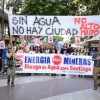
Alto Maipo Project Endangers Santiago’s Water Supply
A hydroelectric project under construction near the Chilean capital poses a threat to the supply of drinking water to more than six million people living in the Santiago Metropolitan Region.
Clean Energy Investment Sags Amid Mounting Climate Risks
Despite Wall Street’s nascent rediscovery of green stocks, global investment in alternative energy declined by 12 percent last year.
Big Coal Undercuts Landmark U.S. Overseas Investment Policy
Environmentalists and some lawmakers are decrying a surprise move by conservative members of Congress to roll back landmark “clean energy” policies guiding U.S. investments in overseas power projects.
Development Follows Devastation from Brazilian Dam
Valdenor de Melo has been waiting for 27 years for the land and cash compensation he is due because his old farm was left underwater when the Itaparica hydroelectric dam was built on the São Francisco river in Brazil’s semiarid Northeast.
Blackouts in Argentina Highlight Failings of Privatisation
Record temperatures at the start of the southern hemisphere summer in Argentina have been accompanied by highs on the thermometer of social discontent, as consumption peaks left thousands without electricity and threw into sharp focus the failings of the privatisation of the power industry in the 1990s.
Mexican Communities On Guard Against Thirst for Oil
The Terra 123 oil and gas well in the southeastern Mexican state of Tabasco was in flames since late October, just 1.5 km from a community of 1,500 Oxiacaque indigenous villagers, who were never evacuated.
The Legacy of 2013
At this time of hope for what the new year may bring, it would be useful to look at the legacy we carry with us from the year we leave behind. It was a year full of events - wars, rising social inequality, unchecked finance, the decline of political institutions, and the erosion of global governance.
Coal Trains Run into Stiff Resistance in U.S.
Citizens and activists in the U.S. Pacific Northwest are fighting three different proposed coal terminals, including one in Oregon and two in Washington.
Christmas Deluge Brings Disaster to Eastern Caribbean
Colleen James arrived in St. Vincent and the Grenadines from Canada two days before Christmas hoping to enjoy the holiday season with her family. Now she’s getting ready to bury her two-year-old daughter and 18-year-old sister.
When Home Becomes a Firing Zone
Jinba is in the crosshair of ‘Firing Zone 918’ - and ‘Firing Zone 918’ is a microcosm of the Israeli occupation. Together with seven other communities, Jinba is slated for demolition to make way for an Israeli training ground. Forced eviction hangs over a thousand Palestinians.Need for Firewood Raises Threat for Georgia’s Christmas Tree Trade
The South Caucasus country of Georgia is a source of much sought-after Christmas tree seeds. But its own forests are now under threat, as firewood is in increasing demand as a cheap source of heat for homes, schools and hospitals.Women Advance in Distant Islands
Women’s political representation in the Pacific Islands region is globally the lowest at 3.65 percent, compared to the world average of 18 percent. Leadership is still widely perceived as ‘men’s business’ and voting is heavily influenced by nepotism and money politics. However, Rhoda Sikilabu, minister for community affairs in Isabel Province in the Solomon Islands is demonstrating that women leaders can drive development progress and win voter support.
Caring for Water Is a Must for Brazil’s Energy Industry
As they build huge hydropower dams, the Brazilian government and companies have run into resistance from environmentalists, indigenous groups and social movements. But the binational Itaipú plant is an exception, where cooperation is the name of the game.« Previous Page — Next Page »


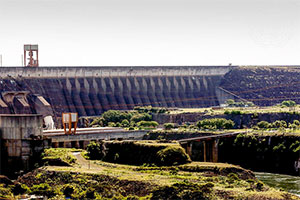 UN Power Plant, Paraguay. Credit: UN Photo/Evan Schneider
Energy has posed a great challenge for economies around the world. As global energy consumption skyrockets throughout the years, so does the need for sustainable solutions. The Sustainable Development Goals are essential in providing people with access to safe, affordable, and sustainable energy sources that minimize harm on the planet. Progress towards these goals opens the door for an advancement in modernization for communities on a global level and allows for a potential mitigation of tensions between nations.
The UN’s Summit of the Future in 2024 offered new initiatives that are being taken to achieve these goals, including a decreased reliance on fossil fuels, a switch to renewable energy sources, and improved climate financing.
IPS is well positioned to provide relevant, insightful, and compelling analysis of recent updates and measures being taken around the world to achieve a cleaner future.

The Week with IPS

NEXT STOP - SDGs
Tracking global progress towards a sustainable world
Tracking global progress towards a sustainable world
