Languages
Sunday, September 20, 2026



News and Views from the Global South
Energy

Sun Shines on Forest Women
Chintapakka Jambulamma, 34, looks admiringly at a solar dryer. It’s the prized possession of the Advitalli Tribal Women’s Co-operative Society- a collective of women entrepreneurs that she leads.
Kyrgyzstan Coal Wars Stymie Critical Industry
Kara-Keche, a sprawling deposit containing about 430 million tonnes of coal in mountainous Naryn Province, is a key asset for Kyrgyzstan’s struggling economy.Water, Water, Everywhere: To Green our Deserts
Providing water for our still growing human population is reaching crisis levels. Water is vital for agriculture, energy production and industrial processes worldwide. Floods and droughts in Asia, Latin America, Europe and the United States accompanied unprecedented typhoons and winter storms. While none could be linked directly to climate change, the debate surfaced. Mainstream media started covering these issues more broadly.
Resolving Nuclear Arms Claims Hinges on Iran’s Demand for Documents
The Barack Obama administration has demanded that Iran resolve “past and present concerns” about the “possible military dimensions” of its nuclear programme as a condition for signing a comprehensive nuclear agreement with Tehran.
Arab NGOs Warn IMF Against Sharp Cuts to Subsidies
Civil society activists from five Arab countries are urging the International Monetary Fund (IMF) to ease pressure on their governments to reduce food and fuel subsidies until stronger social-protection schemes and other basic reforms are implemented.
Sri Lanka Feels the Heat
Sri Lanka is heading into a major crisis under extreme heat, as the rains stay away. Fears are growing of power cuts and interruption to the water supply because reservoir levels are running scarily low.
Indoor Mini-Farms to Beat Climate Change
Industrial engineer Ancel Bhagwandeen thinks that growing your food indoors is a great way to protect crops from the stresses of climate change. So he developed a hydroponic system that “leverages the nanoclimates in houses so that the house effectively protects the produce the same way it protects us,” he says.CORRECTION/OP-ED: Nuclear Disarmament, the State of Play
If psychosis is a loss of contact with reality, the current status of nuclear disarmament can best be described as psychotic.
Sun Smiles on a Cold Desert
Surendar Mohan, a catering assistant at the residential school Jawahar Navodiya Vidyalya, looks thankfully up at the sun from this cold high-altitude desert in northwest India.
Poverty Rises Amidst Gold
Natural reserves such as gold, copper, nickel, gas and timber are being extracted in the western Pacific island states of Papua New Guinea and Solomon Islands to feed the soaring economies of East and South East Asia. But despite these Pacific nations recording economic growth rates of 6-11 percent over the past seven years, opportunities for human development have not been grasped.
U.S. Backing First Nuclear Reactors in 30 Years
The U.S. government has announced that it will be offering substantial loan guarantees for two new nuclear reactors, giving a major boost to what would be the first such projects to go forward in the United States in more than three decades.
U.N. Focuses on Faltering Goals: Water, Sanitation, Energy
When the U.N.'s Millennium Development Goals (MDGs) reach their deadline in 2015, there will still be a critical setback: millions of people in the developing world without full access to safe drinking water, proper sanitation and electricity in their homes.
Obama to Tighten Fuel and Emissions Rules
In an effort to reduce oil consumption and greenhouse gas emissions, President Barack Obama on Tuesday directed his administration to develop new fuel efficiency and emissions standards for trucks within the year.
OP-ED: We Need Everyone to Build a More Sustainable World
Last week, I had the privilege of attending the Delhi Sustainable Development Summit, an annual event that deals with a subject that is very close to my heart. The summit gathered together amazing people: Nobel Prize winners, thought leaders, heads of state, corporate innovators, and academicians to deal with the paramount challenges of the 21st Century all focused on three pressing dimensions of sustainability: food, water and energy.
Nuke Summit Agenda Circumvents Armed Powers
When over 50 world leaders meet in the Netherlands next month for a Nuclear Security Summit (NSS), the primary focus will be on a politically-loaded question: how do we prevent non-state actors and terrorists from getting their hands on nuclear weapons or nuclear materials?
DRC Mega-Dam to Be Funded by Private Sector, Groups Charge
Watchdog groups here are warning that a deal has been struck that would see Chinese investors fund a massive, contentious dam on the Congo River, the first phase of a project that could eventually be the largest hydroelectric project in the world.

Fossil Fuel Subsidies Dampen Shift Towards Renewables
Despite evolving public awareness and alarm over climate change, subsidies for the production and consumption of fossil fuels remain a stubborn impediment to shifting the world’s energy matrix towards renewable sources.
Iron Hell in Brazil’s Amazon Region
“My nephew was eight years old when he stepped in the ‘munha’ [charcoal dust] and burned his legs up to the knees,” said Angelita Alves de Oliveira from a corner of Brazil’s Amazonia that has become a deadly hazard for local people.
Energies Clash in Tokyo Election
Tokyo, one of the largest and most energy-guzzling cities in the world, is set to hold elections for a new governor Feb. 9. Analysts say it could prove crucial in stopping the Japanese government from restarting some nuclear reactors this year.
Egypt’s Generals Face a Watery Battle
Heavy reliance on water intensive crops, a major upstream dam project for the Nile basin, and rising groundwater levels pushing at pharaoh-era monuments will be pressing issues for the next Egyptian president - whether military or civilian.
U.S. Selling Coal Mining Rights at Undervalued Prices
The U.S. government is violating federal leasing policies when it sells land to certain coal-mining companies, according to a new audit from an official watchdog agency.« Previous Page — Next Page »


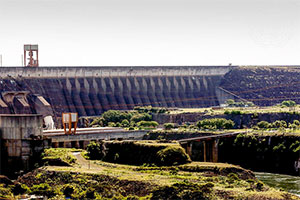 UN Power Plant, Paraguay. Credit: UN Photo/Evan Schneider
Energy has posed a great challenge for economies around the world. As global energy consumption skyrockets throughout the years, so does the need for sustainable solutions. The Sustainable Development Goals are essential in providing people with access to safe, affordable, and sustainable energy sources that minimize harm on the planet. Progress towards these goals opens the door for an advancement in modernization for communities on a global level and allows for a potential mitigation of tensions between nations.
The UN’s Summit of the Future in 2024 offered new initiatives that are being taken to achieve these goals, including a decreased reliance on fossil fuels, a switch to renewable energy sources, and improved climate financing.
IPS is well positioned to provide relevant, insightful, and compelling analysis of recent updates and measures being taken around the world to achieve a cleaner future.

The Week with IPS

NEXT STOP - SDGs
Tracking global progress towards a sustainable world
Tracking global progress towards a sustainable world
