Languages
Thursday, September 24, 2026



News and Views from the Global South
Energy

IPCC Climate Report Calls for “Major Institutional Change”
Greenhouse gas emissions rose more quickly between 2000 and 2010 than anytime during the previous three decades, the world’s top climate scientists say, despite a simultaneous strengthening of national legislation around the world aimed at reducing these emissions.
Yakama Nation Tells DOE to Clean Up Nuclear Waste
The Department of Energy (DOE), politicians and CEOs were discussing how to warn generations 125,000 years in the future about the radioactive waste at Hanford Nuclear Reservation, considered the most polluted site in the U.S., when Native American anti-nuclear activist Russell Jim interrupted their musings: “We’ll tell them.”The Iranian Nuclear Weapons Programme That Wasn’t
When U.S. Attorney for Massachusetts Carmen M. Ortiz unsealed the indictment of a Chinese citizen in the UK for violating the embargo against Iran, she made what appeared to be a new U.S. accusation of an Iran nuclear weapons programme.
OP-ED: The World Bank’s Waste of Energy
The World Bank’s job is to fight poverty. Key to lifting people out of poverty is access to reliable modern energy. It makes sense.
As Planet Warms, Clean Energy Investments Take a Dive
Policy uncertainty and plummeting solar prices led to a 14-percent decrease in investment in renewable energy in 2013, according to a report released Monday.
Going Green Without Sinking into the Red
Most Caribbean countries are famous for their sun, sand and warm sea breezes. Far fewer are known for their wide use of solar, wind and other forms of renewable energy.
Hard-Hit CDM Carbon Market Seeks New Buyers
Since they first emerged as a result of the 1997 Kyoto Protocol, carbon offset markets have been a key part of international emissions reductions agreements, allowing rich countries in the North to invest in “emissions-saving projects” in the South while they continue to emit CO2.
OP-ED: “Cli-Fi” May Be No Stranger Than Reality
When we read novels or short fiction in any language, we read to understand the story. We read to learn something new, and hopefully to get some kind of emotional uplift through the words on the page and the skills of the storyteller.
Fracking, Seismic Activity Grow Hand in Hand in Mexico
Scientists warn that large-scale fracking for shale gas planned by Mexico’s oil company Pemex will cause a surge in seismic activity in northern Mexico, an area already prone to quakes.
For Guyana, Energy Plus Efficiency Equals Common Sense Development
Guyana is shaping up to set a gold standard for the Caribbean in implementing a national energy efficiency strategy to curb greenhouse gas emissions from fossil fuels.
What Nepal Doesn’t Know About Water
Water is a critical resource in Nepal’s economic development as agriculture, industry, household use and even power generation depends on it. The good news is that the Himalayan nation has plenty of water. The bad news - water abundance is seasonal, related to the monsoon months from June to September.
IPCC Climate Report Warns of “Growing Adaptation Deficit”
The latest update of the world’s scientific consensus on climate change finds not only that impacts are already being felt on every continent, but also that adaptation investments are dangerously lagging.
U.S. Rejected Israeli Demand for Iran Nuclear Confession
The Barack Obama administration appears to have rejected a deal-breaking demand by Israel for an Iranian confession to having had a covert nuclear weapons programme as a condition for completing the comprehensive nuclear agreement.
Commonwealth Works to Raise Climate Resilience on Global Agenda
As they fine-tune preparations for the Small Island Developing States (SIDS) Conference in Samoa and the United Nations post-2015 development framework meeting in September, Commonwealth states are focusing on getting the international community to pay more attention to the challenges they face.
ExxonMobil to Disclose Carbon Emissions Risk
As the international community and the U.S. government place a heightened emphasis on reducing carbon emissions as a way to combat global climate change, shareholders have convinced the oil-and gas giant ExxonMobil to publicly disclose the risk that strengthened regulation could pose to its profits.
Uruguay’s Public Transport Goes Electric
Uruguay plans to gradually replace oil-based fuels with electric energy in its public transport system, and is currently assessing the costs and benefits of the shift.
Egypt Gets Muscular Over Nile Dam
When Egypt’s then-president Mohamed Morsi said in June 2013 that “all options” including military intervention, were on the table if Ethiopia continued to develop dams on the Nile River, many dismissed it as posturing. But experts claim Cairo is deadly serious about defending its historic water allotment, and if Ethiopia proceeds with construction of what is set to become Africa’s largest hydroelectric dam, a military strike is not out of the question.World Bank Clears Congo’s Controversial Dam Project
The World Bank Thursday approved a 73.1-million-dollar grant in support of a controversial giant dam project in the Democratic Republic of the Congo (DRC).
U.S. Scientists Launch Wake-Up Campaign on Climate Change
In an unusual intervention in policy debates, the American Association for the Advancement of Science (AAAS) warned Tuesday that the world was “at risk of pushing our climate system toward abrupt, unpredictable, and potentially irreversible changes with highly damaging impacts.”
Renewing Electricity Across Borders
Hervé Gouyet knows firsthand the difference electricity can make in the lives of both isolated rural communities and those who have just suffered a natural disaster.
Canadian Govt Targets Environment NGOs
Job cuts totalling 1,000 announced at Environment Canada’s climate change division this month means there will be even fewer government scientists onboard to monitor the impact of the extraction, development and transportation of crude oil from the carbon-intensive oil sands in Alberta.« Previous Page — Next Page »


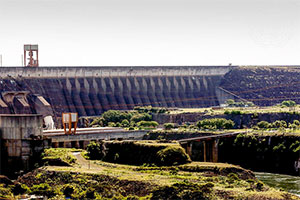 UN Power Plant, Paraguay. Credit: UN Photo/Evan Schneider
Energy has posed a great challenge for economies around the world. As global energy consumption skyrockets throughout the years, so does the need for sustainable solutions. The Sustainable Development Goals are essential in providing people with access to safe, affordable, and sustainable energy sources that minimize harm on the planet. Progress towards these goals opens the door for an advancement in modernization for communities on a global level and allows for a potential mitigation of tensions between nations.
The UN’s Summit of the Future in 2024 offered new initiatives that are being taken to achieve these goals, including a decreased reliance on fossil fuels, a switch to renewable energy sources, and improved climate financing.
IPS is well positioned to provide relevant, insightful, and compelling analysis of recent updates and measures being taken around the world to achieve a cleaner future.

The Week with IPS

NEXT STOP - SDGs
Tracking global progress towards a sustainable world
Tracking global progress towards a sustainable world
