Languages
Thursday, September 17, 2026



News and Views from the Global South
Energy
U.S. “Political” Breakout Demand Could Derail Nuclear Talks
As diplomats began drafting a comprehensive agreement on the Iranian nuclear programme and Western sanctions in Vienna Tuesday, U.S. officials were poised to demand a drastic cut in Iran’s enrichment capabilities that is widely expected to deadlock the negotiations.
Mangroves Could Be Saviour of Guyana’s Shrinking Coastline
Agriculture has always played an important role in the socioeconomic development of Guyana, one of just two Caribbean Community (CARICOM) member states that straddle South America.

Tough Road in Vienna to Iran Nuclear Deal
Iran and world powers will resume negotiating a final deal on Tehran's nuclear programme Tuesday in Vienna while experts warn the hardest work is about to begin.Ukraine Crisis Puts Strain on Turkey-Russia Ties
The deepening Ukrainian crisis is placing Turkey in a difficult diplomatic position. At stake for officials in Ankara are Turkey's commitments to its Western allies and its cultural kin, Crimean Tatars, against its economic and political relationship with Moscow.

Springtime Conflict Spells Winter Crisis for Ukraine
It’s springtime in Ukraine, but conflict and economic threats are bringing an early chill. During these months when the country normally stores up energy reserves for winter, access to natural gas may be Russia’s best weapon to influence Ukraine’s new government.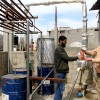
Desperate Gazans Turn Plastic Into Fuel
On the roof of a modest house amidst the alleys of Nusseirat refugee camp in central Gaza Strip, Ibrahim Sobeh and his sons spent more than 200 days working on a primitive device that converts waste plastic into fuel.Azerbaijan’s Rights Situation Deteriorating, Group Warns
The Azerbaijan government crackdown on civil society has worsened in recent months, human rights campaigners are warning, and activists are increasingly falling victim to official efforts to limit dissent.
Community Electricity Lights Up Spain
Until recently it was inconceivable for small groups of organised citizens in fully electrified industrialised countries like Spain to generate their own power from clean sources of energy, challenging the prevailing energy model.
Petrotrin Aims to Shrink Its Carbon Footprint
Trinidad and Tobago holds the dubious distinction of being among the top 10 emitters of carbon dioxide per capita in the world, much of it due to the petrochemical industry that is the main driver of its economy.
Energy Efficiency Is an Untapped Goldmine
The U.S. could create more than 600,000 skilled jobs, cut air pollution and fight climate change while its citizens reap 17 billion dollars in energy savings by doing one simple thing: Boost energy efficiency.
Capitalism Unable to Deal with Climate Change
It is time to craft new politics and economic policies to address the sustainability crisis, according to the latest edition of a flagship report by the Worldwatch Institute, a think tank here.
Finding the Needle in the Post-2015 Haystack
How will the U.N. prioritise the goals of its Post-2015 Development Agenda? Which goals deserve more funding? And which goals will help the most people? These are the questions that the Copenhagen Consensus Centre (CCC) seeks to answer.
Debt and Dirty Energy Weigh Heavy on Puerto Rico’s Utility
Everyone in Puerto Rico agrees that the island's ailing Electric Power Authority (PREPA) is badly in need of an overhaul, both in engineering and economic terms.
OP-ED: As EU Reconsiders Russian LNG, Qatar Waits in Wings
Throughout the Ukraine crisis, European Union (EU) leaders have become more vocal about their interest in reducing Europe’s consumption of Russian natural gas. As a result, Qatar — the world’s number-one provider of liquefied natural gas (LNG) — is well positioned to play a more influential role in Europe’s energy landscape.
U.S. Urged to Tackle Lead in Aviation Gasoline
Consumer advocates, public health workers and environmental groups here are calling on the federal government to take a formal step towards regulating the use of lead in aviation gasoline, despite a failure to do so for nearly two decades.
Charting a Course for Survival, or Oblivion?
Hopefully, on Earth Day today, high-level ministers from all countries are thinking about what they can bring to the table at a key set of meetings on climate change in early May.
Mexico’s Climate Change Law – More Than Just Empty Words?
When Mexico’s climate change law went into effect in October 2012, it drew international praise. But what has happened since then?
Poland Uses Ukraine to Push Coal
A European ‘energy union’ plan proposed by Polish Prime Minister Donald Tusk as an EU response to the crisis in Ukraine could be a Trojan horse for fossil fuels.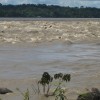
Deforestation in the Andes Triggers Amazon “Tsunami”
Deforestation, especially in the Andean highlands of Bolivia and Peru, was the main driver of this year’s disastrous flooding in the Madeira river watershed in Bolivia’s Amazon rainforest and the drainage basin across the border, in Brazil.
Uzbekistan’s Dying Aral Sea Resurrected as Tourist Attraction
"I’m going for a swim," says Pelle Bendz, a 52-year-old Swede, as he rummages in the jeep for his bathing trunks. The other tourists look at him, bewildered. What’s left of the Aral Sea is reputed to be a toxic stew, contaminated by pesticides and other chemicals.
IPCC Climate Report Calls for “Major Institutional Change”
Greenhouse gas emissions rose more quickly between 2000 and 2010 than anytime during the previous three decades, the world’s top climate scientists say, despite a simultaneous strengthening of national legislation around the world aimed at reducing these emissions.« Previous Page — Next Page »


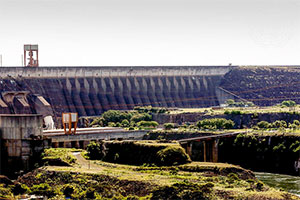 UN Power Plant, Paraguay. Credit: UN Photo/Evan Schneider
Energy has posed a great challenge for economies around the world. As global energy consumption skyrockets throughout the years, so does the need for sustainable solutions. The Sustainable Development Goals are essential in providing people with access to safe, affordable, and sustainable energy sources that minimize harm on the planet. Progress towards these goals opens the door for an advancement in modernization for communities on a global level and allows for a potential mitigation of tensions between nations.
The UN’s Summit of the Future in 2024 offered new initiatives that are being taken to achieve these goals, including a decreased reliance on fossil fuels, a switch to renewable energy sources, and improved climate financing.
IPS is well positioned to provide relevant, insightful, and compelling analysis of recent updates and measures being taken around the world to achieve a cleaner future.

The Week with IPS

NEXT STOP - SDGs
Tracking global progress towards a sustainable world
Tracking global progress towards a sustainable world
