Languages
Tuesday, September 15, 2026



News and Views from the Global South
Energy
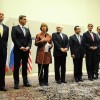
U.S. Demand for Deep Centrifuge Cut Is a Diplomatic Ploy
With only a few weeks remaining before the Jul. 20 deadline, the Barack Obama administration issued a warning to Iran that it must accept deep cuts in the number of its centrifuges in order to demonstrate that its nuclear programme is only for peaceful purposes.
Siberian Global Warming Meets Lukewarm Reaction in Russia
People in Siberia must prepare to face frequent repeats of recent devastating floods as well as other natural disasters, scientists and ecologists are warning, amid growing evidence of the effects of global warming on one of the world’s most ecologically diverse regions.
Q&A: “Fukushima Accident Still Ongoing After Three Years”
It has been three years since the nuclear accident in Fukushima, Japan. But the consequences are still ongoing due to continuous leaks of radioactivity into the environment, says independent nuclear energy consultant Mycle Schneider.
Picture the World as a Desert
Try to imagine an expanse of barren land, stretching for miles, with no trace of greenery, not a single bough to cast a sliver of shade, or a trickle of water to moisten the parched earth. Now imagine that desert expanding by 12 million hectares a year. Why? Because it’s already happening.
Natural Gas – Both Crisis and Solution in Chile
In April 2004, Argentina began to steadily cut natural gas exports to neighbouring Chile, triggering a major energy crisis and revealing structural problems in this vital sector.
Germany’s New Energy Revolution Still Moving Ahead
Germany has now become the world’s first modern renewable energy economy, according to the experts. The Federal Republic of Germany already obtains 29 percent of its electricity from renewable sources, meaning photovoltaic, hydro and wind power, and power produced by burning wood or other biomass.
Renewable Energy for “Cold” Areas
Although most of Iceland already uses renewable energy for its heating and electricity, a handful of places are still reliant on oil. But, at least on Grimsey island in the north, this could change in the future.
Chile’s Patagonia Celebrates Decision Against Wilderness Dams
The Chilean government rejected Tuesday the controversial HidroAysén project for the construction of five hydroelectric dams on rivers in the south of the country. The decision came after years of struggle by environmental groups and local communities, who warned the world of the destruction the dams would wreak on the Patagonian wilderness.
U.N.’s Energy Funding Falls Short of Target by Billions
When the United Nations inaugurated the first-ever global forum on renewable energy last week, it provided a laundry list of financial pledges aimed at achieving one of the world body's most ambitious goals: sustainable energy for all (SE4ALL) by 2030.
Mothers Light Up Homes in Rural Tanzania
“My mother used to just stay at home, now she has come back and is an engineer and a leader. She is on the Village Energy Committee,” said a 10-year-old girl from the village of Chekeleni, in Tanzania’s southeastern Mtwara district.
Small Islands, Beacons for the Rest of the World
Facing potential extinction under rising sea levels, many small island nations are embracing renewable energy and trying to green their economies. Although the least responsible for carbon emissions, small countries like Barbados are on the front lines of climate impacts.
World Applauds Ambitious U.S. Carbon Cuts
New efforts by the U.S. to reduce its carbon emissions are being welcomed around the world. On Monday the U.S. Environmental Protection Agency (EPA) announced a plan to cut carbon emissions from power plants 25 percent from 2005 levels by 2020.
Flexible Biofuel Policies for Better Food Security
Modern biofuels have become a fact of life, part of a quest for more cost-effective and environmentally sustainable businesses and lifestyles. But to be truly sustainable, biofuel production must strike a balance between its benefits and its potential hidden costs, between energy security and food security.
Let There Be Light, Implores U.N. Chief
When night falls, there are over 1.3 billion people, mostly in the developing world, who live in virtual darkness because they have no access to electricity.
Climate Legislation Up Against ‘Abenomics’ in Japan
Undaunted by Japan’s national consensus to boost the economy, which has been mired in lackluster growth for decades, environmentalists are taking baby steps towards incorporating climate change into national legislation.
Pakistan’s Coal Rush: A Bubble Waiting to Burst
Mukhtar Ali is one of the many Pakistanis who are furious at politicians and authorities for failing to provide citizens with a regular supply of electricity during the smouldering summer months.
Offsets to Cushion South African Carbon Tax
To curb greenhouse gas emissions, South Africa wants to put a tax on carbon emissions from big polluters.
Is Ankara Getting Deeper Into The Iraqi Quicksand?
The decision late Thursday by the Kurdistan Regional Government (KRG) to proceed with its first shipment of crude oil to Europe out of the port of Ceyhan in southern Turkey has received mixed reactions from all the parties concerned.
Peaceful Transitions From The Nuclear To The Solar Age
Japanese Buddhist and president of Soka Gakkai International (SGI) Daisaku Ikeda’s Peace Proposal 2014 elevated my focus from the daily news to my longer term concerns for more peaceful, equitable and sustainable human societies to assure our common future. These broader concerns are now shared by millions of humans who have transcended purely personal, local and nationalistic goals and become prototypical global citizens.Russian Manipulation of Reactor Fuel Belies U.S. Iran Argument
In the stalemated talks between the six powers and Iran over the future of the latter’s nuclear programme, the central issue is not so much the technical aspects of the problem but the history of the Middle Eastern country’s relations with foreign suppliers – and especially with the Russians.U.S. “Political” Breakout Demand Could Derail Nuclear Talks
As diplomats began drafting a comprehensive agreement on the Iranian nuclear programme and Western sanctions in Vienna Tuesday, U.S. officials were poised to demand a drastic cut in Iran’s enrichment capabilities that is widely expected to deadlock the negotiations.« Previous Page — Next Page »


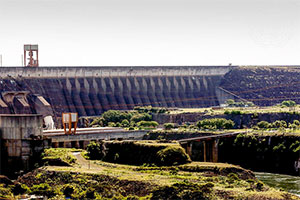 UN Power Plant, Paraguay. Credit: UN Photo/Evan Schneider
Energy has posed a great challenge for economies around the world. As global energy consumption skyrockets throughout the years, so does the need for sustainable solutions. The Sustainable Development Goals are essential in providing people with access to safe, affordable, and sustainable energy sources that minimize harm on the planet. Progress towards these goals opens the door for an advancement in modernization for communities on a global level and allows for a potential mitigation of tensions between nations.
The UN’s Summit of the Future in 2024 offered new initiatives that are being taken to achieve these goals, including a decreased reliance on fossil fuels, a switch to renewable energy sources, and improved climate financing.
IPS is well positioned to provide relevant, insightful, and compelling analysis of recent updates and measures being taken around the world to achieve a cleaner future.

The Week with IPS

NEXT STOP - SDGs
Tracking global progress towards a sustainable world
Tracking global progress towards a sustainable world
