Languages
Thursday, September 17, 2026



News and Views from the Global South
Energy

Will Climate Change Lead to Conflict or Cooperation?
The headline of every article about the relationship between climate change and conflict should be “It’s complicated,” according to Clionadh Raleigh.
U.S. Summit Seeks to Play Catch-Up in Africa
Despite worsening crises in Ukraine, Gaza, and elsewhere in the Middle East, the administration of President Barack Obama hopes next week to focus at least some more positive attention on Africa.World Bank Board Declines to Revise Controversial Draft Policies
A key committee of the World Bank’s governing board Wednesday spurned appeals to revise a draft policy statement that, according to nearly 100 civil-society groups, risks rolling back several decades of reforms designed to protect indigenous populations, the poor and sensitive ecosystems.
Oil Alliance Between China and Costa Rica Comes to Life Again
China’s plan to become Costa Rica’s main energy ally through the joint reconstruction of an oil refinery has been revived after the presidents of the two countries agreed to review the conditions of the project during a meeting in the Brazilian capital.
Under Water: The EPA’s Struggle to Combat Pollution
For years, the U.S. Environmental Protection Agency (EPA) has been frustrated in its efforts to pursue hundreds of cases of water pollution — repeatedly tied up in legal fights about exactly what bodies of water it has the authority to monitor and protect.
Gas and Sun Light the Way for Energy Industry in El Salvador
El Salvador is making steady progress towards diversifying its energy sources, with a plan to bolster the use of cleaner sources and achieve a substantial change in its energy mix by 2018.
Antigua Weighs High Cost of Fossil Fuels
Caught between its quest to grow the economy, create jobs and cut electricity costs, and the negative impacts associated with building an oil refinery, the Antigua and Barbuda government is looking to a mix of clean energy and fossil fuels to address its energy needs.
Oil Lubricates Equatorial Guinea’s Entry into Portuguese Language Community
Evidently, oil talked louder. By unanimous resolution, the Community of Portuguese Language Countries (CPLP) admitted Equatorial Guinea as a full member, in spite of the CPLP’s ban on dictatorial regimes and the death penalty.
Forest Rights Offer Major Opportunity to Counter Climate Change
The international community is failing to take advantage of a potent opportunity to counter climate change by strengthening local land tenure rights and laws worldwide, new data suggests.
Disasters Poised to Sweep Away Development Gains
Extreme poverty and hunger can be eliminated, but only through far greater efforts to reduce carbon emissions that are overheating the planet and producing punishing droughts, catastrophic floods and ever wilder weather, said climate activists involved in talks to set the Sustainable Development Goals (SDGs).
U.S. Debating “Historic” Support for Off-Grid Electricity in Africa
Pressure is building here for lawmakers to pass a bill that would funnel billions of dollars of U.S. investment into strengthening Africa’s electricity production and distribution capabilities, and could offer broad new support for off-grid opportunities.
U.S. Ranks Near Bottom Globally in Energy Efficiency
A new ranking has lauded Germany for its energy efficiency, while condemning the United States for lagging near the bottom.
Caribbean Grapples with Intense New Cycles of Flooding and Drought
As unpredictable weather patterns impact water availability and quality in St. Lucia, the Caribbean island is moving to build resilience to climate-related stresses in its water sector.
U.S. Accused of Forcing EU to Accept Tar Sands Oil
Newly publicised internal documents suggest that U.S. negotiators are working to permanently block a landmark regulatory proposal in the European Union aimed at addressing climate change, and instead to force European countries to import particularly dirty forms of oil.
Zarif and Kerry Signal Momentum on Nuclear Pact
As the negotiations on the Iranian nuclear programme approach the Jul. 20 deadline, both U.S. Secretary of State John Kerry and Iranian Foreign Minister Mohammad Javad Zarif have signaled through their carefully worded statements that they are now moving toward toward agreement on the two most crucial issues in the talks: the level of Iranian enrichment capability to be allowed and the duration of the agreement.
OPINION: Why Asia-Europe Relations Matter in the 21st Century
Hopes are high that the 10th Asia-Europe Meeting – or ASEM summit – to be held in Milan on October 16-17 will confirm the credibility and relevance of Asia-Europe relations in the 21st century.
Major Companies Push for More, Easier Renewable Energy
Some of the largest companies in the United States have banded together to call for a substantial increase in the production of renewable electricity, as well as for more simplicity in purchasing large blocs of green energy.
OPINION: The Caribbean: A Clean Energy Revolution on the Front Lines of Climate Change
Lefties Food Stall, a pint-sized eatery serving Barbados’ signature flying-fish sandwiches, recently became the first snack shack on the Caribbean island to be fitted with a solar panel.
Khamenei Remarks Show Both Sides Maneuvre on Enrichment
Iran’s supreme leader Ali Khamenei’s comments on the nuclear talks Monday provided an unusual glimpse of diplomatic maneuvering by the U.S.-led coalition of five nuclear powers and Germany on the issue of enrichment capability to be allowed in a comprehensive agreement.
Shea Harvesting Good for Income, Bad for the Environment in Ghana
The shea tree, a traditional African food plant, represents a major source of income for women in Ghana's Northern, Upper West and Upper East regions, but they are helping to destroy the very resource that gives them money by cutting it down to produce charcoal.
U.S. Overseas Coal Financing May Be Restarting
Landmark new policies that have sharply curtailed U.S. financing for international coal projects may be rolled back, the result of a sudden, polarised fight over a little-known government agency here.« Previous Page — Next Page »


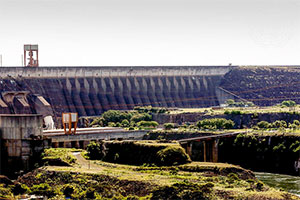 UN Power Plant, Paraguay. Credit: UN Photo/Evan Schneider
Energy has posed a great challenge for economies around the world. As global energy consumption skyrockets throughout the years, so does the need for sustainable solutions. The Sustainable Development Goals are essential in providing people with access to safe, affordable, and sustainable energy sources that minimize harm on the planet. Progress towards these goals opens the door for an advancement in modernization for communities on a global level and allows for a potential mitigation of tensions between nations.
The UN’s Summit of the Future in 2024 offered new initiatives that are being taken to achieve these goals, including a decreased reliance on fossil fuels, a switch to renewable energy sources, and improved climate financing.
IPS is well positioned to provide relevant, insightful, and compelling analysis of recent updates and measures being taken around the world to achieve a cleaner future.

The Week with IPS

NEXT STOP - SDGs
Tracking global progress towards a sustainable world
Tracking global progress towards a sustainable world
