Languages
Friday, November 20, 2026



News and Views from the Global South
Food and Agriculture
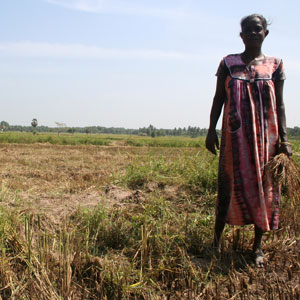
SOUTHERN AFRICA: Plumbing Grey Data for Clear Water
They come like pilgrims to the Department of Geological Surveys office in Lobatse, 120 kilometres south of the Botswanan capital. In the sparsely furnished offices there, they pore over charts, trying to take the guesswork out of choosing where to sink a borehole.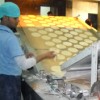
INDIA: Tech to the Rescue of School Lunch Model
Surrounded by lush green wheat and yellow flowering mustard fields at Ekdanta primary school, it is noon and the 57 children in two combined classes are fidgety - impatient for the school served midday meal.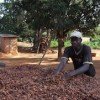
Ivorian Cocoa Producers Cry Foul Over Sanctions
The international community's efforts to deny embattled president Laurent Gbagbo access to funds from cocoa exports have resulted in hundreds of thousands of tonnes of Ivorian cocoa surfacing in neighbouring countries.
Brazilian Agriculture Can Help Combat Hunger and Inflation
The current rise in agricultural prices, which now overshadows the increase seen in 2008, highlights the contribution that Brazil could make towards curbing the growing hunger and inflation that are threatening the world once again.
Tanzania Biofuel Project’s Barren Promise
An ambitious project to produce clean energy for the Netherlands and Belgium has degenerated into a controversial abuse of natural resources in Africa.Save Climate and Double Food Production With Eco-Farming
Eco-farming could double food production in entire regions within 10 years while mitigating climate change, according to a new U.N. report released Tuesday in Geneva.
OP-ED: Women in Agriculture – Gender Gaps Are Holding Back Development
On the occasion of the 100th celebration of International Women’s Day, the Food and Agriculture Organisation (FAO) presented a surprising and alarming assessment of the situation of rural women, based on a comprehensive analysis of men and women farmers around the world.Soaring Commodity Prices a Mixed Bag for Mexico
While Mexico is earning more revenue from oil exports, the cost of food imports has risen to the point where food security is threatened.Eat Chinese, But Eat Safe
Despite a greater government effort to monitor food safety in the wake of high profile contamination incidents – including the 2008 melamine milk poisoning scandal that killed six infants and made 300,000 ill – the majority of Chinese still feel insecure about the food they eat.BRAZIL: Rural Women Protest Use of Toxic Agrochemicals
Thousands of women farmers in Brazil demonstrated this week against the use of toxic weedkillers and pesticides on crops and in favour of agricultural techniques that protect their families' health.
PAKISTAN: New Fears Over Malnutrition
"She was just skin and bones, even crying seemed a huge effort," Hajiani says of one-year-old Samreen Tauqir, when she saw her for the first time two months ago.Educate the Girl, Empower the Woman
Picture a mother, hunching over a field with a Medieval-style hoe in hand, spending day after day tilling the soil under a beating hot sun - only to retire home to care for her family without electricity or running water.
CUBA: Integrated Farming to Help Reach Food Sovereignty
Based on their own experience, Luisa García and Jorge Medina, whose farm in Cuba produces a variety of food that feeds them year-round, said they have no doubt that food sovereignty can be achieved in their country and in the rest of Latin America.
PERU: Nutritional Supplement Programme Big Business for a Few
Peru's Glass of Milk Programme (PVL) is failing in its aim of providing nutritional supplements to all poor children in Peru. But it has been a big business opportunity for the handful of companies that supply the programme, according to a special audit report seen by IPS.
Agro-Fuel Debate Takes Root in Central America
The debate is growing in Central America over the scope of industrial crops in forested areas or subsistence farming zones, and their impact on the source of food for the rural population.
DEVELOPMENT-UGANDA: Better Coffee Brings Better Living Conditions
Producing quality Arabica coffee beans on the slopes of Mount Elgon in eastern Uganda is only viable once farmers are assured ready access to the global market. Fair trade has made this possible.A World Going Hungry
In an era of mass consumption in the West, the developing world is entering its second major hunger crisis in three years, with new figures from the World Bank showing food price hikes have forced 44 million people into economic hardship since last June.Great Green Wall to Stop Sahel Desertification
Imagine a green wall - 15 kilometres wide, and up to 8,000 kilometres long - a living green wall of trees and bushes, full of birds and other animals. Imagine it just south of the Sahara, from Djibouti in the Horn of Africa in the east, all the way across the continent to Dakar, Senegal, in the west.
ENERGY-MALAWI: Rise in Paraffin Prices Leaves Traders in the Dark
Increasing energy prices have caused anxiety for many small-scale Malawian traders, especially those in rural areas and peri-urban areas who rely on paraffin for lighting their business premises.
KENYA: Flower Industry Still Not Back in Full Bloom
Kenya’s flower exporters are cautiously optimistic that the prospects for their industry will improve during 2011 after disaster struck in the form of volcanic ash and adverse winter weather conditions in 2010. But prices will be lower as the global economic recession still weighs heavily on their primary market, the European Union.ARGENTINA: Pockets of Child Malnutrition Despite Economic Boom
Despite years of strong economic growth, record harvests and massive social assistance programmes, there are still places in Argentina untouched by the boom, where child malnutrition has even claimed lives.« Previous Page — Next Page »


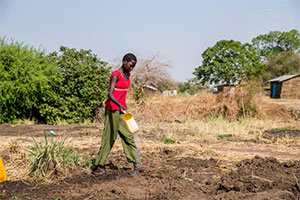 Farming on the Outskirts of Juba. Credit: UN Photo/JC McIlwaine
Promoting human and planetary health is a central focus of the United Nations, as laid out in the 2030 Sustainable Development Goals (SDGs). World hunger and unsustainable farming practices continue to be pressing concerns for the world. According to the 2025 State of Food Security and Nutrition in the World report by the Food and Agriculture Organization (FAO), 673 million people faced hunger in 2024. There are stark regional disparities, with the FAO projecting that 60% of the world population facing hunger will reside in Africa by 2030. Globally, the prevalence of food insecurity has remained consistently higher for women than men.
Sustainable and efficient national food systems are essential in preserving health, education, environmental well-being, peace, economy, and security. However, creating sustainable food systems can be a challenging endeavor, as food production takes a heavy toll on the environment. The agricultural sector accounts for a significant portion of greenhouse gases. Finding safe, sustainable, and ethical strategies to feed the world is crucial in ensuring planetary longevity. A recent initiative from 2023, the EU Regulation on Deforestation-free Products (EUDR), seeks to advocate for sustainable food systems. The main driver of deforestation is the expansion of agricultural land used to produce commodities like cattle, wood, cocoa, coffee, etc. The EUDR is part of the 2020 European Green New Deal and the EU Biodiversity Strategy for 2030 and aims to limit Europe’s consumption of products linked with deforestation by requiring that companies prove that their products are deforestation-free. Despite aiming to achieve major strides in sustainability, policies such as EUDR also raise socioeconomic concerns for targeted countries. Many emerging Latin American economies are impacted by the policy, and have raised the question of how developing countries can grapple with the tensions between economic development and advancing sustainability.
IPS has been at the forefront of providing compelling and insightful stories on communities facing hunger as well as the cost of food production. IPS uses statistics from FAO, the World Food Programme (WFP) and the International Fund for Agricultural Development (IFAD) to bring relevant and hard-hitting facts to readers. This gathering of information and data from such organizations helps bring the best stories from IPS journalists working in the different regions in consultation with experts on the ground.

The Week with IPS

NEXT STOP - SDGs
Tracking global progress towards a sustainable world
Tracking global progress towards a sustainable world