Languages
Friday, November 20, 2026



News and Views from the Global South
Food and Agriculture
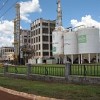
BRAZIL: Sugar Cane Fields Turned into Industry in Sertãozinho
"A disappointment" was his first impression of his new city. It was small, half the size of his hometown of Barretos, and had "weak lights," says Marcelo Pelegrini, remembering his family's move to this southern Brazilian city when he was nine years old, after his father got a job transfer.LATIN AMERICA: Tracking Down Radioactive Food Imports
Rather belatedly, Latin America is beginning to test products imported from Japan to check that they are not contaminated with radioactivity from the Fukushima nuclear power station that was severely damaged by the Mar. 11 earthquake and tsunami.BRAZIL: Science and Sugar Cane Produce Versatile Harvest
For nearly five hundred years, sugar cane was used almost exclusively for making sugar, with a handful of by-products like rum, alcohol and molasses. Now, in Brazil, it has become a source of multiple derivatives, and the focus of much scientific and technological research.
Sky-High Oil Prices Here to Stay
As the Arab world continues to pitch and heave with flashes of popular uprisings here and sparks of brutal crackdowns there, analysts are painting a grim picture of the regional unrest's economic consequences, predicting the persistence of high oil prices in the coming years.
HAITI: Seeding Reconstruction or Destruction?
Last year, tens of thousands of tonnes of tools, seeds and plant cuttings were distributed to almost 400,000 Haitian farming families, perhaps one-third to one-half of the country's farming population.Libya Uprising Hits West’s Dinner Tables
Linkages between the Libyan uprising and shelling out more money than usual at a local market in the West may not at first seem apparent but the common denominator is oil.
ZIMBABWE: Farmers Sceptical About “Complicated” Exchange Market
Kindness Paradza has a mission. After he lost his job as a journalist when the ZANU-PF government closed his newspaper in 2004, he ploughed his life savings into a 2,000 ha farm he received as part of Zimbabwe’s controversial "land reform programme".
GUATEMALA: Evictions of Native Families Add Fuel to Fire Over Land Access
"We have nowhere to plant our corn, we have nothing," Jorge Chocoj told IPS while waiting with his wife and three children for the police to evict them from the land they farmed in northwestern Guatemala.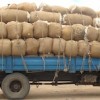
AGRICULTURE: Malawian Cotton Farmers Ecstatic Over High Prices
An ardent listener to the radio, small-scale cotton farmer Mercy Kaduya from Chikhwawa in Nsanje in southern Malawi has just heard on the international news segment that cotton prices have hit a record high on the international market.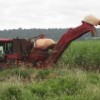
BRAZIL: Women Workers Determined to Ride the Wave of Mechanisation
"She's crazy" said most of the husbands and other family members of the 34 women who decided to become operators of sugarcane harvesters in the southern Brazilian state of São Paulo, attracted by the opportunity of better pay and encouraged by the growing mechanisation of the industry.South African Farmers Set Up in Congo
In the hope of strengthening its agricultural production, the Republic of Congo has handed over 80,000 hectares of arable land to a company owned and operated by 14 South African farmers.Heaviest Ever Floods in Northern Namibia
North-central Namibia is experiencing the heaviest floods ever recorded, but unlike in previous years, the area is fully prepared.
DR CONGO: Beauty of a Bean Wins Farmers’ Hearts
Smallholder farmers in Bandundu Province are boosting their harvests with the help of the sweetly-named velvet bean.Q&A: Studying Kenyan Farmers’ Efforts to Adapt
Climate change has become an important part of the development agenda. In Africa, farmers and consumers alike are feeling its effects on productivity and food security.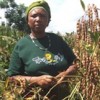
KENYA: Women Hold the Key to Rural Prosperity
John Kyalo Mulwa couldn't support his family from his six hectare farm, so he quit farming to open a bar. But he turned the land - and decision-making on it - over to his wife. Turns out she's a better farmer than he ever was.
Sugar Cane and Ethanol Boom Drives Development in Southern Brazil
The roads are exceptionally good and numerous here, in contrast with other parts of Brazil, but the monotony of the landscape is not inviting to tourists. Sugar cane fields stretch to the horizon along a 400-km stretch of highway to the north of São Paulo.MALI: Early Anxiety Over Price of Grain
In the small village of Gwélékoro, 60 kilometres south of the capital, Bamako, the fields are empty now, during the dry season. After a poor harvest, farmers are worried by swiftly rising prices for staple foods like sorghum and millet.Manufacturing in Africa Can be Profitable – And Developmental
Investing in adding value to raw materials is crucial for the development of the African continent.COLOMBIA: Return of Land to Displaced Farmers Picks Up Steam
"Wholesale land titling" Colombia's Minister of Agriculture and Rural Development Juan Camilo Restrepo announced Tuesday, adding that titles would no longer only be handed over to individuals who file land claims, but to entire groups of people in specific rural areas.
ARGENTINA: Rural Slavery at Time of Record Earnings
Crowded into precarious mud-floored dorms or sheet-metal trailers or forced to live in tents of plastic sheeting, with neither piped water nor electricity, after working 14-hour days: these are the harsh conditions faced by hundreds of thousands of rural workers in Argentina despite bumper crops and record earnings for agribusiness.Agricultural Policy Is Gender Policy
Eva, a Ghanian woman, was given five pigs and some training on how best to care for them. Eventually, her farm grew to 400 pigs and she was able to buy more land and a motorbike which she not only used for transporting her goods to market but for helping neighbours get to town and to hospital quicker.« Previous Page — Next Page »


 Farming on the Outskirts of Juba. Credit: UN Photo/JC McIlwaine
Promoting human and planetary health is a central focus of the United Nations, as laid out in the 2030 Sustainable Development Goals (SDGs). World hunger and unsustainable farming practices continue to be pressing concerns for the world. According to the 2025 State of Food Security and Nutrition in the World report by the Food and Agriculture Organization (FAO), 673 million people faced hunger in 2024. There are stark regional disparities, with the FAO projecting that 60% of the world population facing hunger will reside in Africa by 2030. Globally, the prevalence of food insecurity has remained consistently higher for women than men.
Sustainable and efficient national food systems are essential in preserving health, education, environmental well-being, peace, economy, and security. However, creating sustainable food systems can be a challenging endeavor, as food production takes a heavy toll on the environment. The agricultural sector accounts for a significant portion of greenhouse gases. Finding safe, sustainable, and ethical strategies to feed the world is crucial in ensuring planetary longevity. A recent initiative from 2023, the EU Regulation on Deforestation-free Products (EUDR), seeks to advocate for sustainable food systems. The main driver of deforestation is the expansion of agricultural land used to produce commodities like cattle, wood, cocoa, coffee, etc. The EUDR is part of the 2020 European Green New Deal and the EU Biodiversity Strategy for 2030 and aims to limit Europe’s consumption of products linked with deforestation by requiring that companies prove that their products are deforestation-free. Despite aiming to achieve major strides in sustainability, policies such as EUDR also raise socioeconomic concerns for targeted countries. Many emerging Latin American economies are impacted by the policy, and have raised the question of how developing countries can grapple with the tensions between economic development and advancing sustainability.
IPS has been at the forefront of providing compelling and insightful stories on communities facing hunger as well as the cost of food production. IPS uses statistics from FAO, the World Food Programme (WFP) and the International Fund for Agricultural Development (IFAD) to bring relevant and hard-hitting facts to readers. This gathering of information and data from such organizations helps bring the best stories from IPS journalists working in the different regions in consultation with experts on the ground.

The Week with IPS

NEXT STOP - SDGs
Tracking global progress towards a sustainable world
Tracking global progress towards a sustainable world

