Languages
Friday, November 20, 2026



News and Views from the Global South
Food and Agriculture

MEXICO: Peanuts in Times of Food Crisis
Yandi Condado and a small group of farmers in the southern Mexican state of Puebla decided a few years ago to process their peanuts as an economic boost -- and to defend this traditional crop against the advances of more profitable options.
Kenyan Pastoralists Look Back to Secure Their Future
David Lenamira, watching as usual from a seat outside his compound, has no trouble picking out his sheep as the herd boys drive them home every evening. The red-brown animals are smaller than those in his neighbours' herds, but he's proud of them just the same.TRADE: “Poor Countries Have Already Given Enough in Doha Round”
South Africa has expressed sharp concern over concerted attempts by leading industrialised countries, particularly the U.S. and the European Union (EU), to extract onerous commitments from developing countries as a condition to concluding the stalled Doha Round trade negotiations.
WORLD SOCIAL FORUM: Fisheries Need Transparent Regulation
Senegalese fishers participating in the 2011 World Social Forum (WSF) warned governments to "wake up to the ethical and transparent regulation of access to fisheries" to halt the overexploitation of this increasingly scarce resource.
Water Evaporates in Peru’s For-Export Crops
As freshwater disappears from the super-populated Peruvian coast, the most water-intensive crops are expanding unabated as highly profitable exports. Observers warn about the harm this is causing and demand greater responsibility from the government and all involved.
SOUTHERN AFRICA: Securing Safe Water for a Million More
Long years of armed conflict have obstructed development in the areas on either side of the Angola-Namibia border. Now a 45 million dollar infrastructure upgrade is set to improve access to clean drinking water and decent sanitation for one million people.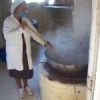
MEXICO: Agave Sweetens Economic Prospects of Indigenous Women
With a wooden spoon in hand, Hortencia Rómulo briskly stirs the amber-coloured liquid cooking in an enormous steel pot.Rising Food Prices May Not Signal New Crisis
As food prices rose for the seventh month in a row in January, contributing to recent popular unrest in the Middle East and a spike in commodities purchases by developing countries last week, some analysts are quick to make comparisons to the dry years of 2007-2008.Q&A: Hunger, Food Shortages Fuel Uprisings
The rise in food prices and growing hunger, one of the causes of the popular uprisings in Tunisia, Egypt and other countries in the Arab world, is due to financial speculation and not a lack of arable land, says Janaina Stronzake, a leader of Brazil's Landless Workers Movement (MST).
TRADE: Doha Round Tariff Cuts “Will Still Hit” Poor Countries
To allow least developed countries (LDCs) to protect nascent industries, they are not required to cut tariffs for industrial goods and fisheries in the Doha Development Round. However, tariffs cuts will affect them if they are members of customs unions where some of their neighbours are larger developing countries without LDC status.
SWAZILAND: Heavy Rains Welcome in the Mountain Kingdom
There's nothing quite like the enthusiasm that rises from the earth when rains come at last to a drought-stricken region. While heavy rains have caused extensive flooding across Southern Africa, with fears of worse to come, in at least one corner of the region the community is gazing with joy at an overflowing dam.
DEVELOPMENT-UGANDA: Fair Trade Gives Coffee Farming a Lift
The cultivation of coffee beans for fair trade has turned the fortunes of this historical cash crop around in some poor rural areas on the slopes of Mount Elgon in eastern Uganda.Rampant Speculation Inflated Food Price Bubble
Billions of dollars are being made by investors in a speculative "food bubble" that's created record food prices, starving millions and destabilising countries, experts now conclude.Forest Summit Seeks “People-Friendly” Solutions
Earlier this month, on a hot and humid day in the Jambi province of Indonesia, a group of local farmers was critically injured after being shot as they attempted to harvest fruit on a contested palm plantation.SRI LANKA: East Reels Under Triple Whammy
The name Mawilaru will be indelibly linked to the history of over 25 years of civil strife in Sri Lanka, especially its bloody end. It was here that the final phase of the war was triggered in June 2006.
EGYPT: Public Noose Tightens Around Mubarak
Demonstrations calling for the ouster of President Hosni Mubarak of Egypt continued for the second day in several Egyptian cities with police cracking down violently, a development that many analysts here say reflects the nervousness of the regime.COLOMBIA: Food Prices Rise after Record Rains
Food prices are set to rise in Colombia, due to the combined effects of soaring international prices and local crop losses after nine months of devastating rains. The government expects food prices to rise three percent in February, while independent analysts forecast an increase twice as high.GUATEMALA: High Staple Food Prices Drive Up Hunger
The rise in prices of corn, beans and other staple foods, driven up by damages to crops caused by extreme weather events, is making it even harder for the poor to afford a basic diet in Guatemala, which has the highest rate of child malnutrition in Latin America.
Mexico Tempted to Shift From Tortillas to Ethanol
Farmers' protests and the rise in corn tortilla prices in late December put temporary brakes on the Mexican Senate, which was preparing to lift the national ban on utilising maize to make fuel alcohol, or ethanol.
RWANDA: Forest Conservation Calls for Carrot and Stick
For years, the various campaigns for sustainable use of forests just passed Pascal Segatashya by. But Rwanda's ambitious Forest Conservation Project eventually found him - and it has transformed his life and livelihood.
COTE D’IVOIRE: New Techniques, New Profits for Tomato Farmers
Even while the country has faced civil war and political crisis, innovative research organisations have worked to meet the challenges of food security and rural poverty.« Previous Page — Next Page »


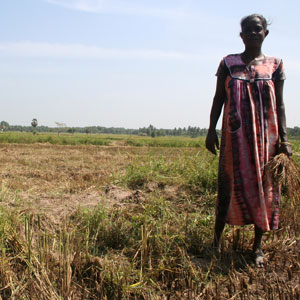
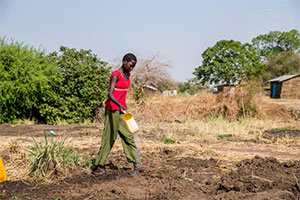 Farming on the Outskirts of Juba. Credit: UN Photo/JC McIlwaine
Promoting human and planetary health is a central focus of the United Nations, as laid out in the 2030 Sustainable Development Goals (SDGs). World hunger and unsustainable farming practices continue to be pressing concerns for the world. According to the 2025 State of Food Security and Nutrition in the World report by the Food and Agriculture Organization (FAO), 673 million people faced hunger in 2024. There are stark regional disparities, with the FAO projecting that 60% of the world population facing hunger will reside in Africa by 2030. Globally, the prevalence of food insecurity has remained consistently higher for women than men.
Sustainable and efficient national food systems are essential in preserving health, education, environmental well-being, peace, economy, and security. However, creating sustainable food systems can be a challenging endeavor, as food production takes a heavy toll on the environment. The agricultural sector accounts for a significant portion of greenhouse gases. Finding safe, sustainable, and ethical strategies to feed the world is crucial in ensuring planetary longevity. A recent initiative from 2023, the EU Regulation on Deforestation-free Products (EUDR), seeks to advocate for sustainable food systems. The main driver of deforestation is the expansion of agricultural land used to produce commodities like cattle, wood, cocoa, coffee, etc. The EUDR is part of the 2020 European Green New Deal and the EU Biodiversity Strategy for 2030 and aims to limit Europe’s consumption of products linked with deforestation by requiring that companies prove that their products are deforestation-free. Despite aiming to achieve major strides in sustainability, policies such as EUDR also raise socioeconomic concerns for targeted countries. Many emerging Latin American economies are impacted by the policy, and have raised the question of how developing countries can grapple with the tensions between economic development and advancing sustainability.
IPS has been at the forefront of providing compelling and insightful stories on communities facing hunger as well as the cost of food production. IPS uses statistics from FAO, the World Food Programme (WFP) and the International Fund for Agricultural Development (IFAD) to bring relevant and hard-hitting facts to readers. This gathering of information and data from such organizations helps bring the best stories from IPS journalists working in the different regions in consultation with experts on the ground.

The Week with IPS

NEXT STOP - SDGs
Tracking global progress towards a sustainable world
Tracking global progress towards a sustainable world