Languages
Saturday, November 21, 2026



News and Views from the Global South
Food and Agriculture

Q&A: Heavy Vehicle Market Taking Off in Africa
Russian president Dmitry Medvedev’s recent official visit to a handful of African countries has provided new impetus to Russian business’s interest in the region.ENVIRONMENT: Could Food Shortages Bring Down Civilisation?
In early 2008, Saudi Arabia announced that, after being self-sufficient in wheat for over 20 years, the non-replenishable aquifer it had been pumping for irrigation was largely depleted.
MALAWI: Surplus Crop, But We Are Starving – Farmers
In a country where maize crop surplus fills the national storehouses to capacity, farmers Ida and Montfort Salijeni and their four children have turned to wild tubers for food.
AGRICULTURE: Can South Africa Afford to Export Virtual Water?
Near the banks of the Orange River, farm manager Le Roux Viljoen sends off an SMS to a weather station and receives an almost instantaneous response telling him the temperature, wind direction and estimated evaporation index.
SOUTHERN AFRICA: Journey of a Working River: the Orange-Senqu
In the steep valleys of Lesotho's Maluti mountains, women carry yellow plastic buckets of water across fields of dark-brown earth; a group of men form a human chain to pass rocks between them to build a small dam wall across a mountain stream; clothes are being washed in rivers; and men draped in blankets ride donkeys or horses along the roadside.TRADE-AFRICA: Russia “Could be Left Behind”
Russia should reconsider its trade policy towards African states if it wants to keep up with the likes of China, the European Union (EU) and the U.S., say experts.UGANDA: Carbon Trading Scheme Pushing People off Their Land
As the world's attention increasingly turns to the impact of climate change, at least one project intended to reduce global carbon emissions is accused of displacing indigenous persons from their home in Uganda.
ENVIRONMENT: Desertification – a Macroeconomic Problem
Understanding desertification as a macroeconomic problem, with financial, productive, environmental and civil society aspects, is a major concern for Christian Mersmann, the managing director of the Global Mechanism of the United Nations Convention to Combat Desertification (UNCCD).
AFRICA: Plant Trees To Boost Agricultural Output
The outlook for food security in East Africa is looking bleak this year following poor rains, underscoring the urgency of raising farm productivity while adapting to a changing climate in Africa. Agroforestry experts have put forward planting trees as a possible solution.
BRAZIL: Electric Car Revolution in the Making
The electric vehicle - pure or hybrid - will trigger an energy and industrial revolution worldwide in the coming decades, dealing a blow to liquid fuels. But plant-based ethanol will survive and grow, say Brazilian experts consulted for this report.
ZAMBIA: Farmers Resort to Human Waste for Fertiliser
The economy's down, the price of fertiliser's up. And Zambian farmers are stealing sewage for their vegetable gardens.LATIN AMERICA: Food Crisis Must Be Regional Priority
There are 52 million hungry people in Latin America and the Caribbean, six million more than in 2008 - an aspect of the global economic crisis that must be a top priority focus of national policies and development aid, according to a meeting of experts from 27 countries held in the Venezuelan capital.
LAOS: What People Cannot Eat is of Great Importance to Women – Part 2
"When I was born my mother could not eat anything but tiny fish and tea made from herbs for one whole year," says Dr Bhounsouane. "She was so weak that she could hardly walk. Post partum food taboos (phit kam) are a major problem in Laos for women," he said.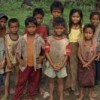
LAOS: Land Legislation Disempowers Women – Part 1
Ki is seven years old but looks more like three. His legs are bowed and skull misshapen. He looked at me with a blank stare. The health worker, Kheo, suggests rickets.LATIN AMERICA: Desertification – an Invisible Cancer
"Desertification is the cancer of the earth," Argentine geographer Elena Abraham told IPS. "It is a process of degradation that does not manifest itself in spectacular ways but furtively advances, and by the time it is visible there is nothing to be done, and people have to move away, in search of an alternative."MALI: Technology Transfer So Slow "We’ll Have to Copy Like China"
Cars and motorcycles are stuck because of the heavy rains that have drenched Mali’s capital for the past few days. It is late afternoon and the water, mud and damaged fruit from nearby stalls make the journey for those heading home to celebrate Ramadan even more treacherous.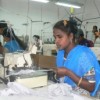
AFRICA: "Why Surrender Market to Subsidised European Goods?"
"Why should we surrender ourselves to the invasion of highly subsidised European goods? What will be the impact of capital outflows because of strategic services such as telecommunication, port, energy and water services being liberalised and privatised in the interest of European companies?"
MOZAMBIQUE: Local Leadership On Environmental Sustainability
Tucked away in the remote northwest corner of Mozambique is some of the most rugged and least developed terrain in the country. It was in this area that some of the most intense fighting took place during the civil war, which ended in 1992.GUATEMALA: Malnutrition Killing Children Again
The deaths of 25 children from severe malnutrition this year in Guatemala, mainly in the eastern province of Jalapa, shows that the specter of hunger is still haunting the country, aggravated by the global economic crisis and drought.LATIN AMERICA: "The More Guns, the More Violence"
Traffic in light weapons and small arms is one of Latin America's major disarmament concerns, because they fuel urban violence, especially in countries like Mexico, Guatemala and Brazil.CUBA: Scientists, Farmers Fighting Climate Change – Together
Cuba is facing the challenge of boosting agricultural output under difficult climate conditions and on soils badly deteriorated by erosion, salinity and other problems. And scientists have a strategic role to play, provided they do not sit in their laboratories but get out into the fields where the action is.« Previous Page — Next Page »


 Farming on the Outskirts of Juba. Credit: UN Photo/JC McIlwaine
Promoting human and planetary health is a central focus of the United Nations, as laid out in the 2030 Sustainable Development Goals (SDGs). World hunger and unsustainable farming practices continue to be pressing concerns for the world. According to the 2025 State of Food Security and Nutrition in the World report by the Food and Agriculture Organization (FAO), 673 million people faced hunger in 2024. There are stark regional disparities, with the FAO projecting that 60% of the world population facing hunger will reside in Africa by 2030. Globally, the prevalence of food insecurity has remained consistently higher for women than men.
Sustainable and efficient national food systems are essential in preserving health, education, environmental well-being, peace, economy, and security. However, creating sustainable food systems can be a challenging endeavor, as food production takes a heavy toll on the environment. The agricultural sector accounts for a significant portion of greenhouse gases. Finding safe, sustainable, and ethical strategies to feed the world is crucial in ensuring planetary longevity. A recent initiative from 2023, the EU Regulation on Deforestation-free Products (EUDR), seeks to advocate for sustainable food systems. The main driver of deforestation is the expansion of agricultural land used to produce commodities like cattle, wood, cocoa, coffee, etc. The EUDR is part of the 2020 European Green New Deal and the EU Biodiversity Strategy for 2030 and aims to limit Europe’s consumption of products linked with deforestation by requiring that companies prove that their products are deforestation-free. Despite aiming to achieve major strides in sustainability, policies such as EUDR also raise socioeconomic concerns for targeted countries. Many emerging Latin American economies are impacted by the policy, and have raised the question of how developing countries can grapple with the tensions between economic development and advancing sustainability.
IPS has been at the forefront of providing compelling and insightful stories on communities facing hunger as well as the cost of food production. IPS uses statistics from FAO, the World Food Programme (WFP) and the International Fund for Agricultural Development (IFAD) to bring relevant and hard-hitting facts to readers. This gathering of information and data from such organizations helps bring the best stories from IPS journalists working in the different regions in consultation with experts on the ground.

The Week with IPS

NEXT STOP - SDGs
Tracking global progress towards a sustainable world
Tracking global progress towards a sustainable world

